Showing posts with label british museum. Show all posts

Thursday, January 2, 2020

PARTHENON MARBLES DAMAGED BY VANDALS
AND BRITISH MUSEUM'S CLEANING METHODS


ONE of the British Museum’s most oft-cited reasons for keeping the stolen Parthenon Marbles since 1816 ... saving them from pollution ... has been undercut by an analysis claiming they have been damaged by cleaning methods and chipped at by vandals.

The marbles were ripped off the edifice of the Parthenon by a Scottish diplomat, Lord Elgin ... who said he took them with permission of officials from the occupying Ottoman Empire, who didn’t own them.


A new study of detailed plaster casts made of many of the artworks, commissioned by Lord Elgin in 1802, suggests many from the west frieze of the Parthenon were in a better condition then, than they are today.

Victorian-era "vandals" had chipped away at the faces of the sculptures and deliberately left chisel marks, Emma Payne, a specialist in classics and archaeological conservation based at King's College London, discovered, said INews.

She defended the theft as necessary to ultimately protect the sculptures ... not mentioning that the Acropolis Museum opened in 2009 with a top floor designed to show them off if returned, under the Acropolis.


Payne compared the casts with present-day 3-D scans of the west frieze, now in the Athens Acropolis Museum, and found features that had subsequently been lost, said the site's report.

"The obvious conclusion to draw is there was a period of particularly rapid deterioration between 1802 and 1872," she wrote.

And a second set of casts, commissioned by the British Museum in 1872, found more likely damage caused in the previous 70 years than the next 120.

The study, published in Antiquity magazine, meant that more than a century of Greek traffic pollution had actually caused less harm than the Victorian "vandals" who damaged them, although it wasn't described why or how.

"It is noteworthy that the decay of the sculptures appears to have slowed during the 20th Century precisely when problems with sulfurous emissions and acid rain were most acute," said Payne. 

Thursday, July 5, 2018

BRITISH MUSEUM'S ANTINOUS BUST
TO GO ON TOUR IN BRITAIN


THE British Museum has gathered a collection of objects with LGBTQ connections, including the world’s oldest known depiction of a couple having sex ... an 11,000-year-old carved calcite pebble ... to be sent on a national tour of Britain.

The pebble, called the Ain Sakhri, possibly depicts gay sex, as the figures portrayed in it are ambiguous. 

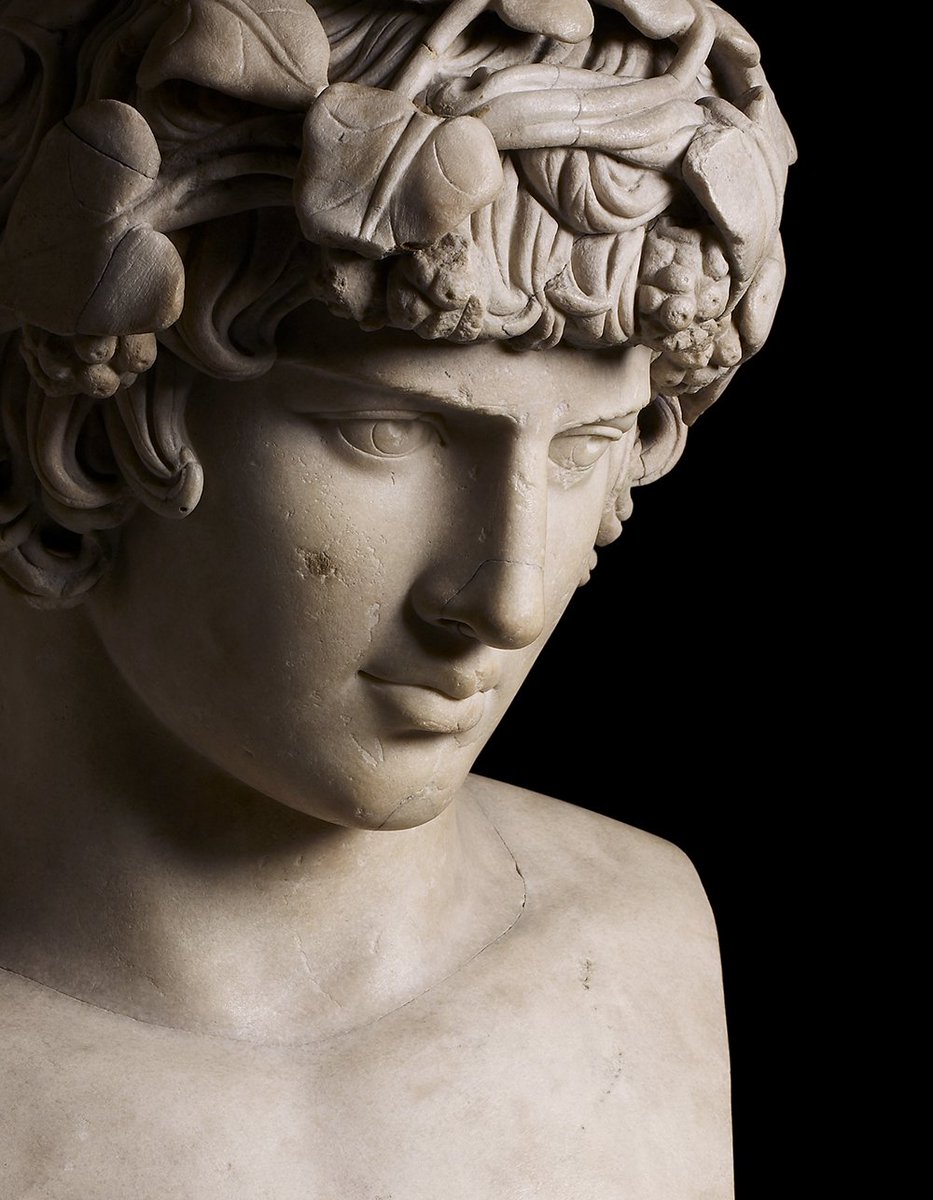
Other items which may go on tour include a bust of Antinous ... the famous Townley bust of the Roman emperor Hadrian's beloved.

Also in the tour will be a silver cup buried near Jerusalem in the 1st century AD showing men having sex and which was sold to the British Museum by a gay American art collector.

The museum has created an audio tour of the objects in London.

The museum will send a number of them out on a four-venue tour of England starting in September 2018 and running through 2019.

Fiona Shaw and Simon Russell Beale, who narrated the audio tour, said people would be surprised by the number of objects in the Museum with LGBTQ connections.

"Many might even have seen some of them on display without knowing how they relate to queer history," Beale said. "I'm thrilled that, thanks to this new audio tour, these stories will now take pride of place. Same-sex desire has existed in all societies and it is really important that the British Museum is highlighting this."


The Ain Sakhri shows a couple making love. Because the figures are ambiguous the museum does not assume they are of different sexes.

The figurine, which was found in a cave in the Judean desert, was made by hunter-gatherers known as Natufians who were among the first people to domesticate sheep and goats. Whoever carved it has ensured that its shape is phallic but the genders are not clear.

Other objects going on the tour, which begins in Oxford and goes on to Nottingham, Bolton and Norwich, include an ancient Greek vase depicting Sappho; etchings of gay sex by David Hockney, inspired by the poems of C P Cavafy; and a deck of cards depicting drag queens, produced in Japan in 1997.

The touring show is an expanded version of the museum's Desire, love, identity: Exploring LGBTQ histories display, which was staged last year.


The audio tour will offer further insight into the 1st Century AD silver drinking cup, known as the Warren Cup after the 19th-century gay Bostonian collector NED WARREN, who is a Saint of Antinous. 

He saw the cup as the "holy grail" of gay history because it showed the existence and acceptance of homosexuality long ago.

The cup will be part of on-site tours at the British Museum in 2019 ... the 50th anniversary of John Wolfenden becoming its director. Wolfenden chaired the committee whose landmark 1957 report recommended the decriminalisation of homosexuality.

Wednesday, August 2, 2017

YOU CAN COPY BRITISH MUSEUM
TREASURES THROUGH 3-D PRINTING


LONDON's British Museum is about to revolutionize the gift shop experience by allowing visitors to download and 3-D print replicas of its priceless antiques and artifacts ... including the famous Townley bust of Antinous as Dionysus shown above.

You can now buy a resin replica of the bust from the Museum's Grenville Shop or ONLINE for £300.

Given the size of the museum's collection it will hopefully be posting hundreds of artifacts for visitors to download and 3D print.

But for now there are just 14 3D models available in the first batch (pictured above).

They are offered on Sketchfab, including everything from a bust of Amenemhat III, an iconic Hoa Hakananai'a statue from Easter Island, and even an Egyptian granite sarcophagus—although you'll have to settle for a plastic version if you're making a copy at home with your 3D printer. [Sketchfab via SlashGear]

Wednesday, February 8, 2017

ANTINOUS AND HADRIAN ARE FOCUS
OF BRITISH 50-YEAR LGBT CELEBRATIONS


THE 2,000-year-old relationship between the Roman emperor Hadrian and his beloved Antinous is the focus of cultural events marking the 50th anniversary of one of the most important moments in gay British history.

In July 1967 the Sexual Offences Act finally decriminalised private homosexual acts between men over 21 in England and Wales. It was a momentous, transformative moment, although it took until 1980 for the law to be changed in Scotland, and until 1982 in Northern Ireland.

Galleries and museums across Britain will celebrate the anniversary with a blizzard of exhibitions and events, with the British Museum putting on a display that shines light on the gay histories that are often overlooked or hidden in its vast collections ... "a great unrecorded history," as EM Forster put it.

The display's co-curator Stuart Frost, head of interpretation at the museum, is bringing together objects that might challenge assumptions we make when we look at items not from our time.

The project was inspired by the 2013 book A Little Gay History by Richard Parkinson (pictured above), a former curator in the museum’s ancient Egypt department, and there was a lot to go at, said Frost.

"There are so many works here … it is hard to stop, I keep finding things. Hopefully we may be able to use them further down the line," Frost said.

Among the objects going on display are a particularly impressive silver medallion of Hadrian and a coin bearing the head of Antinous.

Hadrian, who was emperor from 117 to 138 AD, was far from the only Roman emperor to sleep with boys. 

But it is the intensity of the emperor's grief when Antinous died that has always been striking to historians. 

Not much is known of Antinous’s life or how he became a favourite of the emperor, but it is known that he was an attendant during a lion hunt in Libya in 130 and that he drowned in the Nile.

The exact circumstances of his death are unknown, with one account saying Antinous had hurried into the river to purify the lion's blood by pouring some of it into the water.

Whatever happened, Hadrian was grief-stricken ... he “wept like a woman," according to the Historia Augusta ... a level of grief for a boy lover that was unprecedented.

Hadrian founded the Egyptian city of Antinopolis in the boy's memory and had him deified, while other cities queued up to produce coins with the head of Antinous as well as creating or converting statues in his honour. 

"It was a way of local cities being able to express their allegiance and sympathies to the emperor," said Abdy. "They were sucking up."

Not far from the planned exhibit are marble busts of Hadrian and Antinous that are always side by side, part of the museum's permanent display.

Visitors will be encouraged to go on a trail through the museum to find other objects that may have LBGTQ (lesbian, bisexual, gay, transgender, queer) stories.

Some of them are more obvious than others. 

For example, the Warren Cup is a Roman silver drinking vessel that many visitors look at but perhaps don't inspect closely enough to see two explicit sex scenes ... one between two teenage boys and the other a young man lowering himself on his older, bearded lover.

Visitors will also be directed to the prints gallery where curators plan to displayDavid Hockney’s series of sometimes homoerotic illustrations made for the poetry of CP Cavafy, one of the earliest modern authors to write about same-sex love.

Frost said the display, opening in May, would have objects from 9000BC to the present day. 

The oldest is a phallic stone sculpture that shows two figures making love, whose genders are open to question.

There will bfigurines from the mid-1920s made by the German artist Augusta Kaiser which shine light on her lesbian partnership with the expressionist artist Hedwig Marquardt, highlighting a biographical detail that almost slipped through the records.

The British Museum display, to be called "Desire Love Identity: exploring LGBTQ histories," is one of many exhibitions and events taking place in 2017.

In Suffolk, the years leading up to the law change will be explored through the prism of Benjamin Britten, whose lover, muse, collaborator and recital partner for 39 years was the tenor Peter Pears.

The majority of those years were before the change in the law, when homosexuality was both illegal and socially stigmatised. 

Yet their relationship was something of an open secret, said curator Lucy Walker, and Britten wrote some extraordinary works such as the 1951 all-male opera Billy Budd and the extended solo vocal work Canticle I, My beloved is mine (1947), an open declaration of love for Pears.

"Before 1967, having been together nearly 30 years, it would have been impossible for them to admit in public they were a couple, and they remained discreet on that matter even after then," said Walker.

Comparisons will also be drawn with other high-profile figures who lived lives at odds with the law. 

There are letters written by Saint of Antinous ALAN TURING, the code-breaking hero prosecuted for "gross indecency" and chemically castrated; edits of EM Forster’s homoerotic novel Maurice; and photographs of Nöel Coward and his long-term companion Graham Payn.

Queer Talk: Homosexuality in Britten's Britain will take place at The Red House, Britten and Pears’s home in Suffolk.

The biggest art exhibition is likely to be Tate Britain’s Queer British Art 1861-1967, which will include work by artists including Hockney, Francis Bacon, Dora Carrington, Duncan Grant and Simeon Solomon, the pre-Raphaelite artist who was ruined after his arrest in a public toilet.

It will also include a full-length portrait of Oscar Wilde being exhibited in the UK for the first time.

There will be numerous events across the UK. For example, the National Trust is running a "Prejudice and Pride" programme exploring the history of sex and gender diversity in its properties. 

In Liverpool, the Walker will open a show in July drawing on works in the Arts Council Collection and its own collection; and in Bournemouth, curators at the Russell-Cotes museum and gallery will work with members of the local LGBT community on an exhibition opening in May.


Saturday, July 23, 2016

TOWNLEY ANTINOUS BUST FEATURED
IN TV COMMERCIAL AIRING IN EUROPE


SOMETIMES ... when you least expect it ... Antinous can appear right there in your own living room ... on the TV screen!

Antinomaniacs in Britain could hardly believe their eyes this week when Antinous made a fleeting cameo appearance in a new television commercial for a leading European/Australian opticians firm.

The 30-second advertisement shows a night watchman drowsily making his rounds in the Classical sculpture gallery of a museum which looks a lot like the British Museum ... which is home to the Townley Antinous bust.

The guard ... who is not wearing eyeglasses ... trudges through the gallery, turning off light switches for the night, in this commercial for SPECSAVERS  opticians and eyeglasses which debuted on British television July 11th.

Without seeing clearly what he is doing, the guard accidentally breaks off the penis of a statue ... mistaking it for a light switch ... as the commercial ends with a sly suggestion that he should have gone to the opticians.

Here's the commercial ... watch for Antinous to make his commercial television close-up cameo appearance at 0:11 seconds into the video: