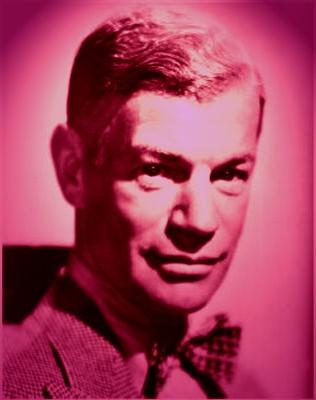
ON May 22nd the world honors Harvey Milk ... his birthday (22 May 1930) is commemorated as Harvey Milk Day around the world.
Champion of the early gay rights movement, in 1977 Harvey Milk became the first openly Gay person to be elected to the Board of Supervisors in San Francisco.
He advocated the liberation of homosexuality for the benefit of society in general, and jokingly claimed to be a gay recruiter. He was instrumental in passing the Gay Civil Rights Bill in San Francisco, which was to be his undoing.
On November 27, of 1978, Milk was murdered City Hall along with Mayor George Moscone by former City Supervisor Danny White who had resigned his office after the enactment of the bill. Dan White was acquitted of murder but sentenced to only seven years on manslaughter charges.
Following his acquittal on May 21st, 1979, riots broke during a demonstration in front of City Hall, and later, 100,000 people marched on Washington in support of Gay Rights chanting "Harvey Milk Lives!" He became the first gay saint and martyr following the movement that began at the Stonewall.
In a tape recording made one year before his assassination, as if in prophecy, Harvey Milk said, "If a bullet should enter my brain, let that bullet destroy every closet door."
For his actions, for his life, for the changes that he effected, and for the love that continues to burn for him in the memory of his gay, lesbian and transgender children, we priests of Antinous recognize and sanctify Harvey Milk as a Heroic Saint and Martyr.
Friday, May 22, 2026
HARVEY MILK, SAINT OF ANTINOUS
Thursday, May 21, 2026
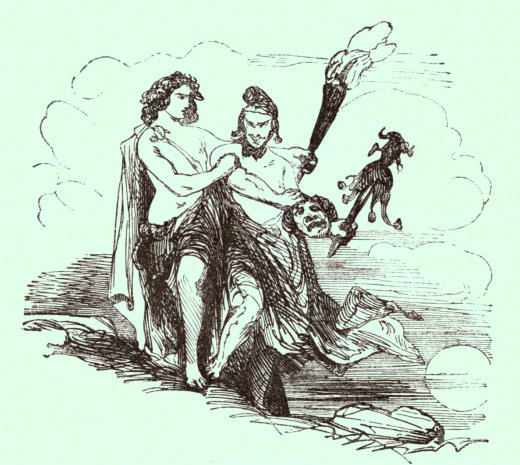
CASTOR AND POLLUX
TWIN GODS OF HOMOSEXUALITY
TODAY the Sun enters the Sign of Gemini — the sign of the Twins Castor and Pollux, Gods of Homosexuality. This is the zodiac sign which ushers in a special sacred time in the Religion of Antinous, for this is the time of year when the STAR OF ANTINOUS rises, after having been hidden below the horizon since the Death of Antinous at the end of October.
We honor the Dioscuri who were born as triplets with the beautiful Helen as their sister. The mother of the three was Leda who was seduced by Zeus who came to her in the form of a swan. Leda gave birth to an egg from which emerged Castor, Pollux and Helen.
The photo above shows the Prado's Ildefonso Group, twin statue of Castor and Pollux, with a marble head of Antinous "restored" to the left figure.
The identical brothers were inseparable, and had a deep affection for one another, for which reason they were often worshipped as gods of homosexuality. Helen was constantly being abducted and in need of rescue, which the brothers were usually successful in accomplishing, however, her beauty was eventually to lead to the Trojan War.
Castor was a skilled horseman, and Pollux was an unconquerable boxer. They took part in the voyage of the Argonauts, and with Orpheus they calmed a storm, for which reason they were worshipped as the protectors of sailors.
Later in the voyage, Castor was killed. Pollux was so overwhelmed that he begged Zeus to accept his life in exchange for his brother's.
Out of compassion, Zeus immortalized Castor and proclaimed that Pollux would spend half the year in the underworld and half the year in heaven with his brother.
Together they were placed in the sky as the sign of Gemini.
The Divine Twins miraculously appeared in Rome to announce the victory of the Republic over the allies of the last king by watering their horses in the Fountain of Juturna in the Forum.
Flamen Antonius has this further insight into Castor and Pollux:
"The sacredness of the Twin Gods, with their third twin sister Helen is found in Norse Mythology as the Alcis and as the twins Frey and Skirnir with their third twin sister Freya.
"The symbolism of brotherly love, and of sacrificing one's life for the immortality of a brother is at the heart of the Religion of Antinous, and is an example of the sacrifice that Antinous is said to have committed for the prolongation of the life of Hadrian. The Dioscuri are Antinous and his "rival" Aelius Caesar, and they are also seen in the two brothers of Hadrian's court, Macedo and Statianus Caesernius, who were servants, protectors, confidants, lovers, friends, witnesses and first priests of Antinous.
"The Sacred Star of Antinous rises during the sign of the brothers Castor and Pollux."ancient egypt,ancient greece,ancient rome,antinoo,antinoos,antinous,antonyus subia,antonyus subia quotes,classical god,gay god,gay spirituality,
THE BIRTH OF PLATO
SAINT OF ANTINOUS
SAINT OF ANTINOUS
ON May 21st the Religion of Antinous honors Plato, Saint of Antinous, because May 21st is Plato's birthday, and no worshipper of Antinous could possibly forget HIS birthday.
The greatest of all western mystics and philosophers was born on this day in the year 427 BC. He was originally named Aristocles, but was called Plato by one of his teachers because of the breadth of his shoulders and of his speech, and we might also say because of the magnitude of his legacy of wisdom.
He was a follower of Socrates and the majority of his works are written as Dialogues of Socrates, wherein Plato elaborates his vision of the Universe, the inner workings of mankind, the complexities of human relationships, and the virtues of civilization.
All we know about Socrates is in reality only what Plato has told us of his teacher. Out of loyalty, Plato gave all personal credit to the wisdom of his divine teacher.
Plato founded the Academy in Athens that was dedicated to the love of wisdom and to the perfection of the minds and souls of young men. The image above is a mosaic from Pompeii showing Plato and his academy assembled under his famous olive tree.
Plato studied Pythagoreanism in Italy and made further speculation into the mathematical mysticism of the first philosopher thereby creating the model upon which western monotheism is based. The Platonic system was essentially a unification of the social inquiry of Socrates with the cosmic ramifications of the teachings of Pythagoras.
Here is how Flamen Antinoalis Antonius Subia explain's the significance of Saint Plato:
"In the vision of Love that Plato expounded, Venus Urania, Celestial Love, is glorified as highest form of human affection, above the earthly requirements of procreation. The love between two men, what is innocently called Platonic Love, was considered by Plato to be the most divine form of relationship.
"Hadrian, in all ways the most Platonic of all Emperors, the veritable manifestation of the Philosopher King as glorified by Plato in The Republic, was demonstrating the meaning of Venus Urania, for all the world to see, in his passion for Antinous.
"For the beautiful light in which Plato illuminated the inner nature of homosexual love, he is venerated as a divine Saint of the Religion of Antinous."
Wednesday, May 20, 2026
THE SACRED BULL HUNT 2026
By Flamen Antinoalis Antonius Subia
Another part, which is in the ancient record and therefore can be regarded as biographical, is that he was a hunter...on horseback...and perhaps on foot...able to chase down wild animals, and kill them with a spear.It is these wild forces that we must face, if we are ever to regard ourselves as Men.
AS THE BEES MYSTERIOUSLY DISAPPEAR
WE REMEMBER ANTINOUS-ARISTAEUS
AS we celebrate World Bee Day on May 20th, we mourn the fact that a mysterious malady is wiping out as many as half of the beehives needed to pollinate much of produce in North America and many other parts of the world.
This is a crisis of mythic proportions ... in the truest sense of the word. In Classical Mythology the world's bees all vanished ... and it took the daring plunge of a brave Hero to find the divine powers to bring the bees back ... and to save mankind.
It is all there in Virgil's version of the story of Aristaeus (Aristée/Aristaios).
As this statue in the Louvre shows, Antinous was identified by the Ancients with Aristaeus ... they both descended into a river and emerged with godly powers.
Aristaeus was the son of Apollo and the river-nymph Cyrene and his assignment on the earthly plane was to teach mortal humans the art of farming and cultivating crops and tending livestock and keeping bees.
Honey was practically a form of ambrosia, or at least the nearest thing to ambrosia that mortal men had. It was the job of Aristaios to teach men how to cunningly harvest honey without being stung.
But Aristaeus had inadvertently caused the death of Eurydice by causing her to tread upon a venomous serpent. Her death and Orpheus's attempt to bring her back to the earthly plane were the origins of the Orphic Mysteries.
Shortly after Eurydice died, the bees which Aristaeus had been nurturing all began dying of a unexplainable cause. Nothing he could do seemed to prevent them from dying and soon they were all gone and humans were deprived of honey, beeswax, mead and the many other products which bees provide to man, not to mention the fact that, without bees, there was nobody to pollinate plants. The situation was dire.
Here's what Bulfinch writes, quoting Virgil:
"Aristæus, who first taught the management of bees, was the son of the water-nymph Cyrene. His bees had perished, and he resorted for aid to his mother. He stood at the river side and thus addressed her: 'O mother, the pride of my life is taken from me! I have lost my precious bees. My care and skill have availed me nothing, and you my mother have not warded off from me the blow of misfortune.'
"His mother heard these complaints as she sat in her palace at the bottom of the river, with her attendant nymphs around her. They were engaged in female occupations, spinning and weaving, while one told stories to amuse the rest. The sad voice of Aristæus interrupting their occupation, one of them put her head above the water and seeing him, returned and gave information to his mother, who ordered that he should be brought into her presence.
"The river at her command opened itself and let him pass in, while it stood curled like a mountain on either side. He descended to the region where the fountains of the great rivers lie; he saw the enormous receptacles of waters and was almost deafened with the roar, while he surveyed them hurrying off in various directions to water the face of the earth.
"Arriving at his mother’s apartment, he was hospitably received by Cyrene and her nymphs, who spread their table with the richest dainties. They first poured out libations to Neptune, then regaled themselves with the feast, and after that Cyrene thus addressed him: 'There is an old prophet named Proteus, who dwells in the sea and is a favorite of Neptune, whose herd of sea-calves he pastures. We nymphs hold him in great respect, for he is a learned sage and knows all things, past, present, and to come. He can tell you, my son, the cause of the mortality among your bees, and how you may remedy it.'"
The story goes on to say a river nymph escorted Aristaeus to the cave of Proteus where he subdued the cantankerous old prophet (who was a shape-shifter and tried unsuccessfully to elude Aristaeus by changing form). Aristaeus told him of his plight and wanted to know the cause of this misfortune and how to remedy it. Bulfinch writes:
"At these words the prophet, fixing on him his gray eyes with a piercing look, thus spoke: 'You receive the merited reward of your deeds, by which Eurydice met her death, for in flying from you she trod upon a serpent, of whose bite she died. To avenge her death, the nymphs, her companions, have sent this destruction to your bees. You have to appease their anger, and thus it must be done: Select four bulls, of perfect form and size, and four cows of equal beauty, build four altars to the nymphs, and sacrifice the animals, leaving their carcasses in the leafy grove. To Orpheus and Eurydice you shall pay such funeral honors as may allay their resentment. Returning after nine days, you will examine the bodies of the cattle slain and see what will befall.'
"Aristæus faithfully obeyed these directions. He sacrificed the cattle, he left their bodies in the grove, he offered funeral honors to the shades of Orpheus and Eurydice; then returning on the ninth day he examined the bodies of the animals, and, wonderful to relate! a swarm of bees had taken possession of one of the carcasses and were pursuing their labors there as in a hive."
So there we have it! Even the most illiterate and ignorant peasant would know the story of Aristaeus and the bees and the plunge into the river to unravel a Sacred Mystery. Aristaeus survived the plunge and emerged with Secret Knowledge which was of a great service to mankind.
For without bees to pollinate orchards and crops, mankind can scarcely survive ... a fact which has come home to haunt us today as bee populations dwindle worldwide and food riots rage in developing countries.
Ancient peoples, even those who could not read or write, could look at the statue of Antinous-Aristaeus and immediately see the Sacred Symbolism ... Like Aristaios, Antinous is a god who took the plunge into a river and who emerged with knowledge of Sacred Mysteries.
Wearing a sun hat, carrying a farm tool and holding an olive sprig, Antinous-Aristaeus symbolizes the union of sunshine and water (Apollo/Cyrene) combined with ingenuity and hard work and the ability to dive into the spiritual depths ... defying death ... and to emerge with a miracle which benefits all humankind.
Tuesday, May 19, 2026
PETER WILDEBLOOD
SAINT OF ANTINOUS
SAINT OF ANTINOUS
ON May 19th, the Religion of Antinous honors our Saint Peter Wildeblood, a British journalist, novelist, playwright and gay-rights campaigner, who was born on this day in 1923.
He became one of the first men in Britain to declare publicly that he was gay, when he was arrested and put on trial in a headline-making case in 1954.
He was sent to prison on a conviction of "conspiring to incite acts of gross indecency and buggery."
His case created such an uproar that it helped to lead to the 1960s reform of anti-gay laws in the UK.
In the uptight post-war years of the early '50s, Wildeblood had made something of a name for himself in the theatre and as a roving reporter for a major newspaper, London's Daily Mail, when he happened to meet a 23-year-old RAF corporal named Eddie McNally in Piccadilly Circus.
Although Eddie McNally was not Peter Wildeblood's type, they developed a relationship over time. In the summer of 1952 they arranged to go on holiday together at Edward Montagu's beach hut on the English coast. John Reynolds, who was also an airman and a friend of Eddie McNally, also joined them.
About 18 months later, on Saturday, January 9, 1954, Peter Wildeblood was arrested at his home and his house was searched. He was charged with conspiring with Edward Montagu and Michael Pitt-Rivers to incite Eddie McNally and John Reynolds to commit indecent acts.
The police tipped off the press and the story was headlined in all the Sunday newspapers the next day. Eddie McNally and John Reynolds became witnesses for the prosecution.
The media went on a feeding frenzy and his picture was plastered all over the front pages for weeks. One paper retouched his photos to make it appear that he was wearing lipstick. He was vilified in public. He later described one incident when a woman recognized him being driven past in a vehicle.
"That night, a woman spat at me," Wildeblood wrote later. "She was a respectable looking, middle-aged, tweedy person wearing a sensible felt hat. She was standing on the pavement as the car went by. I saw her suck in her cheeks, and the next moment a big blob of spit was running down the windscreen.
"This shocked me very much. The woman did not look eccentric or evil; in fact she looked very much like the country gentlewomen with whom my mother used to take coffee when she has finished her shopping on Saturday mornings. She looked thoroughly ordinary, to me. But what did I look like to her? Evidently, I was a monster."
What so troubled the decent people of the day was not that homosexual practices went on — everybody knew they always had and always would — but that anybody would openly declare himself to be "a homosexual."
He was in the news constantly until his conviction and sentencing to 18 months in prison. Because he was (understandably) depressed, he was considered suicidal and was transferred to a dire hospital for the criminally insane where the squalid conditions affected not only his mental health but also his physical health.
He was released after 12 months and immediately launched a personal crusade to overturn anti-gay sex laws in Britain. He lobbied in Parliament and wrote articles and a book entitled Against the Law which outlined how gay people can be entrapped and harassed in their own homes for consensual activity among adults which does not affect anyone else.
His three main points were: homosexuality between consenting adults in private should not be illegal, that prison only encourages homosexuality, and that prison hospitals were inhumane.
While writing this he bought a small drinking club in Soho which attracted a mixture of types on the fringes of society. This provided material for his fictional autobiography about the club, A Way Of Life.
It was a surprise success and encouraged him to write more novels and plays which were hits on stage in London's West End in the late 1950s. In the '60s he became a well-known TV scriptwriter and producer. In the '70s he was lured by Canadian television with a lucrative contract, and emigrated to Canada, where he adopted Canadian citizenship and was responsible for numerous hit productions over the next 16 years.
When he retired in the 1980s, he went to live in a wooden Edwardian cottage in Victoria on the western coast of Canada which had a stunning view over the Juan de Fuca Straits to the Olympic Mountains above Seattle. He suffered a series of debilitating strokes in the mid-'90s which left him speechless and quadriplegic. He learned to communicate via a computer using movements of his chin. He suffered a final stroke and died November 13, 1999, at the age of 76.
In saluting Saint Peter Wildeblood, the Religion of Antinous honors the beacon of courage and hope which he represented in an age of darkness and despair for gay men everywhere. Everyone advised him to remain quiet, and yet he chose to speak out. He did not choose to be exposed but, placed at the mercy of events, he chose to become their master.
His book was a courageous act of defiance against the kind of injustice which the straight world called justice.
"Very faintly," he wrote, "as though at the end of a tunnel, I could see what I must do. I would make a statement ... I would simply tell the truth about myself ... I would be the first homosexual to tell what it felt like to be an exile in one's own country. I might destroy myself, but perhaps I could help others."
Monday, May 18, 2026
TODAY IS THE FESTIVAL OF ANTINOUS
IN HIS GUISE AS PAN AND CERNUNNOS
Sunday, May 17, 2026
NEW BOOK EXPLORES PESSOA'S
FASCINATION WITH ANTINOUS
WE are are proud to announce that Francisco Acedo Fernández, historian, writer and researcher, has written an extraordinary new book: "La Belleza Inútil. El Antinoo de Fernando Pessoa" (The Useless Beauty. Fernando Pessoa's Antinous), published by The Golden Pelican Group.
The book explores Fernando Pessoa's profound fascination with Antinous as a symbol of sacred beauty, idealized youth, melancholy, memory, and spiritual transcendence. It approaches the subject from literary, symbolic, historical, and aesthetic perspectives, examining the unique place occupied by Antinous within Pessoa's intellectual and poetic universe.
The volume also includes the complete text of Fernando Pessoa's poem "Antinous" in its original English version, together with its Spanish translation.
The work is currently available:
— in paperback in Spanish
— in ebook format both in Spanish and English
All editions are available worldwide through Amazon.
https://thegoldenpelicangroup.com/
https://www.amazon.es/Belleza-In%C3%BAtil-Ant%C3%ADnoo-Fernando-Historical/dp/B0FM88PBL9
https://www.amazon.es/Useless-Beauty-Fernando-Antinous-Historical-ebook/dp/B0GX3241JN
We highly recommend this book.
TODAY IS INTERNATIONAL DAY AGAINST
HOMOPHOBIA, TRANSPHOBIA AND BIPHOBIA
THE International Day Against Homophobia, Transphobia and Biphobia is observed on May 17 and aims to coordinate international events that raise awareness of LGBT rights violations and stimulate interest in LGBT rights work worldwide.
Common actions include large-scale street marches, parades and festivals. In Cuba, for example, Mariela Castro has led out a huge street parade in honor of May 17 for the past several years.
In Chile in 2013, 50,000 people took to the streets to mark May 17, and the VIII Santiago Equality march.
The main purpose of the May 17 mobilisations is to raise awareness of violence, discrimination, and repression of LGBT communities worldwide, which in turn provides an opportunity to take action and engage in dialogue with the media, policymakers, public opinion, and wider civil society.
One of the stated goals of May 17 is to create an event that can be visible at a global level without needing to conform to a specific type of action.
Saturday, May 16, 2026
THE RISE AND FALL OF ELAGABALUS
ROME'S TRANSGENDER TEEN EMPEROR
ON May 16th in the year 218 AD, Elagabalus became emperor of Rome, a transgender teen emperor who reigned only four years before being assassinated on March 11 of 222 AD.
Imperator Caesar Marcus Aurelius Antoninus Augustus was born on an unknown date in the winter of 204 AD in the city of Emesa in Syria.
His birth name was Varius Avitus Bassianus, and he is believed to have been the son of Caracalla, for which reason he was declared Emperor by the Legions of Syria during an uprising against the short-lived Emperor Macrinus who had assassinated Caracalla and taken the throne.
Varius Bassianus was only 14 years old when he became sole ruler of the Roman Empire and took the name of Antoninus. He was the last Emperor to bear the sacred name of the most glorious rulers of the world, the Antonines. He is known to history as Elagabalus, because he was from birth the high priest(ess) of the androgynous sun deity Elagabal.
He brought his strange, phallic religion to Rome, and very shortly began to impose Elagabal, going so far as to nullify all other cults and force the Romans to accept his one god. It is even claimed that he closed and demolished the temple of Antinous at Tibur and perhaps others, but this is rumor.
What Elagabalus is famous for is that he was an extreme homosexual phallus worshipper with an insatiable fondness for chariot racers who he often elevated to the highest positions of authority simply based on the size and grace of their penises. He is criticized by ancient historians for portraying himself as Venus on Mount Ida, and allowing himself to be sodomized on stage by his chariot racers in the roles of various gods in full view of an audience.
History is slanted by anti-tranny prejudice. Elagabalus is recorded as having been one of the most infamous and degenerate figures in Roman history.
This despite the fact that he was not particularly cruel or demonstrably mad. He simply offended the sensibilities of later historians ... particularly Victorian historians who were appalled by the fact that a trans teen had been acclaimed emperor of Rome.
Elagabalus, devoted to the androgynous god Elagabal, made it his priority as emperor to demote all others gods and goddesses to the position of servants to the principal deity. A black stone phallic representation of the god was processed through the streets of Rome to the temple annually.
Many of the sacred symbols of other religions were moved to the temple of Elagabal, including those of Jews and Christians. To persuade followers of other deities to worship Elagabal, the emperor participated in the rituals of several other religions. On a daily basis animal sacrifices were performed, consistent with the practices of many of the religions.
Victorian historians record Elagabalus' life as scandalous, yet an examination of their remarks reveal a troubled trans youth struggling with his identity.
"Not only was he bi-sexual, but also a transvestite. He would go to the taverns at night wearing a wig, woman's clothes and makeup and ply the trade of a prostitute. This activity only ended when he met Hierocles, a Carian slave, and became his wife. Hierocles was even permitted to beat the emperor when displeased, as any man might beat his wife. Even more scandalous Elagabalus not only acted and dressed like a woman, but he wanted to be physically transformed into one. He asked his physicians to contrive a vagina for him, promising huge rewards for success."
In other words, he was a transgender teenager who had the power and money at his disposal to create the gender-bending reality he desired to live in.
At the age of 14, in 218, Elagabaltus, a zealous believer, declared a religious initiative giving Elagabal precedence over all other gods, even Jupiter himself.
The god was also to have a consort. Pallas Athena was the first choice, a goddess tended by the Vestal Virgins. As part of his strategy Avitus married one of the vestals. When Romans balked at the violation of a vestal virgin, however, he opted for the symbolic marriage with Urania, a moon goddess.
His attempt to unify Rome under one religion met with strong resistance and did nothing to moderate his unpopularity. In the very year that Elagabalus became emperor the Third Legion, which had placed him in office, attempted to replace him with Verus, their commander. The attempt failed. Over time, subsequent attempts by the Fourth Legion, by the fleet, and by a pretender named Seleucus also failed.
But as unpopular as he was with the nobility and commanders of the Legions, he was not at all unpopular with the plebs, upon whom he lavished gifts and games. As emperor he had a Temple built to Elagabal, restored the Flavian Amphitheatre (the Colosseum) that had been damaged by fire and completed the construction of the public baths of Caracalla in the Vicus Sulplicius. He also had built a palace complex, the Horti Variani, with an amphitheatre, a circus, a bath, and audience hall.
His most famous projects, however, were the temple of Elagabal (the Elagaballium) on the Palatine hill and another such temple on the southeastern edge of the city. From these temples the emperor delivered largesse to crowds that gathered below.
None of his works, or gifts to the people, were sufficient to offset his reputation among the elite, tarnished by his promiscuous behavior with men and women. Regardless, provided with almost absolute power one wonders, wouldn't most teenage boys be self- indulgent? Many of the adult emperors did no less.
Many legends have arisen about the decadent lifestyle of Elagabalus, including the tall tale that one of his palace orgies was the scene of an inadvertent massacre when so many flower petals were showered upon the banquet guests that dozens of people suffocated to death as they reclined on their couches.
A colossal, wall-sized painting of this scene by Lawrence Alma-Tadema shocked and titillated Victorian viewers.
As the young emperor's popularity dwindled his mother, Julia Soaemias, and other supporters recognized that the royal family was in danger of their lives. Rome had a tradition of murdering unpopular emperors, and sometimes their adherents as well.
In hopes of rescuing the regime his close family and supporters induced Elagabalus to adopt his cousin Bassianus Alexianus, a young man popular with the praetorian guard, and name him Caesar, heir to the throne.
The scheme backfired in that Julia Mamaea, Alexianus's mother, was as ambitious as Julia Soaemias and desired to see her son emperor as quickly as possible. Mamaea, playing on the praetorian guard's contempt for Elagabalus entreated for the assassination of Elagabalus. Soaemias, discovering the adoption had created greater danger not less, urged Elagabalus to have his cousin killed lest he himself be murdered. However, no one would obey the order.
Here is where we catch up with Julia Soaemias and Elagabalus:
"Mother," spoke the young emperor, 17 years old, the glow of childhood still reflected in his eyes, "they don't understand what I want to accomplish. If they did, they wouldn't hate me."
"Child," replied Julia Soaemias, "they have more than one reason to hate you. You're obsessed with being a woman and you flaunt Roman tradition. You seek to bring down their gods and make them slaves to Elagabal. Elagabal knows I worship him as much as you, but he wants not that we place him above other gods."
"I will go to the praetorian camp and entreat with them, explain what I intend. Surely they will listen. A single god for all Rome would unify us as naught else might. Our former glory would be restored and Rome would endure forever. I will go. I will go now! The armies must be made to understand," declared the emperor, rising from his throne even as he spoke.
"If you go to the guard they are as likely to kill you as listen to you," admonished his mother.
"That is a chance I must take," he retorted, "Rome is more important than my life."
At the praetorian camp:
"All hail Nellie Ellie," sarcastically called a guardsman upon the approach of the emperor.
"Run, fear for your manhood, she comes to drain us dry," screamed another voice.
Other guardsmen laughed and joined in, a little nervously at first, after all this was the emperor of Rome, but with growing enthusiasm.
Stepping down from his chariot Elagabalus, dressed as a woman, his wig meticulously styled and his makeup artfully done, spoke in a loud voice, "I have come to discuss with you the fate of Rome."
His mother, having accompanied him stepped down beside him, on her countenance fear was plainly written. She had a bad feeling about what could happen that night and the crowd of soldiers mocking and jeering did nothing to lessen that fear.
"Alexianus would have me murdered and restore the old gods, the many religions which kept Romans apart. I have dedicated my rule to bringing our great nation together under one god, you must see the wisdom in such a venture," he called out in a loud voice, ignoring the insults and belittling remarks.
"Wisdom from a boy whore," yelled out a disgruntled soldier, "Drunk one night, boy, I had you. Was that your wisdom, Nellie Ellie?" The crowd laughed uproariously.
"I am the priestess of Elagabal. It is my place to be among my people, to suffer the worst and the best at your hands. I am also your emperor and I command you to kill my rival, Alexianus," he ordered.
His mother leaned forward and whispered in his ear, "Tread softly my son, their temper is not to be trifled with. I like not their mood."
"You have had my spear once, priestess," venomously spat a soldier near the front of those gathered. "Now have another!" As the soldier uttered the words he hurled a spear. It landed to one side, but came perilously close to hitting Elagabalus.
"I want nothing but the betterment of Rome," shouted Avitus, taking his mother by the arm and retreating to his chariot. Too late he took the reins of his spirited horses, the soldiers had already surrounded his chariot and taken control.
"You will agree to abdicate in favor of Alexianus before you leave this night, or you shall not leave," spoke up the closest of his adversaries. The army heard the words and began to chant, "Alexianus, Alexianus, Alexianus."
Enraged the youthful emperor screamed, "I am emperor. It is I who know what is best for Rome. Not you traitors. Now, let go of my horses!" With his whip he struck at the face of the nearest soldier, landing a vicious blow that brought blood.
The soldier in turn pulled Elagabalus from the chariot and stabbed him. Others joined in. The last thing Elagabalus saw before he died was the soldiers pulling his mother from the chariot,"Let my mother be," he tried to yell, but only a whisper passed his lips.
So ended the reign of the trans teenage Varius Avitus Bassinus, having ruled Rome for but four years.
He had been the first emperor to attempt to unify Rome under one god.
His gender variance, his sexual escapades while frowned on but tolerated had destroyed his credibility. After the murders, his body and that of his mother's, were dragged naked through the streets of Rome.
Finally, beheaded, both bodies were thrown into the Tiber, the punishment for convicted criminals.
Elagabalus reigned only four years, and was 18 years old when he was murdered, the same age as Antinous.
Though his character is condemned as perverse, the open phallicism that he imposed upon Rome, and the dramatic exhibition of his homosexuality warrant his deification.
Friday, May 15, 2026
IN PRAISE OF MERCURY
WE lift up our hearts to the great wing-footed God Mercury on this day in mid-May when Mercury traditionally leaves stodgy Taurus and wings his way into Gemini, his astrological home.
The Ancient Romans celebrated this cosmic event on May 15th each year with the Mercuralia festival.
Father of Antinous, son of Zeus and Maia, Mercury is the god of speed, the Lord of commerce, communication, and cunning.
He is forever young and beautiful, the patron of skilled athletes, especially runners, and yet he possesses the infinite wisdom of extreme old age.
When Mercury was one day old, he charmed Apollo by stealing the sun god's prized cattle and crafting an ingenious story to cover his tracks.
Apollo fell in love with Mercury and from that day forward became his godfather and protector, presenting him to Olympus. Zeus was so taken by his son Mercury that he made him the messenger of the gods, and placed in his hand the sacred Caduceus, the serpent-entwined rod.
Hermes (as he was called by the Greeks) was charged with escorting the souls of the dead to the underworld, and to relay messages between heaven and hell. Thus he acquired his mystic powers, which were the inspiration of the Hermits, and of their religion known as Hermeticism.
He was known to them as Hermes Tristmegistus, the "thrice-great", and was said to have taught the secret knowledge of salvation to mankind.
As Hermes of the crossroads, he was a Phallic god, whose image was a herme, or column with a bearded head and a large penis that was placed at forks in the road to protect travelers.
Mercury made love to Venus and was father of Pan, Priapus, Hermaphroditus, and of Fortuna. He was the craftiest inventor, who created the lyre, which he gave to Apollo. And he invented written language, weights and measurement.
Mercury was the god of good business, but also of dishonesty and absolute capitalism. He invented dice and was the lord of gambling and all games of chance.
Antinous was often compared to Mercury in the statues and in the artefact fragments (bust above). His powers of youth, virility and physical fitness were central parts of the Religion of Antinous. But the hermetic sages, from whom so much of the salvation of Antinous extends, deepened this fascade. He is, along with Dionysus, Apollo and Osiris, a major facet of the Spirituality of Antinous.
We acknowledge and extol Mercury, the wing-footed god, and pray to him as Antinous to run by our side and give us good fortune throughout our travels and in our communication with the divine.
Thursday, May 14, 2026
MAGNUS HIRSCHFELD
SAINT OF ANTINOUS
SAINT OF ANTINOUS
ON May 14th, the Religion of Antinous honors the life of the Father of Gay Liberation, Doctor Magnus Hirschfeld, who died on this day in 1935 (which was his 67th birthday) while in exile form his native Germany in Nice, France. He died a broken and embittered man.
A life that had started out with such lofty ambitions ended in disillusionment. He was of Jewish ancestry and began his career as a medical doctor but very soon devoted his life to the study of homosexuality.
In 1897 he founded the Scientific Humanitarian Committee, which was an organization whose publication, called The Yearbook of Intermediate Sexual Types, was devoted to the repeal of "Paragraph 175", a law passed by the Reichstag in 1869.
The work of the committee included ongoing lobbying supported by the scientific studies of Dr. Hirschfeld into human sexuality. This study culminated in the formation of the Institute for Sexual Science in 1919.
Dr. Hirschfeld spent the majority of his career writing and lecturing around the world on the nature of homosexuality and other "intermediate" sexual types, including cross dressers. The word "transsexual" was coined by Dr. Hirschfeld to describe the phenomenon that he argued was a natural extension of human sexuality.
His philosophy centered on the contention that there was a third sex, called the Uranian, which was neither male nor female, but a combination of both that was manifested in homosexuality, which was not to be considered an impure deviation, or even as an illness, but as a natural and phenomenal component of human nature.
For his work, the Nazis targeted Dr. Hirschfeld as an example of decadent Bolshevistic/Jewish influence infecting the purity of the German people, luring the Aryan race into impure and destructive perversity. He was ultimately driven into exile and burned in effigy as an emblem of evil. His institute was ransacked May 6th and his books were publicly burned in a bonfire on May 10th, 1933.
The slogan with which he began his speeches, "Uranians of the World, Unite!" was not to be realized until our own time. For his courage and his career of some thirty years, all of which was spent in tireless devotion to the cause of Gay Liberation, we venerate Saint Magnus Hirschfeld.
Wednesday, May 13, 2026
WE OFFER GARLANDS OF FLOWERS
AT THE FESTIVAL OF NEPTUNE
Tuesday, May 12, 2026
ΑΝΤΙΝΟΟΙ ΗΡΟΙ
(TO ANTINOUS THE HERO)
HERE IS an Antinous image rarely seen, but which I love.
Let me first call attention to the wonderful way that his name is written, combining the second two letters.
I love it...too bad it has been defaced...because I love the body and the stance.
And I would say that this is the only Antinous shown holding a spear. Historical record states that Antinous hurled an adamantine-tipped spear at a man-eating lion in Egypt ...
It was found in the ancient Roman stadium in the city of Plovdiv in Bulgaria, called Philippopolis in Roman times.
Games were held in Philippopolis like those in Greece. The games were organized by the General Assembly of the province of Thrace.
This marble slab was found during excavations at the stadium proving that there were games celebrating Antinous. Games in honor of Antinous were held in ANTINOOPOLIS and in numerous other cities in the Eastern Empire.
This votive tablet dedicated to Antinous is exibited in the PLOVDIV ARCHAEOLOGICAL MUSEUM.
The inscription on the slab reads:
On a number of coins of Antinous, he is honored as a hero. Syncretism of Antinous with locally relevant heroes of various types is certainly a likely thing to have occurred.
Even Hadrian himself honored Antinous as a hero in at least one location: the temple founded in Socanica, Dalmatia (modern Croatia), which was co-founded with his adopted heir, Aelius Caesar, in 136 AD.Of the various classes of divine being that existed for the Greeks, heroes are an interesting option. Gods are gods, and demigods are often born of a god and one mortal parent.
Many heroes seem to have started out as strictly mortal. Whatever the cultic or theological reality may be in each individual case, perhaps the main distinction is that most gods have a timeless and almost eternal quality about them, whereas heroes have a beginning and an end in death, but a very glorious afterlife.
Some heroes such as Hercules were eventually deified. The same happened in the case of "Antinous the Hero," who underwent apotheosis and became "Antinous the Good God."
There always seems to be something new to learn about Antinous.
There always seems to be another image, another bust, even another statue, such as the "Dresden Antinous" shown here, which Priest Julien and I were honored to see at the GETTY VILLA MUSEUM, where it was painstakingly restored before being returned to Germany...
There could well be others hidden away in private collections ....
Sunday, May 10, 2026
THE TWO LOVERS OF ANTINOOPOLIS
ON MAY 10th the Religion of Antinous honors two men we call the Two Lovers of Antinoopolis who lived in the Sacred City of Antinoopolis and who worshiped the Beauteous Boy and whose joint portrait is one of the great mysteries of Egyptology.
This round portrait, called a "tondo" because of its circular format, was used as a face plate on a mummy. The vicinity of Antinoopolis and the Fayoum Oasis region is famous for hundreds of such mummy portraits which give us a priceless look at how the residents of the Sacred City actually looked. It is believed these were portraits which had hung in people's homes and which were interred with the deceased, as a reminder to their Ka about who they were in mortal life.
The tondo is unique, though, because it shows two faces. Archaeologists have no explanation as to why anyone would want the face plate on a mummy to show two men's faces. The conventional explanation is that they were perhaps brothers and when one of them died, his surviving brother insisted on burying him with their joint portrait to show his fraternal love.
But one glance at the portrait shows that the two men bear little resemblance to each other.
Even more striking is the difference in skin coloring. Throughout Egyptian art, males were portrayed as having typically ruddy-brown skin and girls and women as having creamy colored skin ... that was the iconic rule in Ancient Egyptian art. The skin colors do not represent the ACTUAL skin tones of the people, just as the idealized features of pharaohs don't reflect how they actually looked.
In Ancient Egyptian art, even if two individuals appear to be identically dressed with wigs and flowing robes, you can distinguish gender roles by skin color.
Ruddy skin means male. Creamy skin means female.
That makes it all the more interesting to look at the Tondo of the Two Lovers, because one man has dark "male type" skin coloring and the other man has very light "female type" skin coloring. Such contrasting skin coloring traditionally was used only for married male-female couples in Ancient Egyptian art.
Even when the hairstyles and clothing are barely indistinguishable in Egyptian art, the difference in skin tones is a gender-role clue. Any Egyptian would instantly register the visual "pun" and would think it no accident.The artist who painted the Tondo of the Two Lovers appears to have been giving us a clue as to the relationship between the two men.
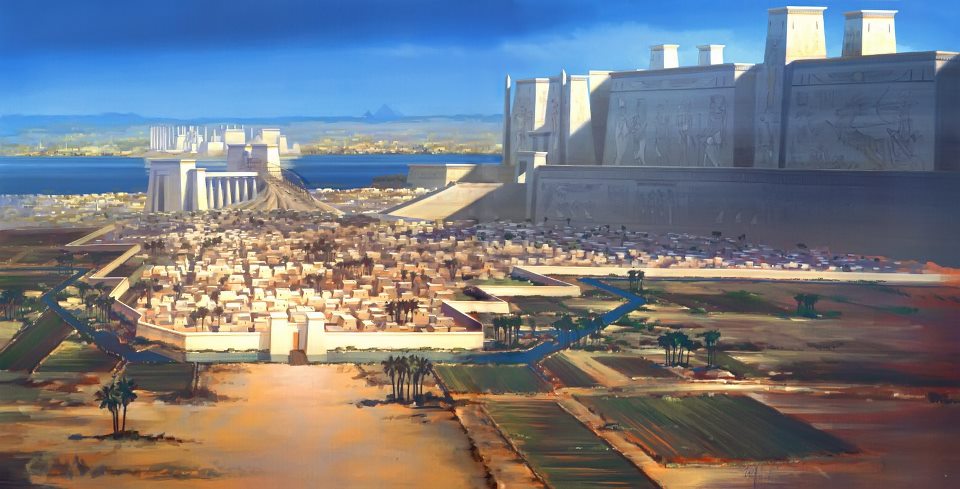
The Tondo has been dated between 130-150 AD which would place them as nearly contemporaries of Antinous, living in His Sacred City in the first bloom of the Religion of Antinous. French architectural historian Jean-Claude Golvin painted this stunning rendering of Antinoopolis at its height.
But of even more significance are the small images of Greco-Egyptian gods placed above their shoulders. The darker man is guarded by a figure which some experts identify as Hermanubis, a god of the underworld adored in the nearby city of Hermopolis. His name is variously interpreted as "Hermes/Anubis" or "Horus-as-Anubis", depending on whether you read the Latin or the Egyptian spellings.
The cult of Hermanubis was on the rise in Rome at this time and he was interpreted as a solar deity who (like Hermes/Mercury and Horus) led the dead through the darkness to everlasting sunlight. A crack runs through the figure, however, making its identity somewhat unsure. At one point Hermanubis had a large cult following in Rome itself and his face graced Imperial coins. But his cult was suppressed almost as quickly as it rose, for moralistic reasons which are hard to reconstruct.
The lighter skinned and more beautifully dressed boy is watched over by Antinous, the patron god of Antinoopolis, who grasps a Dionysiac scepter and who wears the SWTY (Two Feathers) crown of divinity symbolic of his many-faceted Sacred Powers. It is ironic that the Christians later suppressed the cult of Antinous for moralistic reasons, just as the cult of Hermanubis had been suppressed by the Romans. Was there a sexual/moral connection between the two cults?
At any rate, this makes the Tondo of the Two Lovers the only portrait painting of Antinous to have survived, and the only image of two probable followers of HIS religion.
The faint inscription beneath the image of Antinous reads 15 Pachon, which is a date in the Greek calendar that corresponds to the 10th of May. No one knows what the significance of this date might be. An anniversary, perhaps.
The younger figure is wearing a splendid red wrap held in place by an impressive amethyst brooch in a gold setting ... a family heirloom perhaps. The artist has gone to pains to render it perfectly. The embroidery on his white tunic is very fine. An oriental swastika good-luck charm is stitched into his right sleeve.
Perhaps the portrait was commissioned for the day (May 10th) when he donned his manly robes for the first time on his 16th birthday, as was the Roman custom. The peach-fuzz on his face gives him the appearance of an adolescent.
The older man (who could 30-something) stands behind him, as if symbolically showing his love and support of his young companion. He could be an older brother or uncle. He could even be the youth's father ... life expectancy was shorter then, and people married early in those days and were grandparents by their mid-30s.
But just perhaps the composition and skin-tone nuances are subtle clues by the artist that these two men shared an older-man, younger-man relationship ... a Classical Greek-style erastes/eromenos relationship ... similar to that of Hadrian and Antinous. After all, this city was founded on Hadrian's love for Antinous.
The Temple of Antinous honors these two men on May 10th ... the day which was so special to them, for reasons known only to them and to the gods they worshiped ... Hermanubis and Antinous!