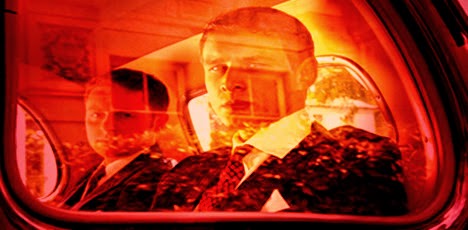
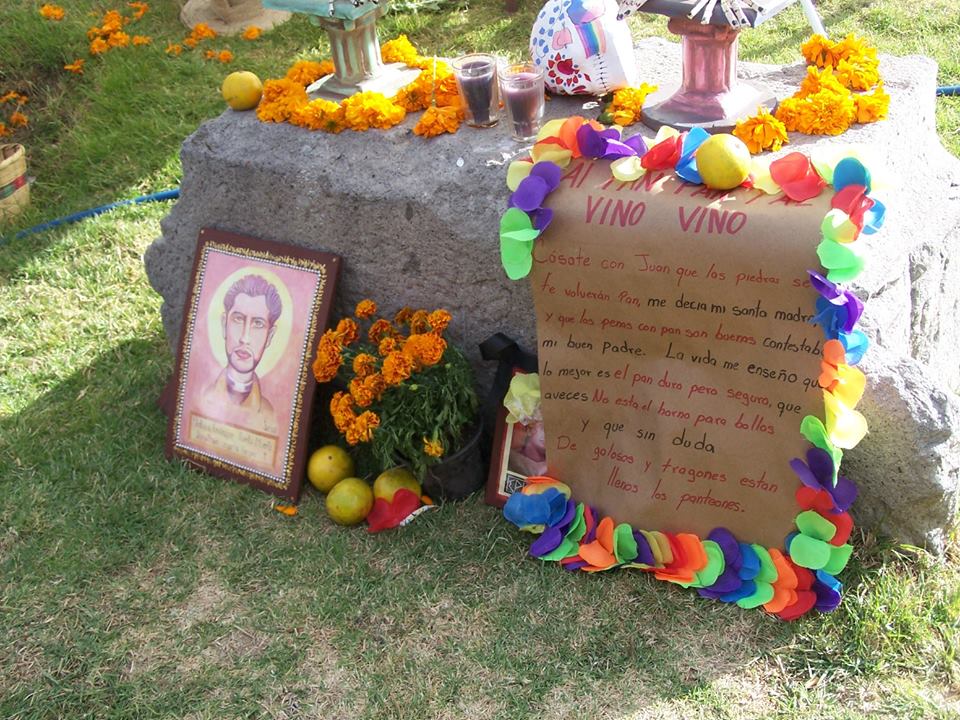
WE honor Willem Arondeus (22 August 1894 – 1 July 1943) as a saint of Antinous for his courage in standing up against hatred, intolerance and bigotry.
He was a Dutch gay non-Jewish artist and writer who led a group in bombing the Amsterdam Public Records Office in order to hinder the Nazi round-up of Jews, was executed with 12 others by firing squad.
He had started life as an illustrator, designer of posters and tapestries and a painter. In 1923 he was commissioned to paint a large mural for Rotterdam City Hall. During that same period, he illustrated poems by J. H. Leopold, Pieter Cornelis Boutens and Martinus Nijhoff. He admired the older Dutch designer Richard Roland Holst, as can be seen in his work. He did not attain much fame and lived in impoverished circumstances.
Around 1935, he gave up visual arts and became an author. The poems and stories he had written in the 1920s went unpublished, but in the year 1938 he published two novels, Het Uilenhuis ('The Owls House') and In de bloeiende Ramenas ('In the Blossoming Winter Radish'), both illustrated with designs by Arondeus himself.
The year 1939 saw the publication of his best work, Matthijs Maris: de tragiek van den droom ('The Tragedy of the Dream'), a biography of the painter Matthijs Maris, who was a brother of the Dutch artists Jacob and Willem Maris.
Two years later, Figuren en problemen der monumentale schilderkunst in Nederland ('Figures and Problems of Monumental Painting in the Netherlands') was published, again with designs by the author.
At that time in 1941, however, Arondeus was already involved with the Dutch resistance movement.
In the spring of 1941, Arondeus started an underground periodical in which he tried to incite his fellow artists to resist the Nazi occupation of the Netherlands. Earlier than others, Arondeus realized that the demand by the Nazi occupiers that all Jews register with the local authorities was not, as the Nazis claimed, for their own safety, but rather so they could be deported to the Westerbork concentration camp and from there to the death camps in occupied Poland.
In the spring of 1942, Arondeus founded Brandarisbrief, an illegal periodical in which he expressed the artist’s opposition to the edicts imposed by the Reichskulturkammer (Reich Chamber of Culture); the Nazis' cultural committee.
In 1943, Brandarisbrief merged with De Vrije Kunstenaar ("The Free Artist"), where sculptor Gerrit van der Veen was one of the editors. Together with composer Jan van Gilse; openly lesbian publisher and writer Tine van Klooster and her partner, publisher Koos Schregardus; sculptor Frits van Hall and his sister, dancer Suzy van Hall; and a number of other artists and intellectuals, the group called for mass resistance against the German occupation.
A concerted operation was underway to hide Jews among the local population, with various underground organizations preparing forged documents for Jews.
Arondeus was a member of one such group, Raad van Verzet (Resistance Council), which also included openly lesbian cellist and conductor Frieda Belinfante and typographer Willem Sandberg, who was then curator at Amsterdam's Stedelijk Museum.
Within a short while, the Nazis began to expose the false documents by comparing the names with those in the local population registry.
To hinder the Nazis, on 27 March 1943, Arondeus led a group in bombing the Amsterdam Public Records Office. Thousands of files were destroyed, and the attempt to compare forged documents with the registry was hindered.
Within a week, Arondeus and the other members of the group were arrested. Twelve, including Arondeus, were executed that July by firing squad.
In his last message before his execution, Arondeus, who had lived openly as a gay man before the war, told his lawyer these words, traditionally translated thusly: "Let it be known that homosexuals are not cowards!"
The Dutch original quote is "Zeg de mensen dat homoseksuelen niet per definitie zwakkelingen zijn!" ... literally: "Show people that homosexuals are not by definition wimps!"
Saturday, August 22, 2026
WILLEM ARONDEUS SAINT OF ANTINOUS:
'HOMOSEXUALS ARE NOT COWARDS'
Friday, May 22, 2026
HARVEY MILK, SAINT OF ANTINOUS
ON May 22nd the world honors Harvey Milk ... his birthday (22 May 1930) is commemorated as Harvey Milk Day around the world.
Champion of the early gay rights movement, in 1977 Harvey Milk became the first openly Gay person to be elected to the Board of Supervisors in San Francisco.
He advocated the liberation of homosexuality for the benefit of society in general, and jokingly claimed to be a gay recruiter. He was instrumental in passing the Gay Civil Rights Bill in San Francisco, which was to be his undoing.
On November 27, of 1978, Milk was murdered City Hall along with Mayor George Moscone by former City Supervisor Danny White who had resigned his office after the enactment of the bill. Dan White was acquitted of murder but sentenced to only seven years on manslaughter charges.
Following his acquittal on May 21st, 1979, riots broke during a demonstration in front of City Hall, and later, 100,000 people marched on Washington in support of Gay Rights chanting "Harvey Milk Lives!" He became the first gay saint and martyr following the movement that began at the Stonewall.
In a tape recording made one year before his assassination, as if in prophecy, Harvey Milk said, "If a bullet should enter my brain, let that bullet destroy every closet door."
For his actions, for his life, for the changes that he effected, and for the love that continues to burn for him in the memory of his gay, lesbian and transgender children, we priests of Antinous recognize and sanctify Harvey Milk as a Heroic Saint and Martyr.
Tuesday, May 19, 2026
PETER WILDEBLOOD
SAINT OF ANTINOUS
SAINT OF ANTINOUS
ON May 19th, the Religion of Antinous honors our Saint Peter Wildeblood, a British journalist, novelist, playwright and gay-rights campaigner, who was born on this day in 1923.
He became one of the first men in Britain to declare publicly that he was gay, when he was arrested and put on trial in a headline-making case in 1954.
He was sent to prison on a conviction of "conspiring to incite acts of gross indecency and buggery."
His case created such an uproar that it helped to lead to the 1960s reform of anti-gay laws in the UK.
In the uptight post-war years of the early '50s, Wildeblood had made something of a name for himself in the theatre and as a roving reporter for a major newspaper, London's Daily Mail, when he happened to meet a 23-year-old RAF corporal named Eddie McNally in Piccadilly Circus.
Although Eddie McNally was not Peter Wildeblood's type, they developed a relationship over time. In the summer of 1952 they arranged to go on holiday together at Edward Montagu's beach hut on the English coast. John Reynolds, who was also an airman and a friend of Eddie McNally, also joined them.
About 18 months later, on Saturday, January 9, 1954, Peter Wildeblood was arrested at his home and his house was searched. He was charged with conspiring with Edward Montagu and Michael Pitt-Rivers to incite Eddie McNally and John Reynolds to commit indecent acts.
The police tipped off the press and the story was headlined in all the Sunday newspapers the next day. Eddie McNally and John Reynolds became witnesses for the prosecution.
The media went on a feeding frenzy and his picture was plastered all over the front pages for weeks. One paper retouched his photos to make it appear that he was wearing lipstick. He was vilified in public. He later described one incident when a woman recognized him being driven past in a vehicle.
"That night, a woman spat at me," Wildeblood wrote later. "She was a respectable looking, middle-aged, tweedy person wearing a sensible felt hat. She was standing on the pavement as the car went by. I saw her suck in her cheeks, and the next moment a big blob of spit was running down the windscreen.
"This shocked me very much. The woman did not look eccentric or evil; in fact she looked very much like the country gentlewomen with whom my mother used to take coffee when she has finished her shopping on Saturday mornings. She looked thoroughly ordinary, to me. But what did I look like to her? Evidently, I was a monster."
What so troubled the decent people of the day was not that homosexual practices went on — everybody knew they always had and always would — but that anybody would openly declare himself to be "a homosexual."
He was in the news constantly until his conviction and sentencing to 18 months in prison. Because he was (understandably) depressed, he was considered suicidal and was transferred to a dire hospital for the criminally insane where the squalid conditions affected not only his mental health but also his physical health.
He was released after 12 months and immediately launched a personal crusade to overturn anti-gay sex laws in Britain. He lobbied in Parliament and wrote articles and a book entitled Against the Law which outlined how gay people can be entrapped and harassed in their own homes for consensual activity among adults which does not affect anyone else.
His three main points were: homosexuality between consenting adults in private should not be illegal, that prison only encourages homosexuality, and that prison hospitals were inhumane.
While writing this he bought a small drinking club in Soho which attracted a mixture of types on the fringes of society. This provided material for his fictional autobiography about the club, A Way Of Life.
It was a surprise success and encouraged him to write more novels and plays which were hits on stage in London's West End in the late 1950s. In the '60s he became a well-known TV scriptwriter and producer. In the '70s he was lured by Canadian television with a lucrative contract, and emigrated to Canada, where he adopted Canadian citizenship and was responsible for numerous hit productions over the next 16 years.
When he retired in the 1980s, he went to live in a wooden Edwardian cottage in Victoria on the western coast of Canada which had a stunning view over the Juan de Fuca Straits to the Olympic Mountains above Seattle. He suffered a series of debilitating strokes in the mid-'90s which left him speechless and quadriplegic. He learned to communicate via a computer using movements of his chin. He suffered a final stroke and died November 13, 1999, at the age of 76.
In saluting Saint Peter Wildeblood, the Religion of Antinous honors the beacon of courage and hope which he represented in an age of darkness and despair for gay men everywhere. Everyone advised him to remain quiet, and yet he chose to speak out. He did not choose to be exposed but, placed at the mercy of events, he chose to become their master.
His book was a courageous act of defiance against the kind of injustice which the straight world called justice.
"Very faintly," he wrote, "as though at the end of a tunnel, I could see what I must do. I would make a statement ... I would simply tell the truth about myself ... I would be the first homosexual to tell what it felt like to be an exile in one's own country. I might destroy myself, but perhaps I could help others."
Sunday, May 17, 2026
TODAY IS INTERNATIONAL DAY AGAINST
HOMOPHOBIA, TRANSPHOBIA AND BIPHOBIA
THE International Day Against Homophobia, Transphobia and Biphobia is observed on May 17 and aims to coordinate international events that raise awareness of LGBT rights violations and stimulate interest in LGBT rights work worldwide.
Common actions include large-scale street marches, parades and festivals. In Cuba, for example, Mariela Castro has led out a huge street parade in honor of May 17 for the past several years.
In Chile in 2013, 50,000 people took to the streets to mark May 17, and the VIII Santiago Equality march.
The main purpose of the May 17 mobilisations is to raise awareness of violence, discrimination, and repression of LGBT communities worldwide, which in turn provides an opportunity to take action and engage in dialogue with the media, policymakers, public opinion, and wider civil society.
One of the stated goals of May 17 is to create an event that can be visible at a global level without needing to conform to a specific type of action.
Thursday, May 14, 2026
MAGNUS HIRSCHFELD
SAINT OF ANTINOUS
SAINT OF ANTINOUS
ON May 14th, the Religion of Antinous honors the life of the Father of Gay Liberation, Doctor Magnus Hirschfeld, who died on this day in 1935 (which was his 67th birthday) while in exile form his native Germany in Nice, France. He died a broken and embittered man.
A life that had started out with such lofty ambitions ended in disillusionment. He was of Jewish ancestry and began his career as a medical doctor but very soon devoted his life to the study of homosexuality.
In 1897 he founded the Scientific Humanitarian Committee, which was an organization whose publication, called The Yearbook of Intermediate Sexual Types, was devoted to the repeal of "Paragraph 175", a law passed by the Reichstag in 1869.
The work of the committee included ongoing lobbying supported by the scientific studies of Dr. Hirschfeld into human sexuality. This study culminated in the formation of the Institute for Sexual Science in 1919.
Dr. Hirschfeld spent the majority of his career writing and lecturing around the world on the nature of homosexuality and other "intermediate" sexual types, including cross dressers. The word "transsexual" was coined by Dr. Hirschfeld to describe the phenomenon that he argued was a natural extension of human sexuality.
His philosophy centered on the contention that there was a third sex, called the Uranian, which was neither male nor female, but a combination of both that was manifested in homosexuality, which was not to be considered an impure deviation, or even as an illness, but as a natural and phenomenal component of human nature.
For his work, the Nazis targeted Dr. Hirschfeld as an example of decadent Bolshevistic/Jewish influence infecting the purity of the German people, luring the Aryan race into impure and destructive perversity. He was ultimately driven into exile and burned in effigy as an emblem of evil. His institute was ransacked May 6th and his books were publicly burned in a bonfire on May 10th, 1933.
The slogan with which he began his speeches, "Uranians of the World, Unite!" was not to be realized until our own time. For his courage and his career of some thirty years, all of which was spent in tireless devotion to the cause of Gay Liberation, we venerate Saint Magnus Hirschfeld.
Thursday, May 7, 2026
JAKOB 'ZAUBERJACKL' KOLLER
SHAPE-SHIFTING SORCERER OF SALZBURG
THE early Christians "demonized" Antinous and all other deities. In essence, we are all demon worshipers in the eyes of fundamentalist Christians.
In a perverse reversal of polarities, fanatical seekers of righteousness often become the very force of darkness and evil that they profess to fight. By identifying too strongly with one pole ("Good", "Righteousness") they call into being its opposite pole. They conjure up a "demon."
We call these demonized individuals "Anti-Saints" ... people who, through no fault of their own, are demonized by self-righteous fanatics because they are outsiders.
The Religion of Antinous has one special "Anti-Saint" ... JAKOB "ZAUBERJACKL" KOLLER, the shape-shifting gay sorcerer of Salzburg.
In one of the most horrific witch hunts of the 17th Century, 139 youths and pre-adolescent boys were put to death as werewolves and witches ... at the hands of religious fanatics determined to rid Salzburg of demons.
Orphans were common in the aftermath of the 30 Years War, and their begging and thievery became a nuisance to upstanding people of Salzburg, who "demonized" them as the apprentices of evil sorcerers ....
Zauberjackl (Magic Jake) was a 20-year-old man with red hair in the Salzburg area of Austria in the late 17th Century who "fancied the lads" and who had a reputation for hanging out with adolescents and teaching them the black arts.
Growing up in the chaos after the war, he lived on the streets under a cloud of suspicion after his mother (under torture for stealing) told investigators he was a sorcerer skilled in the black arts. But she claimed he was dead ... the authorities heaved a sigh of relief.
Then a few years later, in 1677, routine questioning of a 12-year-old crippled street urchin named Dionysus Feldner spawned a witch hunt.
Whether out of spite or fear or for whatever reason, little Dionysus claimed that the "Zauberer Jackl" (Sorcerer Jake) was very much alive. (Interrogation scene re-enacted in an Austrian TV documentary film about Zauberjackl.)
Dionysus said he had spent the previous three weeks in the company of Zauberjackl, who he claimed was engaged in very active instruction of scores of boys and young men in the arts of black magic.
Dionysus said Zauberjackl had a black cap which made him invisible. He said Zauberjackl could transform himself into a fox, wolf or any other animal at will.
He said Zauberjackl could conjure up an infestation of mice, rats and other vermin to wipe out the crops and grain storage warehouses of anybody who crossed him.
News of Dionysus's testimony swept Salzburg like wildfire, creating a frenzy of hysteria in a town that was just beginning to recover from the ravages of the 30 Years War.
Authorities began rounding up every homeless boy and young man for interrogation -- there were a lot of homeless war orphan refugees.
Any adolescent street waif or roustabout lad was immediately suspected of membership in the Zauberjackl gang.
The illustration shows boys and young men being interrogated for witchcraft in Salzburg.
In particular, those who were physically or mentally disabled were thought to be in league with "demons" -- whose mark they bore on their bodies, if not on their souls.
Under torture, and given leading questions, sobbing boys gave their interrogators the most hair-raising stories of Zauberjackl' s occult exploits.
In all, over the next 15 years, 139 young people were rounded up and executed. Of that total, 113 were males. All but 21 were under age 21. And 39 of them were under the age of 10. One-third were classified as "infirm of mind or body". Most were garrotted and their bodies burned.
The youngest, in a show of mercy, were given a quick death: Rather than slowly strangling to death, they were beheaded and then their bodies were burned.
Zauberjackl himself was never apprehended. There were in fact no reported sightings of him. Ever. People from his village insisted he had died of natural causes years earlier, but the authorities assumed they were under his magical spell.
The fact that nobody had ever seen him only added to the phantom mystique surrounding Zauberjackl.
Those high-minded officials in Salzburg evoked the gay werewolf/wizard demon named Zauberjackl. And in doing so, he got out of their control and took on a life of his own.
This woodcut shows popular methods of executing witches in Salzburg.
It's unimportant whether a 20-year-old, red-haired guy named Jakob Koller was ever actually a shape-shifting gay wizard who inculcated bad boys with the secrets of the black arts.
The sad fact is that great evil was carried out and that scores of young lives were lost. The terrible irony is that this evil was done in the name of righteousness and in pursuit of a demonic force.
A demon did indeed stalk the streets of Salzburg in the last quarter of the 17th Century ... it murdered 139 homeless street boys.
Similarly, various horrific demons are still on the loose today, all of them inadvertently evoked by self-righteous people who are grimly convinced they are carrying out the will of Allah or Jesus.
Wednesday, May 6, 2026
THE DAY THE NAZIS STORMED
THE WORLD'S FIRST GAY INSTITUTE
ON May 6th, the Religion of Antinous commemorates the book burnings and the ransacking of the world's first gay scientific institution — foreshadowing the Gay Holocaust.
On this day in 1933, the Nazis stormed and shut down the Institute for Sexual Science which had been founded by Dr. Magnus Hirschfeld in Berlin in 1919.
In collaboration with the Scientific Humanitarian Committee, the institute was founded for the research of human sexology, primarily for the purpose of repealing "Paragraph 175", which was the German Law that made homosexual acts illegal.
The work of the institute was a reflection of the widespread gay liberation that prevaled in Germany after World War I. It was specifically targeted by Adolf Hitler as one of the foremost "degenerate depravities of the Weimar Republic" which the Führer vowed to eradicate.
Next week, on May 14th, the Religion of Antinous celebrates the feast day of Saint Magnus Hirschfeld. The man called the Father of Gay Liberation died on May 14, 1935, in exile in Nice, France, an embittered and broken man.
He died on his 63rd birthday. A life that had started out with such lofty ambitions ended in disillusionment. He was of Jewish ancestry and began his career as a medical doctor but very soon devoted his life to the study of homosexuality.
In 1897 he founded the Scientific Humanitarian Committee, which was an organization whose publication, called The Yearbook of Intermediate Sexual Types, was devoted to the repeal of "Paragraph 175", a law passed by the Reichstag in 1869.
The work of the committee included ongoing lobbying supported by the scientific studies of Dr. Hirschfeld into human sexuality. This study culminated in the formation of the Institute for Sexual Science in 1919.
Dr. Hirschfeld spent the majority of his career writing and lecturing around the world on the nature of homosexuality and other "intermediate" sexual types, including cross dressers.
The word "transsexual" was coined by Dr. Hirschfeld to describe the phenomenon that he argued was a natural extension of human sexuality.
His philosophy centered on the contention that there was a third sex, called the Uranian, which was neither male nor female, but a combination of both that was manifested in homosexuality, which was not to be considered an impure deviation, or even as an illness, but as a natural and phenomenal component of human nature.
For his work, the Nazis targeted Dr. Hirschfeld as an example of decadent Bolshevistic/Jewish influence infecting the purity of the German people, luring the Aryan race into impure and destructive perversity. He was ultimately driven into exile and burned in effigy as an emblem of evil.
His institute was ransacked May 6th and his books were publicly burned in a bonfire on May 10th, 1933.
The exquisite replica frieze of Antinous was ripped off the wall and smashed to pieces.
In another ironic twist, homosexual members of Ernst Roehm's SA Stormtroopers (shown above) hurled these books to the flames in 1933 — and would themselves face persecution and death when Hitler turned against Roehm only a scant year later during the "Night of Long Knives" in June 1934 when Hitler decided that Roehm had become a liability.
The storming of the Institute for Sexual Science was the first step in the persecution of homosexuals, who were later sentenced to labor in the concentration camps, the extreme cruelty of which usually resulted in death.
The symbol of the Pink Triangle, the homosexual form of the yellow star of the Jews, was born after the fall of the forward-thinking Institute. It is the symbol of our repression, just as the rainbow flag is the symbol of our freedom. The storming of the Institute was the beginning of the dark ages which were to last until the riot at the Stonewall in 1969.
Tuesday, April 14, 2026
SIR JOHN GIELGUD
SAINT OF ANTINOUS
SAINT OF ANTINOUS
ON April 14th the Religion of Antinous honors one of our most blessed thespian saints and martyrs, St. John Gielgud, who was born on this day in 1904.
The most terrible moment in John Gielgud's life -- on which he maintained a public silence for 50 years -- was the subject of a critically acclaimed play in the London West End.
The play, entitled "Plague Over England", was about the scandal which swept across Britain in 1953 when John Gielgud was arrested by an undercover policeman in a public toilet in London.
But the 2008 play was concerned with much more than Gielgud's arrest in on the charge of "importuning for immoral purposes". The play showed the plight of gay men in the 1950s Cold War atmosphere when gays were associated with Communist espionage.
Its characters include the producer who nearly ended his career, the virulently anti-homosexual Lord Chief Justice Rayner Goddard, an American fleeing his own country's anti-Communist paranoia, and a doctor who claims to "cure" same-sex attraction with "Clockwork Orange"-style electric shock therapy.
Homosexuals had long been feared and hated in England as men who, it was believed, preyed on the innocent young, and were thus unfit to lead normal, happy lives. Until 1967, they risked prosecution for what the law called "acts of gross indecency between male persons", even in private, and could be arrested for merely showing -- in a police spy's opinion -- an intent to commit them.
Police throughout England were alert for any hints of homosexual behaviour. Just before Gielgud was arrested, two prominent high-class gay men had been uncovered as KGB spies, resulting in a further crackdown on all gay activities. The officer who arrested Gielgud was part of a Metropolitan Police squad established in 1930 that regularly lurked in central London toilets.
The year in which Gielgud came to grief in a Chelsea public convenience was a particularly dangerous one for homosexuals, as the increased frankness of the period allowed politicians, the police, and the press to profit by inflaming public hysteria, warning that a "plague" or "epidemic" of sodomy and Communism was sweeping the land.
The climate of fear was chilling to gay men who paid even the slightest attention to the news.
Gielgud, however, was, in his own words a "silly gubbins" who took no notice of anything outside of acting. On October 21, following the rehearsal for the play "A Day By the Sea", this supremely unworldly man, then 49, had a few drinks at a party and then visited a public lavatory popular with "cottagers" -- English gay slang for men who cruise toilets.
Arrested, and aware that he should give a false identity, he said he was a clerk called Arthur (his real name) Gielgud. The next day he appeared before a magistrate who did not know who he was, fined him 10 pounds, and ordered him, with the disdain and sexual ignorance of the period, to "see your doctor the moment you leave this court".
Unfortunately, a better-informed Evening Standard reporter was there, too. When that afternoon's paper hit the streets, he was on the front page.
You can imagine the shame and the terror with which Gielgud turned up at rehearsal (he had considered suicide) for the role of a bachelor diplomat whose mother worries that he is lonely and unloved.
But the company, led by his co-star, Dame Sybil Thorndike, in fact welcomed him with open arms. "Oh, John," she said, in one of the most magnificent double entendres of all time, "you HAVE been a silly bugger!"
The producer of "A Day By the Sea", however, the immensely powerful Binkie Beaumont, saw the newspaper articles and the hate mail, and worried that the public would stay away.
Yet his thoughts of firing the star were thwarted by Gielgud's brother, Val, who applied a little judicious blackmail about Binkie's very own private life.
Everyone was nervous that the audience might react with silence or even boos.
But as the curtain came down he was cheered to the rafters.
Gielgud was known for having a penchant for anonymous bathroom sex -- It's one of the reasons his knighthood (just a few months before the arrest) was postponed for years. He even had a "cruising cap" for such forays, an attempt to disguise himself so as to avert detection by fans who might recognize him.
The arrest had important consequences, and not only for Gielgud, who was told by the British embassy in Washington to forget about a planned American production of "The Tempest". because he might prove "an embarrassment".
Afterwards, the floodgates opened as the public was confronted by the disturbing fact that an extremely distinguished and beloved artist was one of the people they, in theory, despised. The fuss contributed to the Wolfenden Commission, set up the following year to study prostitution, taking on homosexuality as well. Its recommendations eventually led to decriminalisation in Britain.
While the affair broke Gielgud emotionally, he put himself back together in a way that made him better suited to a theatre in a world of greater change and upheaval.
For his talent and for his courage, the Religion of Antinous honors Saint John Gielgud as a Prophet of Homoeros.
Friday, April 3, 2026
ANTINOUS IS THE GOD OF THE GAYS
BUT WAS HE GAY IN THE MODERN SENSE?
WE are often asked whether Antinous was gay during his mortal lifetime ... truly gay, at least as we understand the complex sociological and orientation that exist today.
This stunning portrait by famed collage artist DOUG STAPLETON shows modern faces superimposed on the face of Antinous.
But was Antinous "gay" in the modern sense?
Scholars have quibbled ... especially in Victorian times ... that Hadrian and Antinous were not homosexuals in the modern sense.
Instead, they were engaged in a socially acknowledged erotic relationship between an adult male (the erastes) and a younger male (the eromenos) usually in his teens ... or so the uptight scholars argued.
These semantic nuances allowed academics to sidestep the socially loaded issue of calling some of the greatest figures in history "practicing homosexuals" ... because that might imply that homosexuality was in fact not a degenerate mental illness, but instead was perfectly normal.
Even up until the turn of the 21st Century, many academicians (mostly male) persisted in avoiding the "G" word when referring to Hadrian and Antinous.
All of that changed at a news conference in London a few years ago.
"Hadrian was gay, and we can say that now. The Victorians had a problem with it. But we can say it." Thorsten Opper, a British Museum curator of Greek and Roman sculpture shocked the stuffy world of academia when he made that statement ... at a news conference announcing the Museum's Hadrian: Empire and Conflict" exhibition in 2008.
The British Museum, that bastion of staid and conservative scholarship, signaled a paradigm shift in historical awareness of homosexuality.
The collage portrait of Antinous by artist Doug Stapleton on this page symbolizes the many layers of perception of gayness through the ages.
Our own high priest, Flamen Antonius Subia, explains the change in attitude that has taken place ... it is not so much gayness which has changed ... but rather the cultural perception of gays has changed ... not only society's perception of gays ... but more especially the perception of gayness amongst gays.
"Gay has always been and always will be, or so I feel," Antonius says. "Antinous was gay in the way that gays were in Roman times, which is different from how gays were in the 1950's, which is different from how gays are now," he says.
"Antinous represents the divine essence that we all hold in common, so yes, I believe that in his own way and for his time, Antinous was gay just like we are now."
Wednesday, March 18, 2026
CHARLOTTE VON MAHLSDORF
SAINT OF ANTINOUS
SAINT OF ANTINOUS
SAINT Charlotte von Mahlsdorf, who was born on this day in 1928, was a Berlin trans/gay who survived the Nazis and East German communists and about whose life a Pulitzer Prize winning play, "I Am My Own Woman", has been staged at theatres around the world.
The title is misleading since the original German is "Ich bin meine eigene Frau" and the word "Frau" can mean either "Woman" or "Wife".
The phrase was Charlotte's answer to her mother's question: "Don't you think it's time you got a wife?"
Charlotte was her own man and her own woman and her own husband/wife. In a long life amidst dictatorship, war and oppression of human-rights, Charlotte learned to create her own identity. We honor Charlotte as a Saint of the Religion of Antinous.
St. Charlotte, who liked to wear frumpy house dresses with a clunky handbag and a strand of pearls and matronly shoes, somehow managed to survive the Gestapo, the East German Stasi secret police and assaults by neo-Nazis. In doing so, Charlotte made serious ethical compromises along the way in order to stay alive.
Charlotte amassed a huge collection of Victorian antiques which some said came from the homes of Jewish Holocaust victims and (later) from homes of people fleeing East Germany.
But Charlotte DID stay alive in dangerous times during which others perished. Charlotte's life forces you to ask yourself what YOU would have done in similar circumstances.
After German unification, Charlotte became something of a reluctant gay icon in Germany in the 1990s. Charlotte never had any pretensions of being intellectual or a political activist.
Charlotte never quite fit in with post-Stonewall activists, who were a bit puzzled by her dowdy grand-motherliness and her passion for 19th Century Renaissance Revival style antiques. Like Quentin Crisp (also a Saint of Antinous), Charlotte belonged to another era.
But unlike Quentin Crisp, Charlotte wasn't especially witty or campy (despite her appearance) and was not an artist of the arch one-liner the way Quentin was. In appearances on talk shows, she would sit there, smiling politely, with not a great deal to say unless it was about collecting and restoring 19th Century antiques. But what she did say was eloquent in its simplicity:
People should be kind to each other and let each other get on with their lives the way they want to.
Above all, she didn't much like being a celebrity. Too many people expected things of her. She became a target for neo-Nazis, mostly drunken, youthful vandals in the 1990s. Not surprisingly perhaps, considering all she had lived through, she became somewhat paranoid towards the end of her life. In the end, she fled to Sweden where she spent her final years in virtual isolation before dying in 2002.
We honor St. Charlotte von Mahlsdorf for being someone who was not afraid to be openly trans/gay in the face of totalitarian dictatorships and police states. Someone who survived the Nazis and the Stasi secret police ... wearing a dress, a strand of pearls and a handbag.
Tuesday, March 3, 2026
MEXICO'S FIRST SAINT OF ANTINOUS
IS VICTIM OF HOMOPHOBIC VIOLENCE
WORSHIPERS of Antinous in Mexico City today solemnly commemorate the anniversary of the horrific murder of the first martyr saint of Antinous in Mexico: Jorge Fernandez Martínez, a victim of homophobic violence.
He was brutally murdered by unknown assailants near his home in the Mexico City suburb of Tultitlán on 3 March 2016.
Forensic tests showed he had been tortured, raped and asphyxiated. His broken body lay undiscovered for days.
Grieving neighbors who had known and loved him for nearly 20 years held a wake and asked for dignified funeral services conducted under the auspices of Epithimia Antinous with Pride Tultitlán Committee and Estamos Contigo.
The rites were held at the famous Shrine of Santa Muerte (Our Lady of Sacred Death) in Tultítlan led by Enriqueta Vargas.
Our sister group Epithimia Antinous at the TEMPLO DE ANTÍNOO MÉXÍCO holds an annual vigil for him during ceremonies at the sanctuary of Santa Muerte in Tultitlán near Mexico City.
Carlos Oseguera Loraca, head of the Templo, says:
Today we commemorate the anniversary of the death of our brother in Antínoo Jorge Fernández Martínez, First Saint of Antínoo in Mexico, victim of homophobic violence in the Municipality of Tultitlán, State of Mexico.
We also thank the Eclesiae Antinoi for having remember him on this date through the International Blog of Antinous the Gay God.
And we thank our brothers throughout the world who have raised their prayers for their eternal rest at the side of Antinous the God Gay.
Praised be the gods because there will be justice in this life or in the other, for the crimes of hatred against our community! And let's say together with FLAMEN ANTONIUS SUBIA:
"When Antinous died, he passed into the realm of the dead where he met with our Lord Osiris and they became one God. A single God to rule the Underworld, travel through the chambers of darkness, cross the rivers of blood, cross the lakes of fire, where the light of his beautiful heart shines like a beacon. All the souls of gays, lesbians and trans will be reunited to give them a safe exit from the kingdom of shadows. He will welcome you all in his Million Year Barque. Not a single soul will be left behind forgotten and without love. Everyone will find a place of love and peace by their side. Let us raise our voices of praise, always in this way, from now on, until the end of time ... "!
Ave Antinoo!
Friday, January 9, 2026
THE BURNING OF THE SODOMITES
ON January 10th we solemnly remember the gays who were burned at the stake in the Middle Ages..
The Heretics of the Middle Ages were the last defenders of the Gnosis, against the authority of the Catholic Church. Like the Gnostic Fathers before them, they advocated homosexuality as a sacred form of love.
When the Order of Knights Templar was disbanded in 1310, the inquisitors discovered (under torture) that Heresy, Homosexuality and Devil Worship were interrelated. They represented a united Satanic assault on the power of the Church and the stability of Christian Civilization.
Heresy infected the soul by undermining faith, Witchcraft bred hatred in the form of hexing, but Homosexuality was the vilest of the three because it infected Love, turning a man from his natural affection for a wife, and causing him to waste his seed in lecherous desire.
The homosexual was a danger because he was a threat to the perpetuation of the family and of the human race. He fostered chaos, and weakened the already tenuous position of a society hemmed in by Islam, infected with Plague, and torn apart by War. The Bible warned that any city guilty of the crime of Sodomy would be destroyed by the fire of heaven, so the solution of the Church, in order to avert god's wrath, was to burn the Sodomites.
The Gay Burning Times lasted six hundred years, seven hundred including the Nazis Holocaust (which was based on the same principles) a period of torture, murder and all out war against our kind, lasting much longer than Heresy and Witchcraft combined, which even continues to this day.
The most intense period of burning was the 1600's through late 1700's in France and England, hundreds of thousands were burned at the stake.
The word "Faggot" which means fire-log is said to have derived from the practice of piling the Sodomites upon the pyre, at the feet of the Heretics, because a Sodomite was not worthy to burn standing up.
Flamen Antonius Subia says:
We who believe in Antinous, and in the sanctity of Homosexuality, solemnly remember the cruel death of the Sodomites who burned for us. Antinous was with them, he burned by their side.
On this last day, Antinous the God redeems the souls of all those who were burned, tortured, strangled, beheaded, or otherwise executed and condemned to Hell by the Church.
That we may never forget the human sacrifice that was inflicted on our brothers and sisters, we consecrate the overthrow of the last Archon to the memory of the Heroic Sodomites who knowing that our form of Love was punishable by death, Loved as Homosexuals nevertheless, and almost willingly gave themselves to be Burned at the Stake. We pray that they will bless us with their fire in our own struggle for liberation.
Sunday, October 12, 2025
MATTHEW SHEPARD
SAINT OF ANTINOUS
SAINT OF ANTINOUS
ON this sad day we honor a young gay man who was brutally murdered: Matthew Shepard, who died at 12:53 am on Monday, October 12th, 1998.
He was brutally assaulted because he was gay, on the night of October 7, by two men who had lured him to a secluded place outside of Laramie Wyoming.
His attackers tied him to a fence, beat him and left him for dead in the freezing cold.
He was found the following evening by a cyclist.
By the time help arrived, he had slipped into unconsciousness.
The death of Matthew Shepard awakened the world to the persecution that homosexuals have endured for centuries. His beauty, youth and innocence affected everyone, and spoke for the hundreds of others who in recent years have died similar deaths without being noticed.
Matthew Shepard is a Sacred and Holy Martyr of Homosexuality, he died an innocent because he was gay. He died a death that so many others have suffered, but his death changed the world.
He was 22 years old, very near the age of Antinous and, like Antinous, his beautiful face, humble origin, and tragic death have had a great impact on the future of homosexuality in our society.
We consecrate his memory and pray for him, that he will guide and protect us in our hour of danger, and bring an end to the violence and hatred that he suffered.
Wednesday, September 10, 2025
GAY TEEN MARTYR JOÃO ANTÔNIO DONATI
FIRST BRAZILIAN SAINT OF ANTINOUS
ON September 10th we remember the brutal mutilation murder of a gay teenager on this date in 2014 in Brazil ... the first official saint of Antinous in Brazil.
The death of 18-year-old JOÃO ANTÔNIO DONATI galvanized worshipers of Antinous into proclaiming him the first martyr saint of Antinous in Brazil.
His severely beaten body was found in the city of Inhumas in the state of Goiás with his neck fractured and both legs broken and with his mouth and trachea stuffed with a plastic bag and a paper note, on which had been scrawled an anti-gay hate message saying that this is what should happen to all queers.
His horrific bruises, lacerations and contusions showed that he had put up a desperate struggle against his attackers.
On the same day that João was killed, two other gays were beaten and a transvestite was murdered in the same state. But the images of João's smiling Facebook selfies instantly touched the hearts of millions.
Outrage swept the nation, with protest marches and vigils held in numerous cities.
Brazil has the largest Antinous faith community in the non-English speaking world, and adherents of Antinous have taken the unprecedented move of proclaiming João the first Saint of Antinous in Brazil.
Brazilian Novitiate Priest DECO RIBEIRO says more than 300 LGBTIU victims of homophobic murders were reported in Brazil in 2015 alone, though the true figure is unknown.
"Hundreds more have died since then," says Deco. "Each and every one of these is a martyr who is symbolized by João Antônio Donati. He was a vibrant young man filled with all the hopes and dreams of so many his age, and who became yet another victim of homophobia in Brazil, and who so deeply touched us that we have been moved to initiate something in our country that has long been in the offing: the Declaration of Apotheosis and canonization of the martyrs of homophobia in Brazil."
Noting that anti-gay hate crimes and murders are frequent in Brazil, Deco says: "This is the first statement and official nomination amid many others that will follow continuously over time honoring the names of many victims who have died in the past and who inevitably will be murdered in the future."
Though Brazil passed same-sex marriage into law in May 2014, homophobic attacks and transphobic attacks are still common.
Friday, August 22, 2025
WILLEM ARONDEUS SAINT OF ANTINOUS:
'HOMOSEXUALS ARE NOT COWARDS'
WE honor Willem Arondeus (22 August 1894 – 1 July 1943) as a saint of Antinous for his courage in standing up against hatred, intolerance and bigotry.
He was a Dutch gay non-Jewish artist and writer who led a group in bombing the Amsterdam Public Records Office in order to hinder the Nazi round-up of Jews, was executed with 12 others by firing squad.
He had started life as an illustrator, designer of posters and tapestries and a painter. In 1923 he was commissioned to paint a large mural for Rotterdam City Hall. During that same period, he illustrated poems by J. H. Leopold, Pieter Cornelis Boutens and Martinus Nijhoff. He admired the older Dutch designer Richard Roland Holst, as can be seen in his work. He did not attain much fame and lived in impoverished circumstances.
Around 1935, he gave up visual arts and became an author. The poems and stories he had written in the 1920s went unpublished, but in the year 1938 he published two novels, Het Uilenhuis ('The Owls House') and In de bloeiende Ramenas ('In the Blossoming Winter Radish'), both illustrated with designs by Arondeus himself.
The year 1939 saw the publication of his best work, Matthijs Maris: de tragiek van den droom ('The Tragedy of the Dream'), a biography of the painter Matthijs Maris, who was a brother of the Dutch artists Jacob and Willem Maris.
Two years later, Figuren en problemen der monumentale schilderkunst in Nederland ('Figures and Problems of Monumental Painting in the Netherlands') was published, again with designs by the author.
At that time in 1941, however, Arondeus was already involved with the Dutch resistance movement.
In the spring of 1941, Arondeus started an underground periodical in which he tried to incite his fellow artists to resist the Nazi occupation of the Netherlands. Earlier than others, Arondeus realized that the demand by the Nazi occupiers that all Jews register with the local authorities was not, as the Nazis claimed, for their own safety, but rather so they could be deported to the Westerbork concentration camp and from there to the death camps in occupied Poland.
In the spring of 1942, Arondeus founded Brandarisbrief, an illegal periodical in which he expressed the artist’s opposition to the edicts imposed by the Reichskulturkammer (Reich Chamber of Culture); the Nazis' cultural committee.
In 1943, Brandarisbrief merged with De Vrije Kunstenaar ("The Free Artist"), where sculptor Gerrit van der Veen was one of the editors. Together with composer Jan van Gilse; openly lesbian publisher and writer Tine van Klooster and her partner, publisher Koos Schregardus; sculptor Frits van Hall and his sister, dancer Suzy van Hall; and a number of other artists and intellectuals, the group called for mass resistance against the German occupation.
A concerted operation was underway to hide Jews among the local population, with various underground organizations preparing forged documents for Jews.
Arondeus was a member of one such group, Raad van Verzet (Resistance Council), which also included openly lesbian cellist and conductor Frieda Belinfante and typographer Willem Sandberg, who was then curator at Amsterdam's Stedelijk Museum.
Within a short while, the Nazis began to expose the false documents by comparing the names with those in the local population registry.
To hinder the Nazis, on 27 March 1943, Arondeus led a group in bombing the Amsterdam Public Records Office. Thousands of files were destroyed, and the attempt to compare forged documents with the registry was hindered.
Within a week, Arondeus and the other members of the group were arrested. Twelve, including Arondeus, were executed that July by firing squad.
In his last message before his execution, Arondeus, who had lived openly as a gay man before the war, told his lawyer these words, traditionally translated thusly: "Let it be known that homosexuals are not cowards!"
The Dutch original quote is "Zeg de mensen dat homoseksuelen niet per definitie zwakkelingen zijn!" ... literally: "Show people that homosexuals are not by definition wimps!"
Thursday, May 22, 2025
HARVEY MILK, SAINT OF ANTINOUS
ON May 22nd the world honors Harvey Milk ... his birthday (22 May 1930) is commemorated as Harvey Milk Day around the world.
Champion of the early gay rights movement, in 1977 Harvey Milk became the first openly Gay person to be elected to the Board of Supervisors in San Francisco.
He advocated the liberation of homosexuality for the benefit of society in general, and jokingly claimed to be a gay recruiter. He was instrumental in passing the Gay Civil Rights Bill in San Francisco, which was to be his undoing.
On November 27, of 1978, Milk was murdered City Hall along with Mayor George Moscone by former City Supervisor Danny White who had resigned his office after the enactment of the bill. Dan White was acquitted of murder but sentenced to only seven years on manslaughter charges.
Following his acquittal on May 21st, 1979, riots broke during a demonstration in front of City Hall, and later, 100,000 people marched on Washington in support of Gay Rights chanting "Harvey Milk Lives!" He became the first gay saint and martyr following the movement that began at the Stonewall.
In a tape recording made one year before his assassination, as if in prophecy, Harvey Milk said, "If a bullet should enter my brain, let that bullet destroy every closet door."
For his actions, for his life, for the changes that he effected, and for the love that continues to burn for him in the memory of his gay, lesbian and transgender children, we priests of Antinous recognize and sanctify Harvey Milk as a Heroic Saint and Martyr.
Monday, May 19, 2025
PETER WILDEBLOOD
SAINT OF ANTINOUS
SAINT OF ANTINOUS
ON May 19th, the Religion of Antinous honors our Saint Peter Wildeblood, a British journalist, novelist, playwright and gay-rights campaigner, who was born on this day in 1923.
He became one of the first men in Britain to declare publicly that he was gay, when he was arrested and put on trial in a headline-making case in 1954.
He was sent to prison on a conviction of "conspiring to incite acts of gross indecency and buggery."
His case created such an uproar that it helped to lead to the 1960s reform of anti-gay laws in the UK.
In the uptight post-war years of the early '50s, Wildeblood had made something of a name for himself in the theatre and as a roving reporter for a major newspaper, London's Daily Mail, when he happened to meet a 23-year-old RAF corporal named Eddie McNally in Piccadilly Circus.
Although Eddie McNally was not Peter Wildeblood's type, they developed a relationship over time. In the summer of 1952 they arranged to go on holiday together at Edward Montagu's beach hut on the English coast. John Reynolds, who was also an airman and a friend of Eddie McNally, also joined them.
About 18 months later, on Saturday, January 9, 1954, Peter Wildeblood was arrested at his home and his house was searched. He was charged with conspiring with Edward Montagu and Michael Pitt-Rivers to incite Eddie McNally and John Reynolds to commit indecent acts.
The police tipped off the press and the story was headlined in all the Sunday newspapers the next day. Eddie McNally and John Reynolds became witnesses for the prosecution.
The media went on a feeding frenzy and his picture was plastered all over the front pages for weeks. One paper retouched his photos to make it appear that he was wearing lipstick. He was vilified in public. He later described one incident when a woman recognized him being driven past in a vehicle.
"That night, a woman spat at me," Wildeblood wrote later. "She was a respectable looking, middle-aged, tweedy person wearing a sensible felt hat. She was standing on the pavement as the car went by. I saw her suck in her cheeks, and the next moment a big blob of spit was running down the windscreen.
"This shocked me very much. The woman did not look eccentric or evil; in fact she looked very much like the country gentlewomen with whom my mother used to take coffee when she has finished her shopping on Saturday mornings. She looked thoroughly ordinary, to me. But what did I look like to her? Evidently, I was a monster."
What so troubled the decent people of the day was not that homosexual practices went on — everybody knew they always had and always would — but that anybody would openly declare himself to be "a homosexual."
He was in the news constantly until his conviction and sentencing to 18 months in prison. Because he was (understandably) depressed, he was considered suicidal and was transferred to a dire hospital for the criminally insane where the squalid conditions affected not only his mental health but also his physical health.
He was released after 12 months and immediately launched a personal crusade to overturn anti-gay sex laws in Britain. He lobbied in Parliament and wrote articles and a book entitled Against the Law which outlined how gay people can be entrapped and harassed in their own homes for consensual activity among adults which does not affect anyone else.
His three main points were: homosexuality between consenting adults in private should not be illegal, that prison only encourages homosexuality, and that prison hospitals were inhumane.
While writing this he bought a small drinking club in Soho which attracted a mixture of types on the fringes of society. This provided material for his fictional autobiography about the club, A Way Of Life.
It was a surprise success and encouraged him to write more novels and plays which were hits on stage in London's West End in the late 1950s. In the '60s he became a well-known TV scriptwriter and producer. In the '70s he was lured by Canadian television with a lucrative contract, and emigrated to Canada, where he adopted Canadian citizenship and was responsible for numerous hit productions over the next 16 years.
When he retired in the 1980s, he went to live in a wooden Edwardian cottage in Victoria on the western coast of Canada which had a stunning view over the Juan de Fuca Straits to the Olympic Mountains above Seattle. He suffered a series of debilitating strokes in the mid-'90s which left him speechless and quadriplegic. He learned to communicate via a computer using movements of his chin. He suffered a final stroke and died November 13, 1999, at the age of 76.
In saluting Saint Peter Wildeblood, the Religion of Antinous honors the beacon of courage and hope which he represented in an age of darkness and despair for gay men everywhere. Everyone advised him to remain quiet, and yet he chose to speak out. He did not choose to be exposed but, placed at the mercy of events, he chose to become their master.
His book was a courageous act of defiance against the kind of injustice which the straight world called justice.
"Very faintly," he wrote, "as though at the end of a tunnel, I could see what I must do. I would make a statement ... I would simply tell the truth about myself ... I would be the first homosexual to tell what it felt like to be an exile in one's own country. I might destroy myself, but perhaps I could help others."