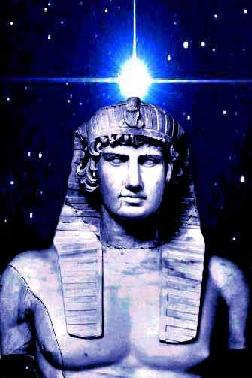
Showing posts with label antonyus subia. Show all posts

Sunday, August 30, 2026

ANTINOUS WORSHIPERS WORLDWIDE
TAKE PART IN LION HUNT CEREMONIES


ANTINOUS worshipers worldwide participated live online tonight in ceremonies commemorating the SACRED LION HUNT, the final recorded event in the brief life of Antinous ... when he and Hadrian slew a man-eating lion in Egypt in August of the year 130 AD.

Worshipers on both coasts of North America as well as worshipers in South America, Europe and Africa took part in the ceremonies originating at the Hollywood Temple of Antinous.


The skin art image shows Antinous subduing the man-eating Marousian lion in the Egyptian desert in the year 130 AD.

The SACRED LION HUNT was immortalized in poetry and in stone, showing Antinous brashly attacking the lion with his adamantine-tipped spear and wounding it ... so that Hadrian had to gallop to his rescue and dispatch the beast.

Hadrian added medallions to the Arch of Constantine showing him and Antinous with feet on the lion's neck and also making sacrifice to the great lion-killer Hercules.

Soon legend would have it that scarlet-red lotus blossoms had sprung forth from the pool of the lion's blood ... which we honor as the LOTUS MOON, the Pisces Third Quarter Moon in June.

Within a few short weeks after the Sacred Lion Hunt, Antinous himself would be dead. The Sacred Lion Hunt is the last recorded event in His short life.

Flamen ANTONIUS SUBIA celebrated the liturgical ritual in Hollywood.

Antonius noted that the brave may not live forever, but the cautious do not live at all. Tonight's rituals and meditations were aimed at enabling participants to traverse the road between who they think they are and who they can be. The key is to set forth on the journey ... with adamantine-tipped spear in hand ... galloping forward.

Monday, August 24, 2026

THE HISTORY OF THE ROSY LOTUS
OF ANTINOUS THE GAY GOD


When Emperor Hadrian visited Alexandria,
the poet Pancrates presented him
with a beautiful lotus flower.


Awestruck by the magnificent rosy-red petals,
Hadrian agreed to name the flower
after his beloved Antinous.


Drawings by Julien


Beautiful CG Art by Antonius Subia


Music by Kevin MacLeod


For more info: THE TEMPLE OF ANTINOUS

Friday, August 21, 2026

THE SACRED LION HUNT


ON the 21st of August, with the Sun in the final degrees of Leo the Lion, we commemorate the Sacred Lion Hunt ... when Hadrian and Antinous slew a man-eating lion in Egypt in August 130 AD.

Priests of Antinous celebrate the event in with ritual ceremonies at the Hollywood Temple of Antinous which also see worshipers participating live online from North and South America, Europe and Africa.

During the special ceremonies they also honor the Sacred Rosy Lotus of Antinous ... the pink waterlily said to have sprung forth spontaneously from the lion's blood as it splattered the banks of the Nile.


Flamen Antonius Subia relates in vivid detail the events of the Sacred Lion Hunt: The place is Egypt, somewhere in the rocky wilderness between the scattered oases southeast of Alexandria. 

The time is August of the Year 130 AD. The Sun is poised to enter the Sign of Leo. The Constellation of Aquila the Eagle is at its zenith in the nighttime sky ... just as it is now.

It is the constellation of the Emperor. And the Emperor and his Beloved are touring Egypt when they hear grisly accounts of a man-eating lion marauding the countryside on the edge of the cultivated land. The "Marousian Lion" it was called.

They lead a hunting expedition out into the wilderness. The whole expedition is rife with symbolism from the start since the Sun is in Leo in the daytime skies and the Eagle is soaring in the nighttime skies and the Ancients believed killing lions was tantamount to defeating death itself. Lion hunting was the sport of kings.

When at last the Imperial party flushes out the man-eater, the huntsmen and archers stand back and leave Hadrian to close in on the beast with his steed. Hadrian has just got off an arrow which wounds the animal when, all of a sudden, out of nowhere, young Antinous rides ahead, his reins in his left hand, an adamantine-tipped lance in his upraised right hand.

As the Imperial retinue looks on in horror, the snarling lion charges toward the boy, causing his panicked horse to whinny and wheel about in terror. But Antinous maintains his balance and, instantly judging distance and angle, sends his lance sailing towards the lion as it quickly closed the gap between them. 

The lance slams into its rear flank, inflicting a serious but not fatal wound. Enraged even more, the lion uses its fangs to pull out the lance and charges anew against the Boy who is fumbling with his quiver to ready a shot with his bow. But an arrow is already in the air from behind Antinous, and it whizzes past his ear and hit its mark in the throat of the lion.

It has been fired by Hadrian, who is approaching at full gallop and who, even while the first arrow was still in the air, had already readied a second arrow, which this time penetrates both lungs.

The lion spins about and collapses writhing in the dust, rage in its eyes, blood and saliva guttering from its fanged mouth, gasping for breath as it struggles to get to its feet — because Antinous has dismounted and is sprinting toward it with a drawn dagger.

Hadrian draws his steed to a halt and dismounts with an agility and  lightness befitting a man half his age, fueled by adrenaline and alarm for his Beloved Boy, who faces imminent peril from the mortally wounded lion, still capable of severing an artery with one swipe of its mighty paw.

Hadrian draws his hunting axe from his belt and holds it high as he  lunges onto the lion's back and dispatches the beast with one powerful blow which splits its skull in two with a frightening crack and a spurt of bright red blood which bathes both the older man, now panting and perspiring heavily, and the younger man who still shows no visible expression of concern, just a wild-eyed look of excitement in his eyes, as if he never realized the danger he had been in — as if he thinks he is immortal.

A cheer goes up from the coterie of onlookers when they realize the lion is dead, killed seemingly by a single blow from the Emperor's hand. Courtiers whose eyes are unskilled in the ways of hunting will later claim Hadrian had struck the lion dead with a club.

As soldiers and nervous bodyguards rush forward to make sure everything is all right, the emperor, his adrenalin-strength ebbing as quickly as it came, shakily wraps a blood-spattered arm around Antinous and plants his gilded, spike-soled sandal on the dead animal's neck and nods to Antinous to do the same.

There they stand, bathed in blood and bathed in the adulation of the Imperial coterie, each with one foot on the vanquished man-eater as the animal's blood spreads out and covers the surrounding rocks and sand and a few scrubby wildflowers growing from a crevice in a rock.

Even the flowers are splattered with blood. And these red blossoms  will be plucked by members of the entourage to take back as souvenirs to show to envious courtiers who had not been invited along.

THE SACRED LION HUNT was immortalized in poetry and in stone, with Hadrian adding medallions to the Arch of Constantine showing him and Antinous with feet on the lion's neck and also making sacrifice to the great lion-killer Hercules.


Soon legend would have it that scarlet-red lotus blossoms had sprung forth from the pool of the lion's blood, the lion which had been brought down by Antinous and which had been dealt its death blow by Hadrian — the SACRED RED LOTUS.

Under the Sign of Leo. And under the Constellation of the Eagle. 

Within a few short weeks, Antinous himself would be dead. The Sacred Lion Hunt is the last recorded event in His short life.

And some time afterward, grieving Hadrian would look up into the  nighttime skies with tear-filled eyes and his court astronomers would point out a New Star which had appeared in the southern part of the Constellation of Aquila the Eagle.

The New Star would be interpreted as a celestial sign that Antinous had been raised to the firmament, that the Constellation of the Imperial Eagle had been joined by the CONSTELLATION OF ANTINOUS. It was a sign that Antinous was now a God.

If you go outside tonight and peer out into the darkness with all its deep and hidden dangers, remember Antinous and how he peered out into the barren wilderness with all its deep and hidden dangers. 

He charged forth, his bridle-reins in his left hand and an adamantine-tipped lance in his right, and he faced death unafraid.

For Antinous knew he was immortal.

The Constellation of Antinous, still under the wing of the Imperial Eagle, will be right directly over your head tonight ... shining proof that Antinous is a God and that he is indeed immortal.


Don't look out into the darkness around you and be afraid. Instead, look up and remember the Beloved Boy, who was a fearless hunter, who stalked death itself, and who emerged victorious over it.

Tuesday, August 11, 2026

LEGIONS PROCLAIM HADRIAN EMPEROR
A TURNING POINT IN LGBT HISTORY


ON August 11th 117 AD, the Legions proclaimed Hadrian as successor to Trajan to become Emperor of Rome ... a major turning poing in LGBT history. 

While on campaign in Nikomedia, capital of Bithynia, Hadrian receives word that Trajan unexpectedly died on August 8th.

He learns that Trajan's "deathbed will" named him as the emperor's adopted son and successor. It is the de facto accession of Hadrian as emperor of Rome.

It is believed that Trajan's wife, the Empress Plotina (who adored Hadrian), forged the will of her husband, naming Hadrian as successor. 

Whatever happened, the Legions proclaimed Hadrian emperor on August 11th.

The support of the army insured the validity of our Emperor's claim, ushering in the Sacred and Golden Age of the Antonines, the dynasty of peaceful and wise emperors which would end with Marcus Aurelius. 

Our own FLAMEN ANTINOALIS ANTONIUS SUBIA explains what this means to gay men everywhere:

"Hadrian became Emperor over Rome at the pinnacle of her glory. Her boundaries stretched farther than ever before; farther than they ever would again. Millions of people were subject to his authority. As Emperor, Hadrian first made peace with the Parthians, surrendering some of the land that Trajan had occupied, and then began the work of consolidating the Empire from the inside. We celebrate the Accession of Hadrian as the miracle that might never have been, without which Antinous would never have been known, and our religion would never have been born. Hadrian is Our Father, Our Emperor and Our Capitoline God, we recognize on this day that the beginning of his age is the beginning of our own."

On August 11th, please take a moment to remember the day on which Hadrian's long and heartfelt dreams and ambitions became reality and the path was paved for him to begin work on creating a civilization based on Hellenistic tolerance — and above-all his dream of founding the perfect religion based on love and beauty.

May the Divine Hadrian help us all achieve our heartfelt dreams and ambitions in this regard.

Saturday, August 1, 2026

ANTINOUS AND HADRIAN ENTER
THE GOLDEN CITY OF ANTIOCH


ANTIOCH was called the "golden" city because of its wealth and gilded architecture and statuary.

On August 1st the Religion of Antinous commemorates the entry of Hadrian and Antinous into Antioch. It was founded by one of the generals of Alexander the Great, who reportedly had camped on the site and said it would be a good location for a great city.

Indeed it was, and Antioch rivaled Alexandria as the most important city in the Eastern Empire.

The emperors preferred Antioch. Julius Caesar visited the city. Tiberius and others showered favors on Antioch because it was far more strategically important than Alexandria.

Alexandria was between the desert and the sea. Antioch was at the crossroads of major trading routes and military roads.

Antioch was a pure Hellenistic city refounded by Augustus in 25 BC as a Roman colony. Hadrian felt very much at home here in this Hellenistic atmosphere.

Antioch was to be the base of Hadrian's Imperial administration until early spring of 130. This prolonged stay was spent visiting the regions of Syria. Starting with Antioch, the whole atmosphere of the Imperial Tour began to change. Antioch is a turning point.

Unlike the cities of Asia Minor, which had opened their hearts to Hadrian and proclaimed him a living god, the people of Antioch were cold and critical of Hadrian's policies.

The large Jewish population resisted the policies of Hellenization, which Hadrian promoted. They would not cooperate with the new religious order of unity, and condemned the whole effort as blasphemous.

The Christians were equally seditious, and defiant. They were disgusted by the presence of Antinous by the side of the Emperor, and called the whole affair an abomination. 


Antioch was the center of Christianity in the ancient Roman world. It had been the base from which Paul the Apostle operated, and was considered to be his seat. 

It was from Antioch that Paul wrote the Epistle to the Romans that is now part of the Bible, which specifically forbids and condemns homosexuality, and thereby dictates the position of the Christian religion on same-sex love (a position never taken by Jesus).

Flamen ANTONIUS SUBIA explains the significance of the visit to Antioch:

"Antioch represents the enemies of homosexuality as embodied by the Apostle Paul. It was here that Hadrian and Antinous first discovered that their love was considered to be unholy, a reality that was to over cloud the religion of Antinous and of same-sex love for centuries to come.

"We observe that when Antinous entered Antioch, the darkness of hatred for homosexuality was born. Our enemies in the Christian Church took inspiration from the beauty of Antinous and used his deification as a weapon for our destruction. It was in Antioch that homosexuality was crucified.

"We lament the misery brought against our kind, and we remember those countless souls who were brutalized and murdered for our cause, and for our form of Love. Through Antinous, upon whom the hatred of Antioch fell, we pray for salvation as we enter the second year of the Sacred Peregrination. "


Antioch today is a pile of ruins ... periodic earthquakes have taken their toll on the Roman forum and the beautiful marble palace where Hadrian and Antinous resided in August of the year 129. The tremors of their tour of the Eastern Empire sent shock waves which reverberate to this very day.

Monday, July 27, 2026

SACRED ART OF THE NILE INUNDATION
THE FIRST MIRACLE OF ANTINOUS THE GOD


ANTINOUS
worked his first recorded miracle in July of the year 130 AD by ensuring a bountiful Nile Inundation which ended a famine.


Artist Andreja Izta Jurečič has created this sacred art showing the deified Antinous wading into the Nile flood waters hand-in-hand with Anubis as a bounty of food and vegetation swirls around them both.


The artist says:


ANTINOUS DEUS - The God Who Made the Nile Give Birth 


The legend says the Nile flooded and bore fruit again only after Antinous died. His sacrifice was a gift to Hapi, god of the inundation.


I created a series that tells exactly that, in Egyptian:


Anubis leads Antinous, holding the Ankh - the symbol of life, through the flooded Nile full of lotus, wheat, fish and offerings. Above them, enthroned, sits golden Osiris, who has received him. And above it all shines the golden moon, the constellation of Antinous in the sky, and a shooting star - his descent back to earth to work the miracle.


The image above is how it looked on the day of its dedication, when the painters of Emperor Hadrian had just finished it. Vivid Egyptian blue, fresh gold letters: ANTINOUS HEROES EVERGETES / FILIUS OSIRIDIS ANTINMORTALIS AETERNUS


The image below  is as if we had just discovered it yesterday in the temple of Antinoopolis, cracked, 1900 years old.


From a drowned youth, to a god who makes the Nile give birth, to a star in the sky. An eternal story of transformation.


Andreja Izta Jurečič


Sunday, July 26, 2026

WE CELEBRATE THE NILE INUNDATION
THE FIRST MIRACLE OF ANTINOUS THE GOD


ANTINOUS worshipers around the world convened via Zoom tonight for ceremonies originating from the Hollywood Temple of Antinous celebrating the First Miracle of Antinous ... the Bountiful Inundation of the Nile which ended a drought which had caused food shortages throughout the Empire.

The famine had overshadowed the tour of Egypt by the Imperial entourage in the year 130. The half-starved Egyptians looked to Hadrian, whom they worshipped as pharaoh, to perform a miracle which would end their misery.

But as Hadrian and Antinous traveled up the Nile during the summer and autumn of 130, the Nile once again failed to rise sufficiently to water the fields of Egypt — Rome's "Bread Basket" and chief source of grain and other staple foodstuffs.

It was a humiliating disappointment for the Emperor following the jubilant welcome by peoples during the earlier part of his tour through the Eastern Empire. In Ephesus and other cities he had been welcomed as a living god.

But the Egyptians had given him and his coterie what little they had in the way of food and wine — and he had failed to convince the Inundation Deity Hapi to bless them with bounty. Hapi is one of the most extraordinary deities in the history of religion.

Hapi is special to us especially because Hapi is hermaphroditic. With many other such deities, the gender division is down the middle of the body (like some Hindu deities) or the top half is one gender and the bottom half is the other.

But Hapi is very complex and the genders are mixed throughout his/her body. Male deities invariably have reddish-orange skin in Egyptian Art and female deities have yellowish skin. Hapi has bluish-green skin. Hapi has long hair like a female deity but has a square jaw and a           beard. Hapi has broad shoulders yet has pendulous breasts like a nursing mother. Hapi has narrow hips and masculine thighs, but has a pregnant belly. Nobody knows what sort of genitals Hapi has, since they are covered by a strange garment reminiscent of a sumo wrestler's belt.

Hapi is both father and mother to the Egyptians. Hapi provides them with everything necessary for life. As Herodotus wrote, "Egypt is the gift of the Nile". Hapi wears a fabulous headdress of towering water plants and she/he carries enormous offering trays laden with foodstuffs.

The Ancient Egyptians had no problem worshipping a mixed-gender deity. I think it is very important to draw the connection between Hapi and Antinous, especially since the First Miracle that Antinous performed as a god involved Hapi. The Egyptians accepted Antinous into their own belief system immediately and were among the most ardent followers of Antinous.

They had no problem worshipping a gay deity who had united himself with a hermaphroditic deity. It must have seemed very logical and credible to them.

It made sense to them and enriched their belief system, made it more personal since they could identify more easily with a handsome young man than with a hermaphrodite wearing a sumo belt (Hapi forgive me!).

Herodotus also said he once asked a very learned religious man in Egypt what the true source of the Nile was.

The learned man (speaking through an interpreter, since most Greeks never bothered to learn Egyptian) paused and finally told him the true source of the Nile is the thigh of Osiris.

We think of it as a strange answer. We think of the Nile as an "it" and the source as a "geographical location". But the Egyptians thought of the Nile as "us" and its true source as "heka" — the magical semen of the creator.

So, a learned Egyptian would have assumed that a learned Greek would understand what was meant: That Hapi is the equivalent of Dionysus, who was "incubated" in the inner thigh of Zeus after his pregnant mortal mother Semele perished when she could not bear the searing sight of her lover Zeus in all his divine panoply.

It's a very poetic way (a very Egyptian way) of saying that the "true source" of the Nile, which is to say Egypt itself, is the magical heka/semen from the loins of the original creator.

We will never know what happened during that journey up the Nile along the drought-parched fields with anxious Egyptian farmers looking to Hadrian for a miracle. All we know is that Antinous "plunged into the Nile" and into the arms of Hapi in late October of the year           130.

And then the following summer, Hapi the Inundation Deity provided a bountiful Nile flood which replenished the food stocks of Egypt — and the Roman Empire.

Our own Flamen Antinoalis Antonius Subia explains the more esoteric aspects of this special Religious Holy Day:

"The Dog Star Sirius appears, and the sacred Star of Antinous begins to approach its zenith in the night sky of the northern hemisphere. The appearance of the Dog Star once announced the rise of the Inundation of the Nile, though it no longer does due to the precession of the Equinox, which is the slight alteration of the position of the stars.
"After the Death and Deification of Antinous, the Nile responded by rising miraculously after two successive years of severe drought. It was on this day, July 25th, in the year 131 that the ancient Egyptians recognized that Antinous was a god, nine months after his death, following their custom of deifying those who drowned in the Nile, whose sacrifice insured the life-giving flood.

"Sirius is the brightest star in the sky, it is part of the constellation Canis Major, or the big dog, which is the hunting dog of Orion. Mystically, Sirius and the constellation Canis Major is Antinous Master of Hounds and Orion is Hadrian the Hunter.

"The position of Orion, along the banks of the Milky Way, our galaxy in relation to Sirius is a mirror image of Pyramids along the bank of the Nile, which is the same relationship as Antinoopolis to the Nile, with the Via Hadriani, the road which Hadrian built across the desert to the East, linking the Nile with the Red Sea — Rome to India.

"We consecrate the beginning of the Dog Days of Summer to the advent of the Egyptian deification of Antinous and the miracle of the Inundation of the Nile."


The First Miracle of Antinous the Gay God is enshrined in the hieroglyphic inscription on the 

The East Face of the Obelisk, which is aligned to the rising sun Ra-Herakhte, speaks of the joy that fills the heart of Antinous since         having been summoned to meet his heavenly father Ra-Herakhte and to become a god himself.

Then the inscription tells how Antinous intercedes with Ra-Herakhte to shower blessings upon Hadrian and the Empress Sabina Augusta.

And Antinous immediately calls upon Hapi ...

Hapi, progenitor of the gods,
On behalf of Hadrian and Sabina,
Arrange the inundation in fortuitous time
To make fertile and bountiful, the fields
Of Both Upper and Lower Egypt!

We joyfully celebrate this, the First Miracle of Antinous!

Saturday, July 25, 2026

THE INUNDATION OF THE NILE
WAS SEEN AS THE FIRST MIRACLE
OF ANTINOUS THE GOD


ON JULY 25 the Religion of Antinous joyfully commemorates the First Miracle of Antinous — the Bountiful Inundation of the Nile which ended a drought which had caused food shortages throughout the Empire.

The famine had overshadowed the tour of Egypt by the Imperial entourage in the year 130. The half-starved Egyptians looked to Hadrian, whom they worshipped as pharaoh, to perform a miracle which would end their misery.

But as Hadrian and Antinous traveled up the Nile during the summer and autumn of 130, the Nile once again failed to rise sufficiently to water the fields of Egypt — Rome's "Bread Basket" and chief source of grain and other staple foodstuffs.

It was a humiliating disappointment for the Emperor following the jubilant welcome by peoples during the earlier part of his tour through the Eastern Empire. In Ephesus and other cities he had been welcomed as a living god.

But the Egyptians had given him and his coterie what little they had in the way of food and wine — and he had failed to convince the Inundation Deity Hapi to bless them with bounty. Hapi is one of the most extraordinary deities in the history of religion.

Hapi is special to us especially because Hapi is hermaphroditic. With many other such deities, the gender division is down the middle of the body (like some Hindu deities) or the top half is one gender and the bottom half is the other.

But Hapi is very complex and the genders are mixed throughout his/her body. Male deities invariably have reddish-orange skin in Egyptian Art and female deities have yellowish skin. Hapi has bluish-green skin. Hapi has long hair like a female deity but has a square jaw and a beard. Hapi has broad shoulders yet has pendulous breasts like a nursing mother. Hapi has narrow hips and masculine thighs, but has a pregnant belly. Nobody knows what sort of genitals Hapi has, since they are covered by a strange garment reminiscent of a sumo wrestler's belt.

Hapi is both father and mother to the Egyptians. Hapi provides them with everything necessary for life. As Herodotus wrote, "Egypt is the gift of the Nile". Hapi wears a fabulous headdress of towering water plants and she/he carries enormous offering trays laden with foodstuffs.

The Ancient Egyptians had no problem worshipping a mixed-gender deity. I think it is very important to draw the connection between Hapi and Antinous, especially since the First Miracle that Antinous performed as a god involved Hapi. The Egyptians accepted Antinous into their own belief system immediately and were among the most ardent followers of Antinous.

They had no problem worshipping a gay deity who had united himself with a hermaphroditic deity. It must have seemed very logical and credible to them.

It made sense to them and enriched their belief system, made it more personal since they could identify more easily with a handsome young man than with a hermaphrodite wearing a sumo belt (Hapi forgive me!).

Herodotus also said he once asked a very learned religious man in Egypt what the true source of the Nile was.

The learned man (speaking through an interpreter, since most Greeks never bothered to learn Egyptian) paused and finally told him the true source of the Nile is the thigh of Osiris.

We think of it as a strange answer. We think of the Nile as an "it" and the source as a "geographical location". But the Egyptians thought of the Nile as "us" and its true source as "heka" — the magical semen of the creator.

So, a learned Egyptian would have assumed that a learned Greek would understand what was meant: That Hapi is the equivalent of Dionysus, who was "incubated" in the inner thigh of Zeus after his pregnant mortal mother Semele perished when she could not bear the searing sight of her lover Zeus in all his divine panoply.

It's a very poetic way (a very Egyptian way) of saying that the "true  source" of the Nile, which is to say Egypt itself, is the magical heka/semen from the loins of the original creator.

We will never know what happened during that journey up the Nile along the drought-parched fields with anxious Egyptian farmers looking to Hadrian for a miracle. All we know is that Antinous "plunged into the Nile" and into the arms of Hapi in late October of the year 130.

And then the following summer, Hapi the Inundation Deity provided a bountiful Nile flood which replenished the food stocks of Egypt — and the Roman Empire.

Our own Flamen Antinoalis Antonius Subia explains the more esoteric aspects of this special Religious Holy Day:

"The Dog Star Sirius appears, and the sacred Star of Antinous begins to approach its zenith in the night sky of the northern hemisphere. The appearance of the Dog Star once announced the rise of the Inundation of the Nile, though it no longer does due to the precession of the Equinox, which is the slight alteration of the position of the stars.
"After the Death and Deification of Antinous, the Nile responded by rising miraculously after two successive years of severe drought. It was on this day, July 25th, in the year 131 that the ancient Egyptians recognized that Antinous was a god, nine months after his death, following their custom of deifying those who drowned in the Nile, whose sacrifice insured the life-giving flood.

"Sirius is the brightest star in the sky, it is part of the constellation Canis Major, or the big dog, which is the hunting dog of Orion. Mystically, Sirius and the constellation Canis Major is Antinous Master of Hounds and Orion is Hadrian the Hunter.

"The position of Orion, along the banks of the Milky Way, our galaxy in relation to Sirius is a mirror image of Pyramids along the bank of the Nile, which is the same relationship as Antinoopolis to the Nile, with the Via Hadriani, the road which Hadrian built across the desert to the East, linking the Nile with the Red Sea — Rome to India.

"We consecrate the beginning of the Dog Days of Summer to the advent of the Egyptian deification of Antinous and the miracle of the Inundation of the Nile."


The First Miracle of Antinous the Gay God is enshrined in the hieroglyphic inscription on the OBELISK OF ANTINOUS which stands in Rome.

The East Face of the Obelisk, which is aligned to the rising sun Ra-Herakhte, speaks of the joy that fills the heart of Antinous since having been summoned to meet his heavenly father Ra-Herakhte and to become a god himself.

Then the inscription tells how Antinous intercedes with Ra-Herakhte to shower blessings upon Hadrian and the Empress Sabina Augusta.

And Antinous immediately calls upon Hapi ...

Hapi, progenitor of the gods,
On behalf of Hadrian and Sabina,
Arrange the inundation in fortuitous time
To make fertile and bountiful, the fields
Of Both Upper and Lower Egypt!

We joyfully celebrate this, the First Miracle of Antinous!

Wednesday, July 22, 2026

THE HELIACAL RISING OF THE DOG STAR


THE "Dog Days" are here! In Ancient Egypt, the "Heliacal Rising of Sirius" occurred in mid-July ... but over the course of many centuries it now occurs in late July or early August (in the Northern Hemisphere). 

But depending on where you live on our planet, you may see Sirius/Sothis rising just before dawn any day now ... as nighttime turns to daytime.

During the daytime, look to the sun and you see Antinous conjoined with Ra-Herakhte, Apollo, Invictus, Horus, Mithras, Belenus, Balder, Huitzilopochtli and countless other solar deities. ANTONIUS SUBIA offers this prayer: 

Arise in Me…Sothis,

Let me be cleansed

Let me be renewed

Let the Inundation flood

Across the heart

Dog Star Returns

A New Antinous coming forth

To set the soul in order

To purify with clear water

That we may be whole again


~FLAMEN ANTONIUS SUBIA

Friday, July 17, 2026

SKIN ART MAKES ANTINOUS
AN INDELIBLE PART OF YOUR LIFE


ANTINOUS skin art is popular among many modern-day worshipers of the Most Great and God God.

Thousands of people want a relationship with Antinous which ... literally ... goes under the skin.

The most famous celebrity with an Antinous tattoo is ADAM LAMBERT, who has called on all of his fans to learn all they can about Antinous. 

The tattoo, which reaches from nipple to hips down the left flank of his torso, features a bust similar to ones he saw on a trip to Greece.

Adam Lambert says he is "obsessed" with Antinous.

He told an interviewer recently: "I have a tattoo of Antinous, Emperor Hadrian’s lover, on my ribs. It was a very public relationship and they travelled around together until Antinous died. They were like the early gay power couple!"

Below are several more skin art designs proudly worn by adherents of Antinous:


Wednesday, July 15, 2026

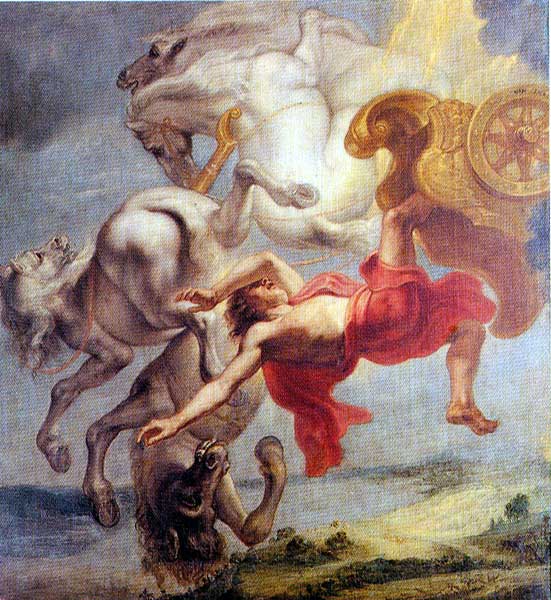
ANTINOUS IN PHAETHON'S CHARIOT


WE CELEBRATE July 15th as the date of the triumphal arrival of Hadrian and Antinous at Tarsus in what was the biggest "celebrity arrival" in that city since Cleopatra had landed with her barge two centuries earlier.

Passing through the Cilician Gate, the famous mountain road used by Alexander to cross the Taurus Mountains, the Imperial court arrived at the city of Tarsus, the guardian of Asia Minor.

It was outside of Tarsus that Alexander battled against the Persian Army and defeated Darius, after which he soon took control of the vast Empire of the Persians, the traditional enemies of Greece. Tarsus was the crossroad between the Hellenic west and the Persian-Phoenician East.

The people of Tarsus were rapturous and espcially adored Antinous, according to Antinous authority Royston Lambert, who writes:

"Tarsus added Adriana to its name, provided a splendid festival and seems to have taken very special note of Antinous."

It was here that Hadrian and Antinous first encountered the devotion that the Phoenicians and Canaanites held for the Sun God, whom they called El, Baal, or Elagabal.

The Greeks called the deity who was the orb, heat and light of the Sun, Helios, and he was pictured riding a chariot pulled by burning horses, who made their way across the sky.

Phaethon was the son of Helios, and he one day tried to drive his father's chariot but lost control, so that the sun moved erratically out of its course and scorched Ethiopia. Zeus struck Phaethon down before he could do further damage.

Flamen Antonius Subia explains the parallels:

"So it is that Antinous, on his journey towards Ethiopia, would find himself unable to control the mighty horses that pulled Hadrian's chariot, and would be struck down by the jealous Sun. We pray to Father Helios of Tarsus on this day."

Friday, July 10, 2026

THE DAY HADRIAN DIED


ON JULY 10th the Religion of Antinous commemorates the Apotheosis of Hadrian. After a prolonged illness, at Baiae, on the Bay of Naples, Hadrian died on July 10, 138. 

His ashes were placed in the mausoleum on the bank of the Tibur that is now called Castel Sant'Angelo.

After the death of the gentle Antinous, Hadrian became embittered and mistrustful, capricious and cruel. 

When Hadrian died, the Senate wished to condemn his memory for atrocities against them during his final years. 

But his successor, Antoninus Pius, persuaded them to declare Hadrian a God. 

A temple was built for him known as the Hadrianeum on the Campus Marius, the remains of which are now part of the Roman Stock Exchange.

Flamen Antinoalis Antonius Subia explains:

"Hadrian the God is venerated as the manifestation of Jupiter Optimus Maximus on Earth, the ruler and guiding force behind the Antonine Dynasty, the most sacred family of emperors, whose reign is the Golden Age of Rome, because of the peace and prosperity that it maintained, which was the result of the wisdom of Hadrian's far-sighted and divine plan stretching out over the world. We worship and adore Hadrian the God, Savior of the Cosmos."

Thursday, July 9, 2026

THE DAY HADRIAN WAS DECLARED
EMPEROR OF ROME


ON JULY 9th we commemorate the Ascension and Consecration of Hadrian — when he became master of the world after years of worrying and waiting. Hadrian was declared Emperor by the Legions when Trajan died suddenly while campaigning in Parthia on August 8th, 117 ... and nearly a year later, on July 9th, 118 AD, he formally became Emperor of Rome. 

In this illustration, you see Hadrian entering the Roman Forum at the height of his power. Standing behind him in the chariot is Antinous saying: "Respice post te! Hominem te esse memento! Memento mori!": "Look behind you! Remember that you are a man! Remember that you'll die!"

On this day in 117 AD, however, Hadrian truly had been in fear of death. Hadrian had been on tenterhooks for years wondering whether Trajan would formally adopt him as his heir. 

If Trajan died without the issue of succession being settled, it could result in civil war — or at least in the assassination of Hadrian by some other ambitious man.

It is said that the Divine Empress Plotina forged the will of her husband and gave the throne to Hadrian, who had been her protégé and friend for years.

After assuming power, Hadrian first settled the conflict with the Persian King, signing a peace treaty that was to last through the whole of his reign. As Trajan's military representative in the provinces, he had seen how the empire was beginning to over-reach its resources. So he set about consolidating things in the East, lest his Empire become embroiled in the sort of chronic blood-letting that modern superpowers now seek to extricate themselves from in that same region.

It is also said that he wanted to let the political dust settle back in Rome before returning to a city where his critics were waiting. Many thought him unfit. Hadrian was Hispanic — literally so. He was born in the province of Hispania and spoke Latin with a provincial "Hispanic accent" which was the cause of much derision by high-born Patricians when he was sent to Rome as a boy to be educated. He never liked Rome and, throughout his reign, spent as little time there as possible.

Settling other matters in the East, Hadrian waited a full year before  returning to Rome, and on July 9th, 118, he entered the Holy City and was formally and ritually installed as Emperor by the Senate. He was then consecrated as Pontifex Maximus, highest priest of the Roman Religion, and head of all foreign cults.

He inherited from the warrior-king Trajan the largest empire that the western world had ever known — Rome at her greatest size and strength — and he wisely chose not to continue to expand the frontiers, but to turn instead to the development of the interior.


He visited every province, traveling more than any other emperor before or after, dedicating his power to art, literature, legal reform and the promotion of peace, prosperity, and the united religious consciousness of Roman citizenship after his beloved Athenian model.

Flamen Antinoalis Antonius Subia says the following about this Sacred Day in our Liturgical Calendar:

"On this day, Imperator Caesar Traianus Hadrianus Augustus was to assume responsibility as the spiritual leader of the Empire, Father of the Country with a vigor unparalleled by his predecessors, and was to be one of the foremost builders of cities, temples, and public structures world-wide. For his love of Antinous and the extraordinary gesture of deifying our god, we worship and venerate Hadrian as the founder of our faith and as our immortal father, the lover of Antinous."

Monday, July 6, 2026

HOW'S THIS FOR A DIVINE SIGN?
ANTINOUS MAKES MIRACULOUS APPEARANCE
ON HOLLYWOOD TEMPLE'S STREET CORNER


ANTINOUS miraculously appeared on July 6th, 2018, which is International Kissing Day ... literally around the corner from the Hollywood Temple of Antinous.

A larger-than-life, hand-painted wall advertisement adorned a building at the corner of La Brea and Melrose in Hollywood.

The advertisement was for Sabrina Carpenter's new single, which was being released that week. The image was all over social media.

"As soon as I saw the picture I knew where it was and ran down to see if it was true," our spiritual leader ANTONIUS SUBIA says. "It's a miracle! It's a great sign from Antinous!"

The image chosen by the artist for the advertisement is ... as sacred synchronicity would have it ... the Townley Antinous ... the same bust which is on the main altar of the Hollywood Temple of Antinous.

Now, the same bust of Antinous (as Dionysus-Bacchus) was featured as cover art for Sabrina Carpenter's single "Almost Love" ... and was emblazoned on a wall just a few steps away from the Hollywood Temple of Antinous!

The actress and singer's track was the first from her upcoming third album "Singular".

That weekend, Sabrina debuted the song with an amazing performance at Wango Tango in Los Angeles.

"The moment when the light is red before the go. The moment when the curtain’s down before the show. The moment when you’re done, but maybe just one more. That's how I feel before I get you all alone," she sings on the song.

Saturday, June 27, 2026

THE DEATH OF JUDY GARLAND
SPARKED THE STONEWALL RIOTS


THIS is the day the Liturgical Calendar of the Religion of Antinous sets aside for remembrance of Saint Judy Garland, whose death was the spark that ignited the Stonewall Riots on a sultry night in 1969 when a bunch of drag queens and assorted other gay men decided they weren't in the mood to put up with yet another raid by the corrupt and brutal NYPD.

Gays had had enough and they had just suffered a terrible shock — Judy Garland's tragic death on June 22 had rocked the gay world. It was said that 13 twisters raged through Kansas the day Judy died, which — in Kansas — in June — is a pretty safe bet, in any case. But still, and all the same ....

Judy had died in London, and amid much news media hype, her body was flown back to New York for a memorial service which drew a huge crowd of grief-stricken gay men who gathered outside Campbell's Funeral Chapel in Manhattan — on June 27, 1969.

Afterwards, the bars were jammed with gay men drowning their sorrows in booze and drugs while listening to Judy Garland songs full blast on every jukebox.

The mood was electrified by a sense of solidarity in grieving for a fallen idol. Gay men had surprised themselves by turning out en masse for Judy's funeral. They had experienced strength in numbers for the first time. They had been on national TV news.

In an unprecedented move by prime-time national news anchormen, Walter Cronkite and Huntley-Brinkley had talked about Judy Garland's "tremendous appeal among male homosexual fans" — at supper time when whole families were watching the evening news!


Blacks were standing up for their rights. Women were burning their bras. The Chicano Movement was gathering steam. And now "ho-mo-sexuals" (the announcers were unaccustomed to speaking the word aloud) were having the audacity to congregate outside a sacred chapel in broad daylight — and they even showed their faces on the evening news!

Straight people were being confronted with homosexuals right there on television beamed into their homes. And — more importantly — homosexuals were seeing themselves and their brothers/sisters on national television news. Gays in isolated places who had worshipped Judy Garland at the movies or on LP and tape, were now watching other gay people weeping for her in New York. For the first time, gay people in isolated places saw themselves on TV. We were not alone in our grief at the passing of a star with whom we somehow innately felt connected.

It was a Friday night. Late June. Hot and steamy. The bars were filled to bursting. Gay men were sharing a rare moment of solidarity in powerful emotions. There was a feeling, not only in New York, but around the world, that a paradigm shift had taken place. A gay icon had died suddenly and tragically (shades of Antinous) and we gay people everywhere found ourselves in a catharsis of identity change. None of us understood what was happening. Just as it was with being gay, we gay men couldn't explain it, we just "felt" it and "knew" it to be true.

And THAT moment was when the Manhattan police happened to stage one of their periodic raids on queers. Basically it was a routine raid on an average gay bar. Nobody had reckoned with what would happen next. Even gay men were surprised by what happened next.

ESPECIALLY gay men.

We were men who had been accustomed to being timid fraidy-cats. Men who had never dared to stand up for their sexuality. Drag queens and faggots never fought back. That was a fact of gay survival. We knew we were gay. And we knew what we weren't. We were not "MEN".

Grief turned to outrage. It was a spontaneous uprising fuelled by rage. The vice squad was overwhelmed. Reinforcements had to be sent in. Gay men stood their ground and advanced on the police, pushing them back.

It was the turning point for us. Gay men throughout America — and later in London, Berlin, Sydney and elsewhere — began standing up for themselves under the banner "Remember Stonewall".

In a sense, Judy Garland died for us. Had it not been for her tragic death — strangling on vomit over a toilet bowl in a London hotel suite — there might not have been any Stonewall Riots.


Flamen Antinoalis ANTONIUS SUBIA puts the Stonewall Riots into a spiritual context:

"It was the first resistance by homosexuals against the repression of two thousand years, and the beginning of the Gay Liberation movement. The importance of the Stonewall Riots is the awakening of gay consciousness, the throwing off of the coils of the python that had for so many centuries enveloped our divine form of Love. This sacred revolt is holy to Apollo, Dionysus, and Diana combined as the guardian spirits of Homosexuality. Our modern Gay society was born on this occasion, and all of the peace and freedom that we have obtained in the these short decades are due to the courage that erupted on that Sacred Night in front of the Stonewall Bar."

Thursday, June 25, 2026

HERE'S YOUR CHANCE TO BE A CHAMPION
IN THE SACRED GAMES OF ANTINOUS


IT is with great joy that we, the Priesthood of the Temple of Antinous, solemnly announce the coming of the 6th Antinous Games!


To be Celebrated on the Day of the Sacred Lion Hunt
6 Days before the Calends of September
On the 30th of August 2026 (Year of Antinous 1895)

We invite Artists, Poets, Musicians, Performers and Athletes
To prepare submissions for the sacred competition
In honor of Antinous the Gay God

The theme is open to interpretation
With suggested emphasis on Antinous
Or Gay Pagan Spirituality.

Three winners will be selected by a panel of judges.
Fabulous prizes will be awarded!

May the gods of Olympus be with us as we formally announce
The 6th Sacred Games of Antinous

AVE ANTINOUS!

Send Submissions to: antinouspriest@gmail.com

Rules of Submission:
The Deadline to Enter is August 27th, 2026

All submissions must be about Antinous, or include Antinous as their theme or subject matter, or in some discernible way reference Antinous. Performance submissions can be about Homotheosis, Gay Spirituality, Paganism, LGBTQ experiences, or even Abstract but must either demonstrate a connection to Antinous or must begin or end with the submitter stating that their performance is dedicated to Antinous. Athletic submissions must begin, or end with a stated dedication to Antinous.

The following are acceptable categories:

ART
MUSIC
DANCE
THEATER
PERFORMANCE ART
POETRY
LITERATURE
ATHLETICS

REQUIREMENTS:

-ART must be submitted as photographs and emailed to antinouspriest@gmail.com
-MUSIC can be submitted as an audio-only file, or as a recorded video performance (preferred)
-DANCE, THEATER and PERFORMANCE ART pieces must be submitted as video and must not exceed standard YouTube time-length requirements.
-ATHLETICS can include any form of athletic demonstration such as weight-lifting, exercise, running, track and field, wrestling, yoga, gymnastics, or any form imaginable that can be captured in short video form.
-LITERATURE can be fiction, nonfiction, essays, academic research papers, or autobiographical works. It is recommended that Literary submissions be reasonably short in form, although there is no official limitation to the length of form of a submission. If submitting a novel or book, a short treatment or synopsis is recommended and a link to where the full work can be purchased or downloaded. Blog entry submissions or articles will also be accepted, a link to the blog page or article must be provided
Additional submissions that do not fall into the above categories will be considered at the discretion of the Convener of the Games.

RULES:

1) All Submission must be about Antinous. Performance pieces and Athletics must be verbally dedicated to Antinous. No non-Antinous related Submissions will be accepted. The decision as to whether a submission conforms to this requirement will be made by the Convener of the Games
2) Only One Entry can be submitted per Competitor. Multiple pieces can be submitted but they will all be considered One entry and will be presented together as a single Submission.
3) All submissions must be the original work of the Competitor. Additional participants in the entry are allowed, but only the submitter will be considered to be the Competitor and only the submitter will be eligible to receive an award.
4) No submissions made during a previous Sacred Games of Antinous will be allowed
5) All Competitors must be over the age of 18 to participate
6) Submissions must conform to the rules of usage of Facebook and YouTube
7) Submissions must not violate copyright laws or any other federal, state or local laws.

Three awards will be given:

ART - paintings, drawings, sculpture, photography
LITERATURE - fiction, nonfiction, poetry, novels, articles, memes
PERFORMANCE - theater, performance art, dance, ceremonies, athletics, music (including audio only)

One of the three winners will be proclaimed the overall champion and will receive the grand-prize, which will include the traditional bronze tripod.


Everyone has heard of the Ancient Olympics, but there were other Games held in antiquity, and among the most famous were the Games of Antinous, which were called the Megala Antinoeia ... the Great Games of Antinous. These were Sacred Games which were held in Antinoopolis, Bithynia and in Mantinea."


The most famous Games were held at Antinoopolis, the city founded by Emperor Hadrian in Egypt at the spot
along the Nile where Antinous had drowned in the year 130 AD.

The competitors were primarily young men called Ephebes. 

In Antinoopolis these included swimming and boat races in the Nile.


But the Antinous Games were unique in that they also included competition in the arts and music. 

The over-all winner was consecrated as the living embodiment of Antinous and given citizenship in Antinoopolis, with an all-expense-paid life of luxury and adoration. 

He was worshiped in the temple as the representative of Antinous, the emblem of youth and masculinity. He was the Divine Ephebe.

The Great Antin
oeia, as the Games of Antinous were called, were held for hundreds of years. 

But little was known of the actual competitions until a fragile papyrus was deciphered recently which revealed some intriguing and somewhat shocking details about the Games of Antinous of the year 267 AD and two wrestlers named NICANTINOUS AND DEMETRIUS.

The Games of Antinous faded into obscurity ... but have been revived in the past decade by us. They are held every four years during the cycle of the blooming of the ROSY LOTUS OF ANTINOUS AFTER THE LION HUNT in August.

The modern-day Religion of Antinous revived the Sacred Games 20 years ago. This is the VI ANTINOEIAD of the modern era, and entry is open to everyone wishing to honor Antinous with their own artistic, academic or athletic talents.

"These Games are open to all ... regardless whether you are gay and regardless of gender," Antonius Subia says.

"You can submit any form of artistic endeavor ... poems, paintings, videos or literary works. But you can also submit dancing, running or other physical effort ... as long as you provide documentation of your performance art," he explained.

Prizes will be awarded to winners, details of which are to be unveiled on this blog in coming days and weeks as the deadline approaches.

For enquiries and submissions, contact us here: antinouspriest@gmail.com