Sunday, August 19, 2018
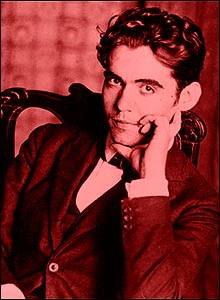
FEDERICO GARCÍA LORCA
SAINT OF ANTINOUS
SAINT OF ANTINOUS
ON AUGUST 19th, the Religion of Antinous honors St. Federico García Lorca, who was openly gay and who is one of the greatest poets of the Spanish language.
He was executed by the Fascists on this day, August 19th, during the Spanish Civil War in 1936.
García Lorca's central themes are love, pride, passion and violent death, which also marked his own life.
The Spanish Civil was just getting underway in August 1936 and García Lorca was seen by the right-wing forces as an enemy. The author hid from the soldiers but he was eventually found.
An eyewitness has told that he was taken out of a Civil Government building by guards and Falangists belonging to the "Black Squad". García Lorca was shot in Granada without trial. The circumstances of his death are still shrouded in mystery. He was buried in a grave that he had been forced top dig for himself.
According to some sources, he had to be finished off by a coup de grâce. One of his assassins later boasted, that he shot "two bullets into his arse for being a queer".
It was the end of a brilliant career as a poet and dramatist who was also remembered as a painter, pianist and composer.
In the 1920s he was close friends with Luis Buñuel and Salvador Dalí, among many others who later became influential artists in Spain. Despite the accolades from artists and critics, he suffered from bouts of depression brought on largely by his inner conflict about his homosexuality.
He was tortured by the demands of being a celebrity in a homophobic society and the yearnings of his gay soul.
During his lifetime only a handful of close friends were allowed to read the collection of gay poems which would be published many years later as his Sonnets of Dark Love. Here is one of them, entitled Love Sleeps in the Poet's Heart:
You'll never understand my love for you,
because you dream inside me, fast asleep.
I hide you, persecuted though you weep,
from the penetrating steel voice of truth.
Normalcy stirs both flesh and blinding star,
and pierces even my despairing heart.
Confusing reasoning has eaten out
the wings on which your spirit fiercely soared:
onlookers who gather on the garden lawn
await your body and my bitter grief,
their jumping horses made of light, green manes.
But go on sleeping now, my life, my dear.
Hear my smashed blood rebuke their violins!
See how they still must spy on us, so near!
With the Catalan painter Salvador Dalí and the film director Louis Buñuel he worked in different productions.
Dalí and Lorca had met in 1923. From the beginning, Lorca was fascinated by the young Catalan's personality and looks. Also Dalí had admitted that Lorca impressed him deeply.
When Buñuel and Dalí made their famous surrealist short film Un Chien Andalou (1928), García Lorca was offended: he thought that the film was about him.
Lorca's friendship with Dalí inspired a poem, a defense of modern art and at the same time an expression of homosexual love. Dalí dedicated his painting of Saint Sebastian to his friend, who often compared himself to the tortured homoerotic martyr.
"Let us agree," Lorca wrote to Dalí, "that one of man's most beautiful postures is that of St. Sebastian."
"In my 'Saint Sebastian' I remember you," Salvador Dalí replied, ". . . and sometimes I think he IS you. Let's see whether Saint Sebastian turns out to be you."
García Lorca was capable only of a "tragic, passionate relationship," Dalí once wrote — a friendship pierced by the arrows of Saint Sebastian.
The Religion of Antinous honors this great artist who lived and loved tragically and passionately and who died tragically for being gay.
Saturday, August 18, 2018
ANTINOUS MAY HAVE EATEN CHEESE
ON HIS FATEFUL VISIT TO EGYPT
ANTINOUS and Hadrian were in Egypt in August 130 AD and enjoyed the finest wines, olives, figs ... and cheese? Now there is proof that the ancient Egyptians were expert cheese makers.
Egyptologists have discovered a jar of the world's oldest cheese in the tomb of an ancient Egyptian mayor, but ... frustratingly for turophiles ... the taste of the bacteria-laced sample is likely to remain a mystery.
The discovery, announced in the American Chemical Society's Analytical Chemistry journal this week, came after researchers tested the whitish contents of the jar found in the tomb of Ptahmes, a mayor of 13th Century BC Memphis, an important capital in ancient southern Egypt.
"This is the oldest solid cheese ever found," Enrico Greco, a scientist with the department of Chemical Sciences at the University of Catania who coauthored the report, told The Telegraph.
Remains of cheese-like products older than the jar's contents had previously discovered in Poland, China, and Egypt, but a scientist who took part in the discovery says they were the products of natural fermentation so were more like yogurt than cheese.
Older samples discovered elsewhere were "more attributable to natural fermented milk like yogurt or kefir. In our case we didn't find any biomolecular traces of proteins resulting from natural fermentation of milk," Greco said.
The jar had been covered in a canvas to preserve the cheese.
The scientists investigated its contents using liquid chromatography and mass spectrometry, the American Chemical Society said.
The tests showed the cheese had been made from a mixture of cow and sheep, or goat, milk. They also revealed that the sample was laced with Bricella melitensis, which can be deadly to humans.
But the cheese's taste is a mystery.
Friday, August 17, 2018
ANTINOUS IN CANOPUS AUGUST 130 AD
THE PLEASURE RESORT THAT HADRIAN
WOULD RECREATE AT HIS VILLA
THE PLEASURE RESORT THAT HADRIAN
WOULD RECREATE AT HIS VILLA
CANOPUS and Heracleion! Where Hadrian and Antinous spent pleasant days away from the hubbub of steamy Alexandria in August and September of the year 130 ... just weeks before tragedy.
Heracleion is a real-life Atlantis which sank off the coast of Egypt nearly 1,200 years ago has now been brought back to the surface with the help of 3-D ... and Antinous and Hadrian visited this city ... before a massive earthquake caused it to sink beneath the waves.
The city of Heracleion, home of the temple where Cleopatra was enthroned, was one of the most important trade centres in the Mediterranean area before it disappeared into what is now the Bay of Aboukir.
The Imperial entourage visited Alexandria and nearby Canopus in August or September 130 AD.
It is hard to believe they would have passed by fabled Heracleion without at least a brief stop to pay respects at the famous temple of Hapi the Nile inundation deity ... it was Hapi who helped Antinous perform his first miracle after deification.
Heracleion had been the primary Egyptian port at the mouth of the western arm of the Nile prior to the founding of Alexandria.
By the time Hadrian and Antinous saw Herakleion the city had been in genteel decline for 300 years but was still an important destination for annual pilgrimages by the Egyptian faithful during the annual inundation of the Nile.
Nearby Canopus had a reputation as the fun spot of the ancient world, a sort of Las Vegas or Monte Carlo or Club Med where those who could afford it played in the sun (and in the pleasure houses) of what is recorded history's first fun-in-the-sun resort.Canopus was a welcome change from Alexandria, where Christians and Jews waged bloody street battles and where the snooty Greco-Egyptian social classes looked down on the upstart Romans and gossiped viciously behind their backs ... "but not too far behind their backs," as Antinous authority Royston Lambert notes.
"Hurt and resentful," Lambert writes in "Beloved and God," "Hadrian and his circle may in late August have removed themselves from the intense and captious city along the canal to the elegant and relaxed pleasure resort of Canopus with its elegant villas, its vine-threaded arches straddling the water to shade its revellers and its splendid Serapeam."
Lambert points out that "it was delicious Canopus and not mocking Alexandria" that Hadrian used as the motif in a special "resort-theme" area in his villa at Tibur.In Marguerite Yourcenar's novel "Hadrian's Memoirs," it is at Canopus that Hadrian (increasingly obsessed with omens and astrological prognostications as his health fails) consults a "heka" (Egyptian magic) mistress and asks the old witch if there is any way to extend his lifespan.
Antinous' beloved tame falcon is sacrificed and its ka is added to the many kas of the emperor's in what the witch says is a guaranteed way to prolong Hadrian's longevity.
An even more sure-fire way would be for a human being to sacrifice his life in love and total devotion to the emperor.But human sacrifice had been banned by Hadrian's predecessor Tiberius and Hadrian was known to oppose such practices.
So Hadrian and Antinous return to Alexandria and Hadrian considers the matter closed. Only later does he learn that Antinous secretly goes back to Canopus.
"He paid another visit to the sorceress," Hadrian writes in his memoirs.
Only a few pages later, with the Nile flood lagging and with Hadrian's health flagging, Antinous makes a burnt sacrifice of a lock of his hair at an Egyptian temple on the banks of the Nile opposite Hermopolis.
Then he sheds his clothes and folds them neatly on the bank ... and walks out into the Nile....
Thursday, August 16, 2018
ANNOUNCING THE LARGEST GALLERY
OF ANTINOUS IMAGES IN THE WORLD
WE are proud to announce the most extensive collection of Antinous images in the world!
Flamen Antonius Subia spent nearly two years assembling the GALLERY OF ANTINOUS ICONS.
What initially was supposed to be one page of images became a massive library.
He says it turned out to entail "months of painful, agonizing, finger-crippling, endless catalogueing, and intricate photoshop enhancing and resizing of countless... countless. ..Antinous images!"
The endeavour proved to be not only a technical challenge but also something of a spiritual initiation.
Antonyus says, "I now feel that I am an expert in Antinous Iconography...as over the process, I have become deeply familiar with each and everyone of Antinous's wonderful, beautiful statues and busts and other images.
"I have to tell you that in the end...it has been the most meaningful, and intimate experience of getting to know Antinous on a level that I have never before felt.
"He is so astonishingly beautiful... I found myself treating each and every one of his images with particular, loving care and devotion.
"It's amazing...when you handle his beautiful image again and again...when you gaze upon him, and study him, and see example after example, they all seem to blur together until you are left with this cumulative impression of what he really must have looked like...like the sum total...as though I had layered translucent leaves of his face and body one over the other, each showing through to the next, cancelling out errors, cracks, chips, peculiarities, the hand of the artist, modern enhancements, slight differences...my own impression of what I always thought he looked like...all blurring together into a ghostly form of his true image...I see him now.
"But I am also deeply familiar with all the different variations...I know them all by name, location, origin, and bits of their history...I know the image of Antinous as I had never known it before."
Antonyus adds that the gallery is not complete and he has issued a call for readers to submit more images.
"My intent is to have the most complete collection of Antinous images in the world," he explains. "We are after all The Temple of Antinous, his modern religion. It is only right that we take his image into our possession and display his form for all to see....with reverance and piety...not as an object of art, or history, but as an object of worship."
Wednesday, August 15, 2018
SNEAK PREVIEW OF COSTUMES AND MUSIC
OF RUFUS WAINWRIGHT'S HADRIAN OPERA
HERE's a sneak preview of the costumes ... and the music ... from long-awaited opera about Antinous and Hadrian by Rufus Wainwright which will have its world premiere 13 October 2018 with the Canadian Opera Company in Toronto.
A little Versace beach wear, some Klimt-inspired gold, and the bursting colours of Minoan frescoes ... and royal purple from Tyre snails ... these are the costumes.
"They're definitely Roman-inspired," says award-winning Canadian designer Gillian Gallow of the costumes she has conceived. "But there is also an extremely theatrical and modern perspective to it."
Guided by a strong belief that the opera stage requires a heightened sense of reality ... a visual language of grand gesture that communicates as effectively to the audience in the fifth balcony as it does to those in the front row .. Gillian has designed costumes she calls "dramatically Roman."
The garments are rooted in historical detail, pattern, and colour, but they’re also scaled to the opera stage, carefully tailored to meet the dramatic and emotional demands of the world’s biggest performing art form.
"Versace did a runway show in 2015 that was very Greek-inspired and Hadrian himself was known for his love of Greek culture, for referencing Greek art and customs, and for championing a Hellenic revival in Rome. So when it came time to imagine Antinous, we were inspired by Versace’s melding of this contemporary aesthetic with the period look."
The opera by Wainright and Daniel McIvor, entitled "HADRIAN," which explores the relationship between Roman Emperor Hadrian and the young Antinous, will run October 13–27 at Toronto’s Four Seasons Centre.
Peter Hinton will direct a cast that includes Thomas Hampson as Hadrian and renowned tenor Isaiah Bell as Antinous, with Karita Mattila as Plotina.
The opera tells the story of the Roman emperor and his young lover Antinous, who was deified after his mysterious and premature death. Wainwright has offered the promise of something provocative:"I think in our modern world," he says, "among younger audiences especially, there's a hunger for a sort of spectacle that the opera world thinks is no longer relevant."
What attracted him to Hadrian was the power of the story Wainwright wanted to tell.
Certainly the story of the Emperor Hadrian has plenty to offer contemporary audiences. Quixotic, domineering and visionary, Hadrian represented the end of the Classical era in Roman history, a fascinating period when the influence of Greek ideas began to predominate in Roman society, changing its political landscape in significant ways.
Wainwright adds, "And then there's Antinous, essentially the male equivalent to Helen of Troy ... though we know he actually existed and exactly what he looked like. At one point he was neck and neck with Christ in terms of cult status after disappearing in the Nile. Imagine what a different world that would have been if he had lived!"
Here is an exclusive sneak preview of the musical score:
Tuesday, August 14, 2018
HERE'S YOUR CHANCE TO BE A CHAMPION
IN THE SACRED GAMES OF ANTINOUS
HERE is your chance to pay tribute to Antinous with your own special artistic talents ... and to compete for prizes ... in keeping with the ancient tradition of holding Games in honor of Antinous.
The 4th SACRED GAMES OF ANTINOUS in the modern era will be held 25 August 2018. Applications for entries are being taken now.
Announcing the opening of The Games, Flamen Antinoalis ANTONIUS SUBIA says prizes will be awarded on 25 August in the categories of Visual Arts, Performing Arts and Literature.
Submissions must be entrants' original work and must pertain to Antinous in some way.
"These Games are open to all ... regardless whether you are gay and regardless of gender," Antonius says.
"You can submit any form of artistic endeavor ... poems, paintings, videos or literary works. But you can also submit dancing, running or other physical effort ... as long as you provide documentation of your performance art," he explains.
Prizes will be awarded to winners, and will be shipped to the winners wherever they live in the world.
The winners will be announed during ceremonies at the HOLLYWOOD TEMPLE OF ANTINOUS on 25 August 2018.
"Everyone has heard of the Ancient Olympics, but there were other Games held in antiquity," Antonius says.
"And among the most famous were the Games of Antinous, which were called the Megala Antinoeia ... the Great Games of Antinous," Antonius adds. "These were Sacred Games which were held in Antinoopolis, Bithynia and in Mantinea."
The most famous Games were held at Antinoopolis, the city founded by Emperor Hadrian in Egypt at the spot along the Nile where Antinous had drowned in the year 130 AD.
In Antinoopolis these included swimming and boat races in the Nile.
But the Antinous Games were unique in that they also included competition in the arts and music.
The over-all winner was consecrated as the living embodiment of Antinous and given citizenship in Antinoopolis, with an all-expense-paid life of luxury and adoration.
He was worshiped in the temple as the representative of Antinous, the emblem of youth and masculinity. He was the Divine Ephebe.
The Great Antinoeia, as the Games of Antinous were called, were held for hundreds of years. But little was known of the actual competitions until a fragile papyrus was deciphered recently which revealed some intriguing and somewhat shocking details about the Games of Antinous of the year 267 AD and two wrestlers named NICANTINOUS AND DEMETRIUS.
The Games of Antinous faded into obscurity ... but have been revived in the past decade by us. They are held every four years during the cycle of the blooming of the ROSY LOTUS OF ANTINOUS AFTER THE LION HUNT in August.
Labels:
ancient egypt,
ancient greece,
ancient rome,
antinoe,
antinoé,
antinoeiad,
antinoopolis,
antinopolis,
antinoupolis,
antonyus subia,
antonyus subia quotes,
Games of Antinous,
gay god,
gay spirituality,
hadrian
Monday, August 13, 2018
THE BIRTH OF DIANA
DIANA the Divine Huntress was born August 13, according to the Lanuvium inscription which is consecrated to Antinous and Diana.
She is said to be the twin sister of Apollo, but our belief is that the virgin huntress is the female Antinous, his twin sister, goddess of lesbian beauty just as Antinous is the god of gay beauty.
Diana and Antinous are deities of the Moon.
As Antinous is often assimilated to Apollo, he therefore substitutes as the twin of Diana, though he can often be viewed as her male double, so that Antinous is Diana.
She is Helen of Troy to the Castor and Pollux of Antinous-Apollo, they share not only the attribute of hunters, and of the moon, but also as gods of magic and darkness.
Diana is often compared to Heckate, the supreme goddess of Theurgian magicians, who rose to prominence during the reign of Marcus Aurelius. Antinous therefore is the male equivalent of Heckate.
We pray to Diana to guide us in our hunt and to illuminate our nights with the silver light of her sublime power. We recognize that the Moon of Diana is the Moon of Antinous.
On this night we venerate the Virgin, she who guides new life into the world, goddess of beasts, the mistress of the hounds, the archeress, the young Great Mother of Ephesus.
Subscribe to:
Posts (Atom)


