Monday, July 17, 2017

'THE LOVE GOD' BY MARTIN CAMPBELL
IS A BRILLIANT NOVEL ABOUT ANTINOUS


THE most brilliant novel about Antinous to appear in over half a century ... THE LOVE GOD ... is authored by our own MARTINUS CAMPBELL, priest of Antinous.

While that sounds like biased praise, we Antinomaniacs are hard to please and would not hesitate to pick apart a poorly researched book or one that denigrated Antinous, even if it were written by one of our best friends ... perhaps especially if it were. 

At the same time, a sycophantic book that presented Antinous as being cloyingly sweet and angelic would be unbearable and not believable.

So we are gratified (and greatly relieved) to report that this book truly is a remarkable work of historical fiction right up there with Marguerite Yourcenar's landmark MEMOIRS OF HADRIAN 60 years ago.

Martin traces the life of Antinous from the moment his tousle-haired head emerges from his mother's womb under auspicious stars in Asia Minor to the moment his head sinks beneath the swirling waters of the Nile on a starry evening in Egypt.

Antinous comes to life as a young man of breath-taking beauty who is filled with conflicting passions and loyalties. He is a young man who at times is naive, yet at other times worldly wise with an ability to see the world as it is ... and to describe it with at times brutal honesty to the most powerful man in the world.

Above all, this is a gentle love story between Antinous and Emperor Hadrian, himself a man of contradictory passions and priorities.

Martin himself is a man shares these passions. He has rebounded from a series of debilitating strokes to resume a daunting array of political activism for LGBTIU health and rights issues ... while working on this novel.

Based in a hilltop home overlooking the sea in Brighton England, he spent the best part of a decade researching this novel, retracing the footsteps of Antinous across Greece and Italy, as far north as Hadrian's Wall and as far south as the Nile in Upper Egypt.

Historical facts are excruciatingly accurate ... even the positions of the stars and planets at the moment of the birth of Antinous have been calculated to precision.

An academic scholar can read this book with satisfaction, noting obscure and arcane references which only the experts in the field of Antinology fully appreciate.

At the same time, however, this is a fun book to read even for those who have never heard of Antinous in their lives and who have no firm grasp of Roman civilization in the 2nd Century AD.

There is intrigue, skulduggery, near-death by lightning, getting lost in a subterranean labyrinth, a storm at sea, earthquakes ... and some fairly hot man sex as well, albeit tastefully brought to the page.

The narrator is the Classical Love God himself: Eros. He shoots his amorous arrows and ensures that Antinous and Hadrian fulfill the destiny which the Fates have in store for them ... despite efforts by certain people in the Imperial Court to thwart the Fates.


But the genius of this book is that there are no black-and-white villains or heroes. Antinous is a young man with all the problems and drives of late adolescence. Hadrian is a man with a mid-life crisis of doubt and regret.

Others such as Empress Sabina and her constant companion Julia Balbilla and their coterie of fawning courtiers and freedmen are not really hateful towards Antinous so much as they are simply perplexed by him. 

They view him the way some members of the Royal Household might look at the favorite Corgi of the Queen, unable to comprehend her affection for it, her grief when it dies.


They whisper amongst themselves: What hold does Antinous have over Hadrian? 

Just who does he think he is? And is he a threat to them? 

What is so different about Antinous that Hadrian doesn't grow weary of him ... as he always has with previous toy boys? 

Because they cannot understand how he fits in the scheme of Imperial court life, some really rather wish he would just disappear ... voluntarily or otherwise. 

And through it all is the boyhood friend of Antinous who has accompanied him on this long journey with mixed feelings and with growing envy and jealousy. 

The boiling emotions all stem from Eros, who winks knowingly at the reader as he shoots one arrow after another with unerring accuracy to ensure that Antinous fulfills his destiny ... to take his place alongside Eros as a God of Love.

The result is a richly entertaining and beautifully written novel which appeals to those seeking authoritative scholarly accuracy as well as readers who just want a riveting and memorable adventure yarn.

The Love God is available as Kindle and as a paperback ... CLICK HERE to order.

Sunday, July 16, 2017

GREEK THEATRES HAD MOVABLE STAGES
CENTURIES EARLIER THAN EVER THOUGHT


ANCIENT Greek theatres had movable wooden stages on stone tracks to swap scenes, and even hold dressing rooms for actors, according to new findings.

An ancient storage room and three stone rows discovered at the Messene Theatre in Greece have offered new clues on the complex structures used by thespians 2,000 years ago.

Researchers in Japan say there likely was once a wooden stage at the theatre – and, they suspect it may have been equipped with one and two-story stage backgrounds that could be moved in and out of place on wooden wheels.

The discovery bears similarities to structures seen at the Megalopolis and Sparta theatres, and the experts say it lines up with ancient literary accounts of rotating stage devices used in both Greece and Rome.

Researchers from the History of Western Architecture Laboratory of Kumamoto University discovered the large storage room and three stone rows during an excavation at Messene in 2007.

Further examination of the site, compared with previous discoveries made in Megalopolis and Sparta, suggests that the rows would have been used as tracks for large wheeled structures known as a ‘proskenion’ and a ‘skene.’

The proskenion was a one-story structure that was placed on the stage and served as a background, the researchers explain.

The skene, on the other hand, would have been a two-story structure placed behind the proskenion, acting as a dressing room and another stage background. In the past, some have suggested that these structures moved as one along three stone rows.

Saturday, July 15, 2017

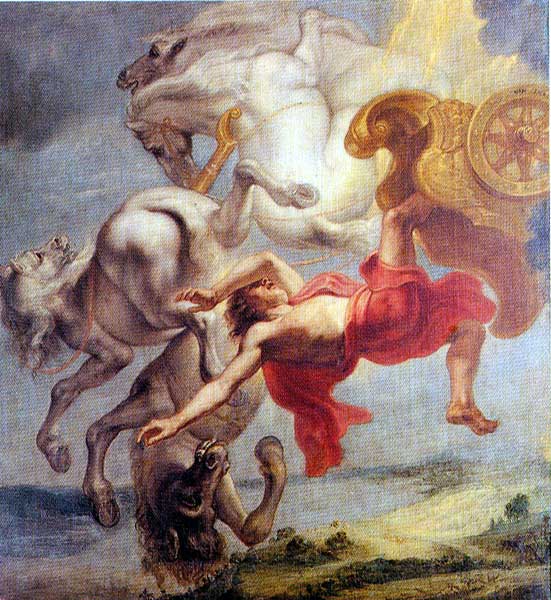
ANTINOUS IN PHAETON'S CHARIOT


WE CELEBRATE July 15th as the date of the triumphal arrival of Hadrian and Antinous at Tarsus in what was the biggest "celebrity arrival" in that city since Cleopatra had landed with her barge two centuries earlier.

Passing through the Cilician Gate, the famous mountain road used by Alexander to cross the Taurus Mountains, the Imperial court arrived at the city of Tarsus, the guardian of Asia Minor.

It was outside of Tarsus that Alexander battled against the Persian Army and defeated Darius, after which he soon took control of the vast Empire of the Persians, the traditional enemies of Greece. Tarsus was the crossroad between the Hellenic west and the Persian-Phoenician East.

The people of Tarsus were rapturous and espcially adored Antinous, according to Antinous authority Royston Lambert, who writes:

"Tarsus added Adriana to its name, provided a splendid festival and seems to have taken very special note of Antinous."

It was here that Hadrian and Antinous first encountered the devotion that the Phoenicians and Canaanites held for the Sun God, whom they called El, Baal, or Elagabal.

The Greeks called the deity who was the orb, heat and light of the Sun, Helios, and he was pictured riding a chariot pulled by burning horses, who made their way across the sky.

Phaeton was the son of Helios, and he one day tried to drive his father's chariot but lost control, so that the sun moved erratically out of its course and scorched Ethiopia. Zeus struck Phaeton down before he could do further damage.

Flamen Antonius Subia explains the parallels:

"So it is that Antinous, on his journey towards Ethiopia, would find himself unable to control the mighty horses that pulled Hadrian's chariot, and would be struck down by the jealous Sun. We pray to Father Helios of Tarsus on this day."

Friday, July 14, 2017

SEEK THE LOST TOMB OF ANTINOUS
WITH BEN PASTOR'S 'THE WATER THIEF'


IT's summer vacation time in the Northern Hemisphere and anyone who is interested in historical fiction in general and Antinous in particular should read this book by Ben Pastor, the award-winning Italian-American historian and author. 

She knows more about Hadrian and Antinous than almost any other living expert. 

Her historical novel THE WATER THIEF is an example of fine scholarly research, as are indeed all of her books.

This novel traces the efforts of Aelius Spartianus to discover the fabled LOST TOMB OF ANTINOUS. 

Aelius Spartianus is a true-life figure who did in fact write a biography of Hadrian nearly 200 years after the death of Antinous.

Set in the year 304 AD, it tells of this very literate Roman army officer who is commissioned by Emperor Diocletian to do research on his predecessor the Divine Hadrian, who had died nearly two centuries earlier. 

It is while delving into the mystery of the death of Antinous and while trying to learn the whereabouts of the Boy's tomb that the officer stumbles onto evidence of a letter penned by Hadrian uncovering a covert conspiracy to bring down the Empire ... a conspiracy that is still very much at work in 4th Century Rome. 

As Spartianus comes ever closer to finding the answer to the death of Antinous, the conspirators' efforts to thwart him become ever more violent, resulting in numerous brutal murders and attempts on the officer's life.

Pastor's descriptions of Rome in the year 304 AD are superb. You get a real feel for the teeming city in mid-summer, with all the odors and noise, colors and steamy heat that that implies. 

Best of all, for those of us who love and worship Antinous, are the chapters in which Spartianus ensconces himself in Hadrian's derelict villa outside Rome. 

It is there, as he stares up into the stars at night, that he makes a startling connection between the layout of the villa and the eight visible constellations in the nighttime sky in late October when Antinous died ... indicating that Hadrian's obsession with horoscopes and astrology led him to create an earthly universe where time stood still at the death of Antinous.

Did Hadrian's belief in astrological fate compel him to have Antinous killed? Or did Antinous take his own life in a bid to fulfill his astrological fate? 

Or was it more mundane? Did he and Hadrian have a lovers' tiff that ended tragically? Was he done in by young male rivals intent on gaining Hadrian's affections for themselves? 

Or was something even more sinister at work? And why is someone desperate to preventing the officer from finding out what happened to Antinous all those years ago?

For those of us who love Antinous, this book is a joy to read. Pastor works in many small and obscure details which are well known to his modern-day followers. 

To give just one example, the Roman officer expends a great deal of effort trying to locate and decipher the OBELISK OF ANTINOUS which today stands in a park in Rome and is the focus of much current research in the 21st Century.

The obelisk's key inscription, which is the focus of modern experts seeking his tomb, says that Antinous "rests within the garden bounds of the great lord of Rome". 

Just as today's researchers have puzzled over the meaning of that phrase, Ben Pastor's protagonist must also make sense of it ... and he arrives at a startling answer that almost costs him his life and jeopardizes future of the Empire.

The novel's characters are well drawn and the reader identifies with Spartianus as he attempts to unravel this Gordian Knot while at the same time pulling together the strands of his own personal life.

There are numerous gay characters and they emerge as well-rounded and believable characters, especially the flamboyant Egyptian gays who find themselves unwittingly the target of unscrupulous killers in their very midst.

The tales of Antinous and Hadrian which unfold as the investigation progresses are a true pleasure to read, if only because they are all so contradictory and often far-fetched ... precisely as they are to today's researchers. 

Spartianus must work his way through this thicket of tall tales and outright lies and defamations in order to determine precisely what sort of persons Hadrian and Antinous were ... in order to save the Empire two centuries after their deaths.

One of the more outlandish tall tales is told to Aelius by a Roman transgender hustler named Cleopatra Minor who claims to have frequented a notorious whorehouse which specializes in boys for aristocratic customers whose villas line the Bay of Naples. 

Cleo claims it is "well-known there" that Antinous was a boy prostitute who had just arrived from Bythinia and "had barely become accustomed to his little bed" when Hadrian stopped by the whorehouse and took a fancy to him.

There are lots of other, equally intriguing characters in this book. But the most intriguing character of all, of course, is the one character who cannot take active part in the plot but whose presence is felt at every turn of the plot:

Antinous himself.

Though the 4th Century murders take center stage in the story, this book actually is more concerned with telling the story of Antinous and Hadrian and their abiding love affair which spans the gulf of the centuries.

As you read the novel, you get a growing awareness of Antinous as the living, breathing, three-dimensional human being that he must have been in life. 

The more Spartianus looks into the life of Antinous, the more he becomes obsessed with the Blessed Boy. He simply has to find that tomb, even if it means his death and the downfall of Rome.

We won't give away the thrilling ending, except to say that, when Spartianus finally "exchanges glances" with Antinous (in a manner of speaking), Spartianus is overcome with emotion ... and the reader finds it hard to hold back the tears. 

CLICK HERE to order, but don't wait too long ... or the Water Thief will catch up with you.

Thursday, July 13, 2017

HUGE CACHE OF SOLDIERS' POSTCARDS
FOUND AT VINDOLANDA ROMAN FORT


A cache of 25 Roman letters has been found at Vindolanda, the fort below Hadrian’s Wall where the most famous postcard-like documents from the Roman world were discovered in 1992, first-person accounts of cold feet, beer running short, and jolly birthday parties at the northernmost edge of the empire.

Together, the cache of documents provides an unprecedented look at life in a Roman garrison.

Along with beer requests, birthday invitations and letters that included derogatory names for the locals, the tablet collection includes the oldest example of women's handwriting from Europe, in the correspondence between two high-ranking military commanders' wives. These women seem to have led lonely, solitary lives, the letters reveal.

Over the years many WRITING TABLETS have been discovered at Vindolanda along with history's oldest WOODEN TOILET SEAT.

The newly found writing tablets are still being conserved, before being scanned with infrared light which should make the faint marks in black ink legible, but the cursive script is invariably a cryptic crossword puzzle that will take experts many months to solve.

However, the archaeologists have already spotted that one of the tablets may refer to a character already well known from the original find: Masclus was then writing to his commanding officer asking for more beer supplies to be sent to his outpost on the wall.


In the newly discovered letter, Masclus is requesting leave ... possibly with a painful hangover.

Most of the new letters are written like the original find on thin slivers of birch.


But there is particular excitement about one double-leaved oak tablet, as the two pieces of timber folded together usually give particularly good preservation of ink and the wood was used for more important correspondence than the more plentiful birch.

“This is the find I have been hoping for all my working life,” said Andrew Birley, the second generation of his family to lead excavations and head the trust which owns the site near Bardon Mill in Northumberland.

“I was a lad of 17 when the first letters were found, and every season since then I have hoped, but never really expected, that more might turn up. My father has been rather poorly recently, but by the time I got home he had cracked open a bottle of champagne and the level had already fallen considerably.”

Wednesday, July 12, 2017

ANTINOUS SHOOTS HIS ARROWS
INTO YOUR HEART


THE PERSEID meteors streak across the heavens from mid-July to mid-August. Go outside on a clear night and you will see dozens of meteors.

They appear to originate in the Constellation of Antinous right in the middle of the July and August night sky — as though Antinous is shooting arrows at you.

The CONSTELLATION OF ANTINOUS is directly right overhead in mid-heaven at this time of year. Go outside about 10 p.m. when it is good and dark and look up. You will see the Milky Way bisecting the sky from north to south. Look for the "Summer Triangle" formed by the stars Vega, Deneb and Altair — they seem to straddle the brightest part of the Milky Way.

Altair is the head of Aquila the Eagle — and Antinous is directly under the Eagle. 

The PERSEIDS are a great opportunity for ANTINOUS STAR MAGIC. 

How you cast the wish is up to you. If you re a Druid, Wiccan or even just a lapsed Catholic, you know some simple rituals. You can write a wish on a piece of paper and then go outside and look up and, as you repeat the wish aloud while tearing up the piece of paper, a shooting star will catch your eye — and you hold the palm of your hand in front of your mouth and blow away the bits of paper.

The Shooting Star does the rest.

There are many, many other ways of working ANTINOUS STAR MAGIC. As always with such things, the "magic" is within your heart and soul. So there are no firm-and-fast rules ... it all depends on you. 


If you are an ARIES, you probably don't believe in such foolishness as "wishing on a star" — but you love to gamble, and so you'll make a wish. And when it comes true, you'll be all the happier.

If you are a TAURUS, you know precisely what you want to wish for, something you've wanted for a long, long time. A leatherette recliner, for example. You love the romance and beauty of a summer evening. You've brought along a lawn chair and a hamper full of food and drink. 

If you are a GEMINI, you will be out with friends and you will be talking, laughing or else texting and twittering so much that you may forget to look up and make a wish.

If you are a CANCER you will be overwhelmed by the sheer romantic beauty of it all. You love the cosy setting and being with close friends or family. When you look up, you will make a special wish upon a star in hopes of finding that certain someone. You may stop pouting about how that other special someone broke your heart.

If you are a LEO, you will be convinced that Antinous is indeed shooting these love arrows your way — just for your own personal benefit, of course! And you will make a very grand wish, and you can't wait to show off and brag when it comes true.

If you are a VIRGO, you don't believe in luck, only in thankless hard work, and so you doubt that any wishes ever come true. You are wary of lying back on the grass because you are worried that a tick might bite you and you would contract Lyme Disease. It would be just your luck — Besides, you know it's selfish to wish for things for yourself. And anyway, you think you don't deserve to have a wish come true. But you DO deserve it!

If you are a LIBRAN, you can't decide on just one wish. So you make two wishes (at least). You secretly know you deserve to have your wishes come true more than anybody else, but you are far too diplomatic and tactful ever to say so openly. Your wishes involve matters of love and grace and beauty. You publicly wish good luck to all the others and they all thank you and think you're so nice. Everyone thinks you're their friend and you encourage them in that. Of course, secretly you think they're all morons, and if their lame wishes come true and your lovely wish doesn't come true — then there's no justice in this world.

If you are a SCORPIO, then you will also wish for love — but skip the grace and beauty and get down to the hot and heavy. Something with gleaming black leather and chrome steel chains. That wish better come true, too. You demand obedience.

If you are a SAGITTARIUS, your wish comes true instantaneously — or perhaps has already come true before you actually made the wish. Sagittarians have a direct hotline to the stars, so you always get your wishes -- and don't mind letting others know about it, either.

If you are a CAPRICORN, you don't believe in such frivolous nonsense as wishing on a star. But you have a list of very practical things you would like to wish for. Good dividends on investments, for example. So there's no harm in making a wish. If it comes true, it was "coincidence".

If you are an AQUARIUS, you will be counting the shooting stars ("Wow, 60 in just one hour, that's one a minute!") and you will be estimating what speed they must be traveling to reach the burn-out temperature. You're indoors, of course, watching the spectacle on NASA's streaming video website. You wrote down a wish for a new iPhone on a slip of paper, but you forgot where you put it, maybe it's stuck to the cheese under the Domino's Pizza next to your keyboard. Who cares? There are so many shooting stars to count.

If you are a PISCES, you have made elaborate plans to position yourself on a hilltop where your friends the UFO space aliens will be sure to spot you in your glow-in-the-dark jump suit. Your wish is for the aliens to abduct you ... again.

Make a wish!

HERNESTUS  

Tuesday, July 11, 2017

THE WELL OF CASTALIA —
HOW DELPHIC ANTINOUS
CAN TEACH YOU TO TAME PEGASUS


ON JULY 11th each year, the Religion of Antinous takes a moment to ponder the esoteric reflections in the Well of Castalia at Delphi — where Antinous took a sacred bath, and where he was initiated into the Delphi Mystery Teachings.

It is also where one of the most mysterious and inspiring statues of Antinous was found.

The Well of Castalia is a fresh-water spring that flows from Mount Parnassus at Dephi, the sanctuary of Apollo. 

The Castalian Spring is located about 500 yards/meters from the Apollo Sanctuary itself. Busloads of tourists are whisked through the ruins of Delphi, but few ever stray away from their groups to wander off over to the spring site, which makes it an even more secluded and magical and mysterious place. 

It really is like stepping into the scene pictured here — Tarot Trump XVII "The Star" — the trump card which was inspired by the Well of Castalia. 

The spring was created when Pegasus, the winged horse, struck his hoof against a rock at the base of Mount Parnassus and water gushed forth, creating a wellspring of divine inspiration for the gods of Olympus. 

The name Castalia is derived from a Nymph named Castalia, a daughter of the river Achelous, who, when pursued by Apollo, threw herself in the spring that took her name. It was the most holy spring at Delphi and was said to be the place where Apollo and the Muses bathed. 

Pilgrims washed in the sacred water before visiting the Pythoness at the Delphic Oracle. According to Euripides, washing one's hair was sufficient for the average visitor, but persons who had transgressed more seriously against the Gods (he mentions habitual murderers as an example) had to strip off and wash themselves completely in the purifying waters.

The ancients believed the name Pegasus came from an even more ancient word meaning "wellspring of magical inspiration" and it was said that Pegasus was drinking from the Castalian Pool when Bellerophontes (or in later versions Perseus) sneaked up on him to harness Pegasus to do battle against fearful monsters.

In the Delphic Mystery Teachings, the initiates were called upon to harness the magical inspiration of Pegasus for their own quest against the inner-demons of darkness towards spiritual enlightenment.


It was also said that the water of Castalia possessed the gift of prophecy, and any man who drank there would derive prophetic vision. Castalia is also a metaphor for the Well of Knowledge, and was said to be the fountain from which wisdom and learning poured from the heart of Apollo.

We know that Hadrian and Antinous visited this spot and it seems certain that Antinous purified himself in these waters — or at least washed his luxuriant hair.

An exquisite statue of Antinous was discovered at Delphi. The forearms had been broken off, but the ancient priests had lovingly buried the statue standing upright — which was the way it was found in the 19th Century, incredibly intact except for the missing forearms.

Alas, Antinous would drown in the similarly magical waters of the River Nile only a few scant months after visiting Delphi, during what we call the imperial "Three-Year Peregrination" — the wondrous and fateful final three-year Eastern Empire travels of Hadrian and Antinous. 

Flamen Antinoalis Antonius Subia explains why this special day, July 11th, is venerated by us Antinoians:


"We venerate the wisdom-gushing Well of Castalia on this day, half a year distant from the Well of Juturna, and bathe in preparation for the transition of the Peregrination year. We pray to Castalia to sweeten our tongue, as Antinous once bathed there, exposing the pure beauty of his flesh to the cold, fresh-gushing pool that imparts inspiration of the mind. In reverence of the wisdom and poetic elegance  of Antinous, we bathe in our own Fountains of Castalia."

The imagery of this purifying plunge into the magically inspiring waters of the Castalian Well has been used throughout history — even adorning the walls of early Christian churches, as seen in the mosaic (above) found in Libya. 

The imagery lives vibrantly in the XVIIth Greater Trump in the Tarot as The Star.

Open your Mind and your Heart to the Mystery Teachings of Delphi. Permit yourself to be carried aloft upon the magical wings of Pegasus, whose name means "wellspring of magical inspiration". Become one with Antinous through the wonder of HOMOTHEOSIS and allow yourself to conquer your demons and to soar to glory amongst the stars.