Friday, August 19, 2016
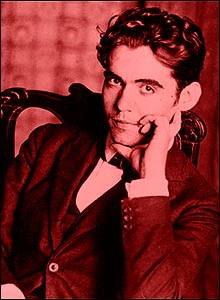
FEDERICO GARCÍA LORCA
SAINT OF ANTINOUS
SAINT OF ANTINOUS
ON AUGUST 19th, the Religion of Antinous honors St. Federico García Lorca, who was openly gay and who is one of the greatest poets of the Spanish language.
He was executed by the Fascists on this day, August 19th, during the Spanish Civil War in 1936.
García Lorca's central themes are love, pride, passion and violent death, which also marked his own life.
The Spanish Civil was just getting underway in August 1936 and García Lorca was seen by the right-wing forces as an enemy. The author hid from the soldiers but he was eventually found.
An eyewitness has told that he was taken out of a Civil Government building by guards and Falangists belonging to the "Black Squad". García Lorca was shot in Granada without trial. The circumstances of his death are still shrouded in mystery. He was buried in a grave that he had been forced top dig for himself.
According to some sources, he had to be finished off by a coup de grâce. One of his assassins later boasted, that he shot "two bullets into his arse for being a queer".
It was the end of a brilliant career as a poet and dramatist who was also remembered as a painter, pianist and composer.
In the 1920s he was close friends with Luis Buñuel and Salvador Dalí, among many others who later became influential artists in Spain. Despite the accolades from artists and critics, he suffered from bouts of depression brought on largely by his inner conflict about his homosexuality.
He was tortured by the demands of being a celebrity in a homophobic society and the yearnings of his gay soul.
During his lifetime only a handful of close friends were allowed to read the collection of gay poems which would be published many years later as his Sonnets of Dark Love. Here is one of them, entitled Love Sleeps in the Poet's Heart:
You'll never understand my love for you,
because you dream inside me, fast asleep.
I hide you, persecuted though you weep,
from the penetrating steel voice of truth.
Normalcy stirs both flesh and blinding star,
and pierces even my despairing heart.
Confusing reasoning has eaten out
the wings on which your spirit fiercely soared:
onlookers who gather on the garden lawn
await your body and my bitter grief,
their jumping horses made of light, green manes.
But go on sleeping now, my life, my dear.
Hear my smashed blood rebuke their violins!
See how they still must spy on us, so near!
With the Catalan painter Salvador Dalí and the film director Louis Buñuel he worked in different productions.
Dalí and Lorca had met in 1923. From the beginning, Lorca was fascinated by the young Catalan's personality and looks. Also Dalí had admitted that Lorca impressed him deeply.
When Buñuel and Dalí made their famous surrealist short film Un Chien Andalou (1928), García Lorca was offended: he thought that the film was about him.
Lorca's friendship with Dalí inspired a poem, a defense of modern art and at the same time an expression of homosexual love. Dalí dedicated his painting of Saint Sebastian to his friend, who often compared himself to the tortured homoerotic martyr.
"Let us agree," Lorca wrote to Dalí, "that one of man's most beautiful postures is that of St. Sebastian."
"In my 'Saint Sebastian' I remember you," Salvador Dalí replied, ". . . and sometimes I think he IS you. Let's see whether Saint Sebastian turns out to be you."
García Lorca was capable only of a "tragic, passionate relationship," Dalí once wrote — a friendship pierced by the arrows of Saint Sebastian.
The Religion of Antinous honors this great artist who lived and loved tragically and passionately and who died tragically for being gay.
Wednesday, August 17, 2016
BRAZILIAN GAY ICON ELKE MARAVILHA
NOMINATED AS SAINT OF ANTINOUS
ALL of Brazil is shocked at the passing of the Russian-born drag artiste extraordinaire ELKE MARAVILHA who died this week at age 71.
Our 2014 Antinoeiad chamption PIETRO ADJANO of Brazil has nominated Elke to become a SAINT OF ANTINOUS.
Pietro says: "She was an actress, musical artist, TV star, model, and precursor of an innovative, bold and unique style, who opened the possibilities of aesthetic and behavioral path wherever she went and appeared.
Elke was an artistic personality whose charisma provoked strong popular impact, both the image and the message of joy, intelligence and irreverence. Because of this, she already attained legendary status Carmen Miranda and Arthur Bispo do Rosário.
Merging exoticism, mysticism, joy, madness and deep knowledge of human, her infectious joy inspired hope. Half a century ago she emerged as a firebrand of rebellion and liberation.
Elke Maravilha was a work of art in constant metamorphosis and as an artist she pursued the best of artistic paths: She gambled and bet on the possible dream.
Teacher, translator and interpreter of foreign languages, including Latin, she was the youngest French teacher of the French Alliance and the English Cultural Union Brazil - United States.
She said:
'They ask me how I created this style, this look that characterizes me. I say always sought compose this way, of course it was not as now, because today it is all inclusive, with come time finding me more inside and putting what I find out. I often say that I was always like that, only with time I'm getting worse! In fact, always been a bit different train, you know? As a teenager I decided to tear the clothes, disheveled hair, exaggerated makeup on and go out on the street... took me to spit in the face. But it was good because I understood the situation as if they were putting me to the test. Perhaps if my style was not really my inner reality, I would have gone back. But I knew he would never back down. I never wanted to harm anyone! What I want is to play, show me, communicate. "
"I want to live together! Great art is not living, is live together!'
I Pietro Adjano hereby nominate Elke Maravilha to become a saint of Antinous!"
Elke Maravilha - Элке Георгевна Груннупп (1945 - 2016).
...atriz, intérprete musical, apresentadora, modelo. Precursora de um estilo inovador, ousado e único, vem abrindo as possibilidades de caminho estético e comportamental por onde passa e aparece. Elke é uma personalidade artística cujo carisma provoca forte impacto popular, tanto na imagem como na mensagem de alegria, inteligência e irreverência. Devido a isto, já faz parte do imaginário popular brasileiro e pode perfilar com mitos contemporâneos como Carmem Miranda e Artur Bispo do Rosário.
Mesclando exotismo, misticismo, alegria, loucura e profundo conhecimento do humano, sua vibração contagiante a faz mensageira de utopias e portadora de esperanças.
Dra. Nise da Silveira, criadora do Museu de Imagens do Inconsciente, afirmava que Elke é uma Sacerdotisa Dionisíaca, e que, com tal, ilumina caminhos e aquece corações.
Já na década de 60 despontou como símbolo de transgressão e liberação. Visionária como só os que assumem seu delírio, intuiu o movimento holístico e vem exercendo-o tanto em suas relações pessoais como em sua comunicação com o mundo.
Elke Maravilha é uma obra de arte em constante metamorfose e como artista vem trilhando o melhor dos caminhos da arte: Ela apostou e aposta no sonho possível.
Professora, tradutora e intérprete de línguas estrangeiras, incluindo Latim. Foi a mais jovem professora de francês da Aliança Francesa e de inglês na União Cultural Brasil – Estados Unidos;
“Perguntam-me como criei este estilo, este visual que me caracteriza. Digo que sempre busquei compor este jeito, claro que não era assim como agora, pois hoje a coisa é mais abrangente, com o tempo venho me descobrindo muito mais por dentro e colocando o que descubro para fora. Costumo dizer que sempre fui assim, só que com o tempo estou piorando! Na realidade, sempre fui um trem meio diferente, sabe? Ainda adolescente resolvi rasgar a roupa, desgrenhei o cabelo, exagerei na maquiagem e sai na rua... Levei até cuspida na cara. Mas foi bom porque entendi aquela situação como se estivessem colocando-me em teste. Talvez, se meu estilo não fosse verdadeiramente minha realidade interior, eu teria voltado atrás. Mas sabia que nunca iria recuar. Eu nunca quis agredir ninguém! O que eu quero é brincar, me mostrar, me comunicar”.
“Eu quero é conviver! A grande arte não é viver, é conviver"!
TEEN SKELETON A HUMAN SACRIFICE
LINKED TO LYCAEUS WEREWOLVES?
EVEN a man who is pure in heart ... and who says his prayers by night ... can become a wolf when the wolfsbane blooms ... and the August Moon is full and bright ... as indeed the Full Moon is tonight.
Ancient Greek writers, including the philosopher Plato in the 5th Century BC and the geographer Pausanus in the time of Antinous reported chilling incidents of human sacrifice and werewolfry at the birthplace of Zeus ... the Temple of Lykaion in Arcadia.
Pausanus wrote in a grisly story of WEREWOLVES ON MOUNT LYCAEUS that youths or children were sacrificed on the altar of Zeus and that the meat of the boy would be mixed with meat of sacrificial animals and prepared as a meal.
Worshipers would partake of the meal ... and the man whose dished contained the boy's flesh would transform into a wolf for the next seven years.
It was thought to be a myth ... until now.
Now Greek officials say they have found the skeleton of a teenage boy amidst the remains of sacrificial animals at a site atop Mount Lycaeus.
They caution that it is too early to say whether the boy was a human sacrifice ... but the coincidence is uncanny.
The myth was believed to have come from an incident in which King Lycaon sacrificed human flesh to Zeus ... and for his blasphemy was transformed into a ravenous wolf.
It is difficult to say precisely when the story of the werewolf first developed, but wolf-men were well-known in Greek and Roman times.
The twins Romulus and Remus had been suckled by a she-wolf, and so the idea of the human/wolf hybrid was ingrained in the Roman psyche from an early date.
Shape-shifters were quite common in Greek and Roman mythology.
One of the very earliest depictions of a wolf-man is on an Etruscan Black Figure Plate from the 5th Century BC with decoration representing Hercules pursuing the centaur Nessos in the presence of Deianira ... and at center a wolf-man.
Usually, the metamorphosis from human to animal form often occurred as a direct result of divine punishment ... the gods condemning an individual on the basis of pride, boastfulness or blasphemy.
Pliny the Elder described the lycanthropic shape shifting of a man into a wolf by the gods following an act of cannibalism.
Early in the 1st Century AD, the Roman poet Ovid wrote "Metamorphoses," in which which King Lycaon (from whom we get the term "Lycanthrope") offended the gods by serving them human flesh.
Wanting to see if Zeus/Jupiter was truly omniscient, he slaughtered men and served them for dinner.
In return, Zeus turned Lycaon into a man-wolf and killed his 50 sons with lightning bolts. He is shown here holding a wicked meat axe.
Forget the Hollywood full-moon myths ... a werewolf can change at any time ... if the wolf-man has the right clothes! Some ancient myths speak of cloaks or belts which enable a human to become a wolf.
In the "Satyricon," Petronius writes of such a transformation: "And when I looked for him ... I was appalled to see he had stripped off naked and placed his queer garments by the roadside ... whereupon he walked in a circle round the heap of clothes, urinating a protective ring about them upon the ground ... and then ... as I watched in dread ... he transformed into a wolf!"
Emperor Hadrian had a fascination for magic and strange customs ... he must have told Antinous many weird bedtime tales of uncanny things he had heard in his travels.
Tuesday, August 16, 2016
THE CAVALRY IS COMING BACK
TO FORTS ALONG HADRIAN'S WALL
THE Roman Cavalry return to Hadrian's Wall this weekend to delight young and old alike.
Saddle up at CHESTERS ROMAN FORT in Hexham in northern England on August 20th and 21st.
You can meet fast-paced cavalry warriors with their unique and ancient weapons from 11 a.m. to 5 p.m.
Then on the first weekend in September, be sure to check out HADRIAN'S WALL LIVE mock battle events at Housesteads and Birdoswald forts. You'll see armies clashing and gladiators fighting hand-to-hand.
And be sure to mark your calendars for a series of major exhibits at museums and sites along Hadrian's Wall in 2017, between April and September, focusing on the underrated role of the cavalry along Rome's frontier.
The Hadrian’s Cavalry exhibition will focus on the story of Roman cavalry regiments which were a vital but less well known aspect of the frontier garrison. Cavalry and part-mounted units were the elite of the auxiliary forces of the Roman army providing long-range reconnaissance, high-speed communications, shock tactics and mopping-up operations on the battlefield.
Alongside presentation of the training, equipment, daily life and military operations of cavalry troopers and their horses, the exhibition will explore the role of the regiments in projecting the Roman imperial image through their impressive armour and other equipment, and the powerful individual stories of regiments who came to Hadrian’s Wall from other parts of the empire.
Each participating Roman site and museum across the Wall will host part of the exhibition.
Cavalry regiments were stationed at key locations on major road and river crossings along Hadrian’s Wall supported by part-mounted regiments at many other forts. The cavalry regiment at Stanwix just north of Carlisle was one of only three 1,000 strong cavalry regiments in the Roman army.
The cavalry regiments were costly to raise and maintain. The troopers were highly paid and lengthy training was required for both men and horses. Their equipment – including full face parade helmets like that found at Crosby Garrett and horse armour such as the Vindolanda chamfron – was expensive, exotic and designed to impress.
The exhibition programme will include live re-enactment, learning and community engagement activity.
“The sheer quantity, quality and range of objects from sites across Hadrian’s Wall provides opportunities to tell many different stories as well as celebrating the beauty and interest of the objects themselves,” said Bill Griffiths, chair of the Wall-wide project steering group and head of programmes for Tyne & Wear Archives & Museums.
“Evidence from sites along Hadrian’s Wall has informed understanding of cavalry regiments across the Roman empire.
“From Segedunum we know that cavalry horses were stabled with the troopers in adjacent rooms in customised barrack blocks, while Chesters Roman Fort is the best preserved cavalry fort in Britain.
"Many of the best known writing tablets from Vindolanda were written by Batavian troopers posted there following their deployment as shock troops to overpower the druids on Anglesey and before their subsequent deployment to the Danube to support Emperor Trajan in his war against the Dacians.
"The three metre high tombstone of Flavinus from Hexham Abbey is one of the most celebrated portrayals of the cavalryman-barbarian motif from across the empire.
“We are also hoping to work with museums across the Frontiers of the Roman Empire World Heritage Site to assemble a unique collection for this exhibition.”
Hadrian’s Cavalry will cost £790,000 in total, and the remaining £100,000 needed will be generated through ticket sales, donations and sponsorship. Planning and preparation for the exhibition will start in 2015 and continue during 2016 for the opening at Easter 2017.
Monday, August 15, 2016
ANTINOUS IN CORINTH
THE IMPERIAL entourage arrived in Greece, at the city of Corinth in the late summer of 128.
They visited the Temple of Fortuna, the goddess of fortune, known as Tyche to the Greeks.
Hadrian and Antinous made sacrifice to her for the benefit of the tour and for the Empire as a whole. Fortuna, also known as Bona Dea, a manifestation of the Great Mother as a girl, in her aspect as the bestower of goodness, wealth and prosperity.
Her consort was Agatho Daimon, the "Blessed Daimon." In Greek, "daimon" means "spirit-being" regardless whether that being is beneficial or detrimental to humans. It was only later that the Christians literally "demonized" the word daimon, so that the modern word "demon" only ever refers to an evil spirit.
Agatho Daimon is a decidedly beneficent spirit, rendered often as a serpent.
Antinous was later compared to Agatho Daimon, and is often portrayed with the Serpent in his hand, as in the famous Berlin Antinous-Agathodaimon statue pictured here.
The arrival of the court in the city of Corinth signaled the beginning of the association between Antinous-Agatho Daimon and his female counter-identity as Fortuna.
After the death and deification of Antinous, a temple to Antinous would be erected to him and we know the name of the chief priest there: HOSTILIUS MARCELLUS.
We consecrate this day to our own fortune and to the forces of chance that play through our lives, as Hadrian and Antinous submitted their hope to the goddess at Corinth.
Saturday, August 13, 2016
THE BIRTH OF DIANA
DIANA the Divine Huntress was born August 13, according to the Lanuvium inscription which is consecrated to Antinous and Diana. She is said to be the twin sister of Apollo, but our belief is that the virgin huntress is the female Antinous, his twin sister, goddess of lesbian beauty just as Antinous is the god of gay beauty.
Diana and Antinous are deities of the Moon.
As Antinous is often assimilated to Apollo, he therefore substitutes as the twin of Diana, though he can often be viewed as her male double, so that Antinous is Diana.
She is Helen of Troy to the Castor and Pollux of Antinous-Apollo, they share not only the attribute of hunters, and of the moon, but also as gods of magic and darkness.
Diana is often compared to Heckate, the supreme goddess of Theurgian magicians, who rose to prominence during the reign of Marcus Aurelius. Antinous therefore is the male equivalent of Heckate.
We pray to Diana to guide us in our hunt and to illuminate our nights with the silver light of her sublime power. We recognize that the Moon of Diana is the Moon of Antinous.
On this night we venerate the Virgin, she who guides new life into the world, goddess of beasts, the mistress of the hounds, the archeress, the young Great Mother of Ephesus.
Friday, August 12, 2016
HERCULES INVICTUS
ON AUGUST 12th, we honor Hercules Invictus, the champion of homosexuality.
The Great God Hercules, defender of mankind against chaos, the son of Zeus, the strongest and mightiest man that has ever lived, was one of the first of the Greek gods to be worshipped by the Romans.
The Greeks of southern Italy introduced the Cult of Hercules at such an early date that the Romans were convinced that Hercules was indigenous. Indeed, he was admitted by Romulus into the sacred Pomeria, the spiritual protective wall of the city of Rome.
The cult of Hercules was centered at Tibur, where Hadrian built his magnificent Villa, and Hadrian is often compared to Hercules for his travels, his physical strength, courage, and his sexual prowess.
Hercules was driven mad by Hera and forced to murder his wife and children. In order to atone for his sin, he visited the oracle of Delphi and was instructed to submit to twelve labors.
Hercules accomplished them all, and many others including the release of Prometheus from bondage.
He was also a sexual champion and the number of his lovers is very long, and they include boys such as Abderus, Chonus, Haemon, Hylas, Iokastus, Iolaus, Nestor, Philoctetes, Polyphemus, Telamon, Abderus, Admetus, and Dryops.
Without question, Hercules was a champion of homosexuality, and a defender of mankind against the forces of evil.
For his benefit to mankind, he is venerated as a God and Protector of the Religion of Antinous.
(Illustration above of Hercules battling the Hydra by gay old-school beefcake artist George Quaintance.)
Subscribe to:
Posts (Atom)


