Sunday, August 31, 2025

ANTINOUS WORSHIPERS WORLDWIDE
TAKE PART IN LION HUNT CEREMONIES


ANTINOUS worshipers worldwide participated live online tonight in ceremonies celebrating the departure of Antinous and Hadrian from Rome at the outset of their fateful three-year tour of the Eastern Provinces.


Worshipers also commemorated the SACRED LION HUNT, the final recorded event in the brief life of Antinous ... when he and Hadrian slew a man-eating lion in Egypt in August of the year 130 AD.

Worshipers on both coasts of North America as well as worshipers in South America, Europe and Africa took part in the ceremonies originating at the Hollywood Temple of Antinous.


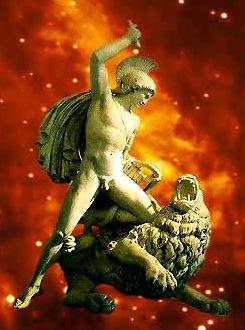
The skin art image courtesy Priest Michael Isom shows Antinous subduing the man-eating Marousian lion in the Egyptian desert in the year 130 AD.

The SACRED LION HUNT was immortalized in poetry and in stone, showing Antinous brashly attacking the lion with his adamantine-tipped spear and wounding it ... so that Hadrian had to gallop to his rescue and dispatch the beast.

Hadrian added medallions to the Arch of Constantine showing him and Antinous with feet on the lion's neck and also making sacrifice to the great lion-killer Hercules.

Soon legend would have it that scarlet-red lotus blossoms had sprung forth from the pool of the lion's blood ... which we honor as the LOTUS MOON, the Pisces Third Quarter Moon in June.

Within a few short weeks after the Sacred Lion Hunt, Antinous himself would be dead. The Sacred Lion Hunt is the last recorded event in His short life.

Flamen ANTONIUS SUBIA celebrated the liturgical ritual in Hollywood.

Antonius noted that the brave may not live forever, but the cautious do not live at all. Tonight's rituals and meditations were aimed at enabling participants to traverse the road between who they think they are and who they can be. The key is to set forth on the journey ... with adamantine-tipped spear in hand ... galloping forward.

Saturday, August 30, 2025

ANTINOUS ENABLES YOU TO DISCOVER
THE INTELLIGENCE OF THE HEART


IN ancient times, Antinous was known as a miracle worker. His worshipers prayed to him for miracles, oracles, visions and answers to problems in their daily lives.

The Egyptian hieroglyphs on the OBELISK OF ANTINOUS state clearly that Antinous answers the prayers of all who call upon him through dreams and visions, for example.

The hieroglyphs also make cryptic references to his ability to work magic through his heart. This is a reference to the Ancient Egyptian concept of the "Intelligence of the Heart."

The Egyptians knew that the brain is the center of motor activity and sensory perception. But they believed the heart is the center of a form of intelligence which has baffled most mainstream Egyptologists ... who assume the Egyptians believed the heart was where cognitive thinking occurs.

But the Egyptians had a very different view of the universe from our rational, scientific view of the universe. We dissect facts and analyze them. But while the Egyptians were very good at analyzing facts, they also retained the Zen-like ability to see the whole ... which leads to contemplation ... not analysis.

The Egyptians understood that if you want to find an intelligent solution to a problem, your brain can do the work. You have all the necessary intelligence inside the bone in your skull.

However, most people use their brains the same way they use their muscles. You can strain your head just as if it were a muscle, and work very hard trying to arrive at an answer, but it doesn't really work that way.

When you really want to find an answer to something, what you need to do is contemplate the problem. Visualize your question as well as you can, and then simply wait.

If you don't, and if you instead try to find the solution through brute mental strength, you may be disappointed, because any solution that comes in that way is likely to be wrong.


But when you have waited for a while, the solution will come of itself. That is what the Egyptians called the Intelligence of the Heart ... using your heart instead of your head.

It will work for you in the same way your stomach will digest your food for you without your having to supervise it consciously. Our attempts to supervise everything consciously have all led to consequences that aren't too good for our stomach, and the reason for that is quite simple.

Conscious attention, which employs words, cannot think of very much. We are forced, therefore, to ignore almost everything while we are thinking. We think along a single track, but the world doesn't proceed along a single track.

The world is everything happening altogether everywhere, and you just can't take all that into consideration because there isn't time.

However, the Intelligence of the Heart can take it all into consideration because it is capable of handling innumerable variables at once, even though your conscious attention cannot...


The hieroglyphs on the Obelisk of Antinous promise that Antinous the Gay God enables us to discover the Intelligence of the Heart ... the Intelligence of HIM ... he opens his heart to you .... 

Friday, August 29, 2025

ANNOUNCING THE LARGEST GALLERY
OF ANTINOUS IMAGES IN THE WORLD


WE are proud to announce the most extensive collection of Antinous images in the world!

Flamen Antonius Subia spent nearly two years assembling the GALLERY OF ANTINOUS ICONS


What initially was supposed to be one page of images became a massive library.

He says it turned out to entail "months of painful, agonizing, finger-crippling, endless catalogueing, and intricate photoshop enhancing and resizing of countless... countless. ..Antinous images!"

The endeavour proved to be not only a technical challenge but also something of a spiritual initiation.

Antonyus says, "I now feel that I am an expert in Antinous Iconography...as over the process, I have become deeply familiar with each and everyone of Antinous's wonderful, beautiful statues and busts and other images.

"I have to tell you that in the end...it has been the most meaningful, and intimate experience of getting to know Antinous on a level that I have never before felt.

"He is so astonishingly beautiful... I found myself treating each and every one of his images with particular, loving care and devotion.

"It's amazing...when you handle his beautiful image again and again...when you gaze upon him, and study him, and see example after example, they all seem to blur together until you are left with this cumulative impression of what he really must have looked like...like the sum total...as though I had layered translucent leaves of his face and body one over the other, each showing through to the next, cancelling out errors, cracks, chips, peculiarities, the hand of the artist, modern enhancements, slight differences...my own impression of what I always thought he looked like...all blurring together into a ghostly form of his true image...I see him now.

"But I am also deeply familiar with all the different variations...I know them all by name, location, origin, and bits of their history...I know the image of Antinous as I had never known it before."

Antonyus adds that the gallery is not complete and he has issued a call for readers to submit more images.


"My intent is to have the most complete collection of Antinous images in the world," he explains. "We are after all The Temple of Antinous, his modern religion. It is only right that we take his image into our possession and display his form for all to see....with reverance and piety...not as an object of art, or history, but as an object of worship."

Thursday, August 28, 2025

WE WEEP FOR JOHN J JOHNSTON


WE weep for our dear British Egyptologist friend John J Johnston, a cultural historian and one of the world's leading authorities on Antinous, who died suddenly and wholly unexpectedly on August 28, 2025.


John was a professional lecturer, writer, and editor. An eloquent speaker and raconteur with an engaging manner and dapper style, his research interests encompassed Egyptian mortuary belief and practice, gender and sexuality in the ancient world, Hellenistic and Roman Egypt, the history of Egyptology, and the reception of the ancient world in modern popular culture.


A former Vice-Chair of the Egypt Exploration Society (2009-2015), he lectured extensively at major academic and cultural institutions in Britain and other countries.


In addition to contributing numerous articles to both academic and general publications, he co-edited the volumes "Narratives of Egypt and the Ancient Near East: Literary Linguistic Approaches" (Peeters, 2011), "A Good Scribe and an Exceedingly Wise Man" (Golden House, 2014), and an anthology of classic mummy fiction, "Unearthed" (Jurassic London, 2013). 


Formerly, a member of the Editorial Board of the journal "Egyptian Archaeology" (2011-2020), he was a Trustee of By Jove Theatre Company (2020-25), and Editor-at-Large for "Horrified Magazine" (2020-25). 


He made onscreen contributions for major documentaries on the Blu-Ray releases of more than twenty, gloriously restored, Hammer Films, originally produced between 1958 and 1976, in addition to making onscreen contributions to the television documentaries "Egypt's Unexplained Files" (360 Productions Ltd, 2019), a ten-episode series, "Tutankhamun in Colour" (BBC, 2020), and "The Curse of Tutankhamun" (Viacom International, 2020).


JUAN GABRIEL IS A SAINT OF ANTINOUS
GAY ICON TO MILLIONS IN MEXICO


WE honour Juan Gabriel, a superstar Mexican songwriter and singer who was an icon for millions of LGBT people in the Latin music world. He is a saint of Antinous.


Born 7 January 1950, he dropped dead 28 August 2016 at his home in California only hours after performing a standing-room-only crowd. He performed for two hours at the Los Angeles Forum on Friday, clad in one of his typical brightly colored outfits. In its review of the concert, Billboard called him "the ultimate showman." He was 66.

Juan Gabriel was Mexico's leading singer-songwriter and top-selling artist. 

His ballads about love and heartbreak and bouncy mariachi tunes became hymns throughout Latin America and Spain and with Spanish speakers in the United States.

He brought many adoring fans to tears as they sang along when he crooned his songs about love and heartbreak, including his top hits, "Hasta Que Te Conoci" ("Until I Met You") and "Amor Eterno" ("Eternal Love").

His hit "Querida" ("Dear") topped Mexico's charts for a whole year.

The adjectives "flamboyant" and "eccentric" followed him all his career, and he was imitated by drag queens in gay clubs throughout Mexico.

He skirted rumors of gayness his whole life. 

He liked to wear jackets covered in sequins or dress in shiny silk outfits in hot pink, turquoise blue or canary yellow, and he was known for tossing his head before dancing or jumping around the stage.

He was once famously asked by a television interviewer: "People look at you and say you are homosexual. What do you say?" His answer became part of his enduring myth.

"Lo que se ve no se pregunta," he answered … "Don't ask about something that is obvious."

Then Juan asked the interview what he saw when he looked at him.

The journalist said: "I see a singer before me, I see a winner" and Juan Gabriel replied: "That is the most important thing, because it is what you do that counts in life."

Juan started out as a waif ... having been sent to an orphanage after his father went insane with grief over the loss of Juan's mother and burned down their village and had to be carried off in a straitjacket.

Little Juan fled abuse at the orphanage by hiding in a rubbish bin and being transported to freedom in a garbage truck. 

Arriving in Juarez, he sang for tips and tricks in seedy clubs, where he caught the eye of a "talent scout" ... and the rest is showbiz history.

In 2015 artist Arturo Damasco painted a 40-square-meter mural of Juan Gabriel on a building in Juarez.

Juan Gabriel never married. According to The Associated Press, a former secretary of his, Joaquín Muñoz, claimed that the two men had a sexual relationship in a tell-all book, "Juan Gabriel and I." 

It confirmed what most fans already believed, but his fans were surprised when years later it became known that he had fathered four children with a friend, Laura Salas.

Juan Gabriel performed to packed auditoriums, including New York's Madison Square Garden and the Kodak Theater in Los Angeles. 

A six-time Grammy nominee, Juan Gabriel was inducted into the Billboard Latin Music Hall of Fame in 1996 and received countless industry awards.

He also garnered ASCAP Songwriter of the Year in 1995, Latin Recording Academy's Person of the Year 2009, and a star on the Hollywood Walk of Fame that same year.

The singer, who was born 7 January 1950, wrote his first song at age 13 and went on to compose more than 1,500 songs. He died 28 August 2016 at age 66 … a homeless orphan who came to be loved by millions.


Wednesday, August 27, 2025

ANTINOUS WORKS MIRACLES FOR YOU
WHILE YOU DAYDREAM AT WORK


NEXT time you have a difficult problem to solve, and concentrating on it just isn't getting you anywhere, consider this: Maybe you're thinking too hard.

"Walk over to a window and think about the people or cars going by for a few minutes, until you get bored," suggests Josh Davis, research director at the New York Neuro-Leadership Institute. 

"Let your mind wander."

How will that help? "Always being 'on' blocks the brain processes that occur when we daydream," says Davis. 

His book, TWO AWESOME HOURS Science-Based Strategies to Harness Your Best Time and Get Your Most Important Work Done, draws on new discoveries in brain science.

The idea is certainly not new. This enkoimesis (ἐγκοίμησις) "dream-incubation" was used in Abaton sleep chambers of Aesculapius temples where worshipers sought healing visions from the god to cure their ailments.


The Ancient Priests of Antinous knew that enkoimesis "dream-incubation" and zoning out, even for a few minutes, allows your brain to tackle tasks it can't handle when you're busy. 


They called it the medium for Antinous to work miracles in your life.

In ancient times, Antinous was known as a miracle worker. His worshipers prayed to him for miracles, oracles, visions and answers to problems in their daily lives.

The Egyptian hieroglyphs on the OBELISK OF ANTINOUS state clearly that Antinous answers the prayers of all who call upon him through dreams and visions, for example.

The hieroglyphs also make cryptic references to his ability to work magic through his heart. This is a reference to the Ancient Egyptian concept of the "Intelligence of the Heart."

The Egyptians knew that the brain is the center of motor activity and sensory perception. 

But they believed the heart is the center of a form of intelligence which has baffled most mainstream Egyptologists ... who assume the Egyptians believed the heart was where cognitive thinking occurs.

But the Egyptians had a very different view of the universe from our rational, scientific view of the universe. 

We dissect facts and analyze them. But while the Egyptians were very good at analyzing facts, they also retained the Zen-like ability to see the whole ... which leads to contemplation ... not analysis.

The Egyptians understood that if you want to find an intelligent solution to a problem, your brain can do the work. You have all the necessary intelligence inside the bone in your skull.

However, most people use their brains the same way they use their muscles. You can strain your head just as if it were a muscle, and work very hard trying to arrive at an answer, but it doesn't really work that way.

When you really want to find an answer to something, what you need to do is contemplate the problem. Visualize your question as well as you can, and then simply wait.

If you don't, and if you instead try to find the solution through brute mental strength, you may be disappointed, because any solution that comes in that way is likely to be wrong.


But when you have waited for a while, the solution will come of itself. That is what the Egyptians called the Intelligence of the Heart ... using your heart instead of your head.

It will work for you in the same way your stomach will digest your food for you without your having to supervise it consciously. Our attempts to supervise everything consciously have all led to consequences that aren't too good for our stomach, and the reason for that is quite simple.

Conscious attention, which employs words, cannot think of very much. We are forced, therefore, to ignore almost everything while we are thinking. We think along a single track, but the world doesn't proceed along a single track.

The world is everything happening altogether everywhere, and you just can't take all that into consideration because there isn't time.

However, the Intelligence of the Heart can take it all into consideration because it is capable of handling innumerable variables at once, even though your conscious attention cannot...


The hieroglyphs on the Obelisk of Antinous promise that Antinous the Gay God enables us to discover the Intelligence of the Heart ... the Intelligence of HIM ... he opens his heart to you ....

Tuesday, August 26, 2025

NINE MILLION MUMMIFIED DOGS
FOUND AT EGYPTIAN TEMPLE OF ANUBIS


AS Antinous and Hadrian journeyed up the Nile in August and September of 130 AD, they must have seen the mighty monuments at Memphis ... and the sprawling cliffside ANUBIEION, the mystery-shrouded Temple of the jackal-headed Egyptian deity Anubis at Saqqara south of modern Cairo.

But was Antinous aware that nine million dog mummies were entombed there?

The unique, terraced temple compound was built into the face of the cliffs overlooking the ancient Egyptian capital city of Memphis-Mennefer. Beyond the Anubieion lay the necropolis city of the dead. In front of it lay the teeming city nestled in the Nile Valley.

For decades, experts were unsure what purpose the Anubieion served. No where else in Egypt is there a temple dedicated solely to Anubis. Some temples to other deities had niche shrines to the jackal-headed deity who conveyed the souls of the dead to everlasting life.

But the discovery of myriads of mummified dogs in the Anubieion's catacombs makes it clear that the Anubieion was indeed a temple whose goal was to assist people in making the transition from earthly life to eternal life.

The dog mummies were sold to serve as "guide dogs" for souls of the departed.

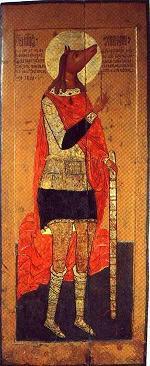
As Christianity spread in Egypt, Anubis morphed into St. Christopher ... and many early Coptic images of Saint Christopher depict him with the head of a dog (image at left).

The discovery came during routine excavations at the dog catacomb in Saqqara necropolis by an excavation team led by Salima Ikram, professor of Egyptology at The American University in Cairo (AUC), and an international team of researchers led by Paul Nicholson of Cardiff University.

Initial inspection reveals that dogs of all breeds and ages were mummified, from newborn puppies to decrepit old dogs.

“We are recording the animal bones and the mummification techniques used to prepare the animals,” Ikram said.

Ikram also told National Geographic, which is financing the project, that "in some churches people light a candle, and their prayer is taken directly up to God in that smoke. In the same way, a mummified dog's spirit would carry a person's prayer to the afterlife".

Saqqara dog catacomb was first discovered in 1897 when well-known French Egyptologist Jacques De Morgan published his Carte of Memphite necropolis, with his map showing that there are two dog catacombs in the area.

However, mystery has overshadowed such mapping as it was not clear who was the first to discover the catacombs nor who carried out the mapping, and whether they were really for dogs.

"The proximity of the catacombs to the nearby temple of Anubis, the so called jackal or dog-headed deity associated with cemeteries and embalming, makes it likely that these catacombs are indeed for canines and their presence at Saqqara is to be explained by the concentration of other animal cuts at the site," Nicholson wrote on his website.

"These other cults include the burials of, and temples for, bulls, cows, baboons, ibises, hawks and cats all of which were thought to act as intermediaries between humans and their gods."


Despite the great quantity of animals buried in these catacombs and the immense size of the underground burial places, Egyptologists have focused on the temples and on inscriptional evidence rather than on the animals themselves.

The mysteries behind De Morgan's mapping were unsolved until 2009 when this team started concrete excavations at the cemetery in an attempt to learn more about the archaeological and history of the site.

"Results at the first season showed that De Morgan map has substantial inaccuracies and a new survey is under way," Nicholson said.


"The animal bones themselves have been sampled and preliminary results suggest that as well as actual dogs there may be other canids present. Furthermore the age profile of the animals is being examined so that patterns of mortality can be ascertained."

Saturday, August 23, 2025

THE HISTORY OF THE ROSY LOTUS
OF ANTINOUS THE GAY GOD


When Emperor Hadrian visited Alexandria,
the poet Pancrates presented him
with a beautiful lotus flower.


Awestruck by the magnificent rosy-red petals,
Hadrian agreed to name the flower
after his beloved Antinous.


Drawings by Julien


Beautiful CG Art by Antonius Subia


Music by Kevin MacLeod


For more info: THE TEMPLE OF ANTINOUS

Friday, August 22, 2025

WILLEM ARONDEUS SAINT OF ANTINOUS:
'HOMOSEXUALS ARE NOT COWARDS'


WE honor Willem Arondeus (22 August 1894 – 1 July 1943) as a saint of Antinous for his courage in standing up against hatred, intolerance and bigotry.

He was a Dutch gay non-Jewish artist and writer who led a group in bombing the Amsterdam Public Records Office in order to hinder the Nazi round-up of Jews, was executed with 12 others by firing squad.

He had started life as an illustrator, designer of posters and tapestries and a painter. In 1923 he was commissioned to paint a large mural for Rotterdam City Hall. During that same period, he illustrated poems by J. H. Leopold, Pieter Cornelis Boutens and Martinus Nijhoff. He admired the older Dutch designer Richard Roland Holst, as can be seen in his work. He did not attain much fame and lived in impoverished circumstances.

Around 1935, he gave up visual arts and became an author. The poems and stories he had written in the 1920s went unpublished, but in the year 1938 he published two novels, Het Uilenhuis ('The Owls House') and In de bloeiende Ramenas ('In the Blossoming Winter Radish'), both illustrated with designs by Arondeus himself. 

The year 1939 saw the publication of his best work, Matthijs Maris: de tragiek van den droom ('The Tragedy of the Dream'), a biography of the painter Matthijs Maris, who was a brother of the Dutch artists Jacob and Willem Maris. 

Two years later, Figuren en problemen der monumentale schilderkunst in Nederland ('Figures and Problems of Monumental Painting in the Netherlands') was published, again with designs by the author. 

At that time in 1941, however, Arondeus was already involved with the Dutch resistance movement.

In the spring of 1941, Arondeus started an underground periodical in which he tried to incite his fellow artists to resist the Nazi occupation of the Netherlands. Earlier than others, Arondeus realized that the demand by the Nazi occupiers that all Jews register with the local authorities was not, as the Nazis claimed, for their own safety, but rather so they could be deported to the Westerbork concentration camp and from there to the death camps in occupied Poland. 

In the spring of 1942, Arondeus founded Brandarisbrief, an illegal periodical in which he expressed the artist’s opposition to the edicts imposed by the Reichskulturkammer (Reich Chamber of Culture); the Nazis' cultural committee. 

In 1943, Brandarisbrief merged with De Vrije Kunstenaar ("The Free Artist"), where sculptor Gerrit van der Veen was one of the editors. Together with composer Jan van Gilse; openly lesbian publisher and writer Tine van Klooster and her partner, publisher Koos Schregardus; sculptor Frits van Hall and his sister, dancer Suzy van Hall; and a number of other artists and intellectuals, the group called for mass resistance against the German occupation.

A concerted operation was underway to hide Jews among the local population, with various underground organizations preparing forged documents for Jews. 

Arondeus was a member of one such group, Raad van Verzet (Resistance Council), which also included openly lesbian cellist and conductor Frieda Belinfante and typographer Willem Sandberg, who was then curator at Amsterdam's Stedelijk Museum. 

Within a short while, the Nazis began to expose the false documents by comparing the names with those in the local population registry. 

To hinder the Nazis, on 27 March 1943, Arondeus led a group in bombing the Amsterdam Public Records Office. Thousands of files were destroyed, and the attempt to compare forged documents with the registry was hindered.

Within a week, Arondeus and the other members of the group were arrested. Twelve, including Arondeus, were executed that July by firing squad.

In his last message before his execution, Arondeus, who had lived openly as a gay man before the war, told his lawyer these words, traditionally translated thusly: "Let it be known that homosexuals are not cowards!"

The Dutch original quote is "Zeg de mensen dat homoseksuelen niet per definitie zwakkelingen zijn!" ... literally: "Show people that homosexuals are not by definition wimps!"

Thursday, August 21, 2025

THE SACRED LION HUNT


ON the 21st of August, with the Sun in the final degrees of Leo the Lion, we commemorate the Sacred Lion Hunt ... when Hadrian and Antinous slew a man-eating lion in Egypt in August 130 AD.

Priests of Antinous celebrate the event in with ritual ceremonies at the Hollywood Temple of Antinous which also see worshipers participating live online from North and South America, Europe and Africa.

During the special ceremonies they also honor the Sacred Rosy Lotus of Antinous ... the pink waterlily said to have sprung forth spontaneously from the lion's blood as it splattered the banks of the Nile.


Flamen Antonius Subia relates in vivid detail the events of the Sacred Lion Hunt: The place is Egypt, somewhere in the rocky wilderness between the scattered oases southeast of Alexandria. 

The time is August of the Year 130 AD. The Sun is poised to enter the Sign of Leo. The Constellation of Aquila the Eagle is at its zenith in the nighttime sky ... just as it is now.

It is the constellation of the Emperor. And the Emperor and his Beloved are touring Egypt when they hear grisly accounts of a man-eating lion marauding the countryside on the edge of the cultivated land. The "Marousian Lion" it was called.

They lead a hunting expedition out into the wilderness. The whole expedition is rife with symbolism from the start since the Sun is in Leo in the daytime skies and the Eagle is soaring in the nighttime skies and the Ancients believed killing lions was tantamount to defeating death itself. Lion hunting was the sport of kings.

When at last the Imperial party flushes out the man-eater, the huntsmen and archers stand back and leave Hadrian to close in on the beast with his steed. Hadrian has just got off an arrow which wounds the animal when, all of a sudden, out of nowhere, young Antinous rides ahead, his reins in his left hand, an adamantine-tipped lance in his upraised right hand.

As the Imperial retinue looks on in horror, the snarling lion charges toward the boy, causing his panicked horse to whinny and wheel about in terror. But Antinous maintains his balance and, instantly judging distance and angle, sends his lance sailing towards the lion as it quickly closed the gap between them. 

The lance slams into its rear flank, inflicting a serious but not fatal wound. Enraged even more, the lion uses its fangs to pull out the lance and charges anew against the Boy who is fumbling with his quiver to ready a shot with his bow. But an arrow is already in the air from behind Antinous, and it whizzes past his ear and hit its mark in the throat of the lion.

It has been fired by Hadrian, who is approaching at full gallop and who, even while the first arrow was still in the air, had already readied a second arrow, which this time penetrates both lungs.

The lion spins about and collapses writhing in the dust, rage in its eyes, blood and saliva guttering from its fanged mouth, gasping for breath as it struggles to get to its feet — because Antinous has dismounted and is sprinting toward it with a drawn dagger.

Hadrian draws his steed to a halt and dismounts with an agility and  lightness befitting a man half his age, fueled by adrenaline and alarm for his Beloved Boy, who faces imminent peril from the mortally wounded lion, still capable of severing an artery with one swipe of its mighty paw.

Hadrian draws his hunting axe from his belt and holds it high as he  lunges onto the lion's back and dispatches the beast with one powerful blow which splits its skull in two with a frightening crack and a spurt of bright red blood which bathes both the older man, now panting and perspiring heavily, and the younger man who still shows no visible expression of concern, just a wild-eyed look of excitement in his eyes, as if he never realized the danger he had been in — as if he thinks he is immortal.

A cheer goes up from the coterie of onlookers when they realize the lion is dead, killed seemingly by a single blow from the Emperor's hand. Courtiers whose eyes are unskilled in the ways of hunting will later claim Hadrian had struck the lion dead with a club.

As soldiers and nervous bodyguards rush forward to make sure everything is all right, the emperor, his adrenalin-strength ebbing as quickly as it came, shakily wraps a blood-spattered arm around Antinous and plants his gilded, spike-soled sandal on the dead animal's neck and nods to Antinous to do the same.

There they stand, bathed in blood and bathed in the adulation of the Imperial coterie, each with one foot on the vanquished man-eater as the animal's blood spreads out and covers the surrounding rocks and sand and a few scrubby wildflowers growing from a crevice in a rock.

Even the flowers are splattered with blood. And these red blossoms  will be plucked by members of the entourage to take back as souvenirs to show to envious courtiers who had not been invited along.

THE SACRED LION HUNT was immortalized in poetry and in stone, with Hadrian adding medallions to the Arch of Constantine showing him and Antinous with feet on the lion's neck and also making sacrifice to the great lion-killer Hercules.


Soon legend would have it that scarlet-red lotus blossoms had sprung forth from the pool of the lion's blood, the lion which had been brought down by Antinous and which had been dealt its death blow by Hadrian — the SACRED RED LOTUS.

Under the Sign of Leo. And under the Constellation of the Eagle. 

Within a few short weeks, Antinous himself would be dead. The Sacred Lion Hunt is the last recorded event in His short life.

And some time afterward, grieving Hadrian would look up into the  nighttime skies with tear-filled eyes and his court astronomers would point out a New Star which had appeared in the southern part of the Constellation of Aquila the Eagle.

The New Star would be interpreted as a celestial sign that Antinous had been raised to the firmament, that the Constellation of the Imperial Eagle had been joined by the CONSTELLATION OF ANTINOUS. It was a sign that Antinous was now a God.

If you go outside tonight and peer out into the darkness with all its deep and hidden dangers, remember Antinous and how he peered out into the barren wilderness with all its deep and hidden dangers. 

He charged forth, his bridle-reins in his left hand and an adamantine-tipped lance in his right, and he faced death unafraid.

For Antinous knew he was immortal.

The Constellation of Antinous, still under the wing of the Imperial Eagle, will be right directly over your head tonight ... shining proof that Antinous is a God and that he is indeed immortal.


Don't look out into the darkness around you and be afraid. Instead, look up and remember the Beloved Boy, who was a fearless hunter, who stalked death itself, and who emerged victorious over it.

Wednesday, August 20, 2025

THE SACRED BAND OF THEBES
THE ARMY OF LOVERS


AUG. 20 the Religion of Antinous commemorates the Sacred Band of Thebes, the Army of Gay Lovers whose courage and valour have echoed down through the ages as an inspiration that Gay Love is a magical means of Conquering Fear and  Doubt.

The Sacred Band of Thebes, also called The Theban Band, was a battalion composed entirely of homosexual friends and lovers. This military unit, consisting of 150 male couples, was based on the belief that men fighting alongside their lovers would die rather than shame one another.

According to Aristotle, the Army of Lovers were sworn into military service at the Tomb of Iolaus, one of the many male lovers of Hercules. Iolaus had helped the god in the Twelve Herculean Tasks. 

He often acted as Hercules' charioteer and companion, and the closeness of their relationship was such that he was known as Heracles' symbomos (altar-sharer), since the two could be honored at one and the same altar — a very rare occurrence in ancient Greece, where each divinity would have his or her own altar.

Iolaus was called the eromenos (beloved boy) of Hercules, and was thus a Sacred Hero of same-sex love in Thebes. Hercules, Iolaus and Eros were often depicted together.

That is probably why the army of gay lovers was called the Sacred Band, since they took their oath of allegiance at the Sacred Tomb of Iolaus, which was at the same time a shared sacred altar to Hercules. In effect, the warriors were swearing that they would fight alongside their comrades the same way Iolaus and Hercules fought together — armed with the arrows of Eros.


You can see the parallels to Hadrian and his beloved boy Antinous, and later this week the parallels become even clearer when we commemorate the SACRED LION HUNT.

After that hunt in the Libyan desert in the summer of the year 130 AD, Hadrian and Antinous made sacrifice to thGreat Lion Slayer Hercules — thus cementing the identification between Hadrian/Hercules and Antinous/Iolaus — and their affiliation with the Sacred Band of Thebes.

The great Theban gener
al and tactician Epaminondas is generally credited with establishing The Sacred Band, although some sources claim it was his "beloved friend" Pelopidas who was responsible for recruiting them. No matter — they both fought side-by-side at the head of The Sacred Band.

This corps d'elite first took to the battlefield against Sparta, which had dominated Greece since the fall of Athens in 404 BC. The Spartans were confident of victory, as they had never suffered a defeat on the battlefield — never ever.

Deploying the Sacred Band on his front left wing, "Epaminondas made his left wing fifty deep and flung it forward in the attack." 

The "extra weight" of this wing and the "fanatical bravery of the Sacred Band" broke the Sparta right wing, which contained their best warriors. In the ensuing hand-to-hand combat, the Spartan king was killed and their right gave way.

Witnessing this, the rest of the Spartan forces, who had not yet been engaged, fell back in disarray, running for their lives. Thus, Sparta suffered their first recorded defeat in more than 400 years — at the hands of an Army of Gay Lovers.

But the end came in 338 BC at the battle of Chaeronea when King Phillip II of Macedonia and his son Alexander (later called Alexander the Great) defeated the combined forces of Athens and Thebes-Boetia. Alexander confronted The Sacred Band of Thebes, the elite corps of 300 homosexual lovers who were by that time the most respected soldiers in the world.

But alas! They were no match for the Macedonians under Phillip and Alexander. It was a rout. The Athenian and Theban armies gave way and began retreating from the advancing Macedonians. Only The Sacred Band stood their ground — and died. Only a few were subdued and captured. Of those who died, it was found that not one had been wounded in the back — a sign that they had not turned away from the fight.

Alexander was so moved by their nobility and courage that he asked his father to bury them with honour and raise a monument in the form of a Sacred Lion over their mass grave. In 1881, the shattered fragments of this Lion Tomb were discovered, surrounded by the bones of 254 pairs of men with their weapons, arranged in a phalanx of seven rows, the battle formation of the Sacred Band.

In 1902 the fragments of the Sacred Lion were reconstructed and placed again over the tomb of The Sacred Band (depicted left) by the secret homosexual society known as the Order of Chaeronea, founded by gay-rights pioneer George Cecil Ives.

It reminds us once again of the Sacred Lion Hunt which we celebrate later this week.

So, what has all of this got to do with us in our daily lives? We're not soldiers. We're not brave and courageous. Like Dorothy Gale, we're meek and mild. Timid. We know that if we were on a battlefield, we would turn and run. We would hide and "play dead" and hope nobody found us.

We assume that the Army of Gay Lovers were all fearless. We think they were unafraid. We don't think of them as being scaredy-cats like us. We think they didn't mind the prospect of agonizing death. We think they were somehow above such mortal fears and doubts.

That's nonsense, of course. They were scared out of their wits. We can scarcely imagine how afraid they were. As they stood there alone against the mightiest army in the Ancient World, their emotions shifted beyond the mere terror of possibly being killed, to the actual horror of inescapable agony and death. It is one thing to be terrified — we all know the fears generated by terrorists who fly airliners into buildings. 

But the emotions experienced by those trapped in the planes or inside the burning buildings go far beyond mere terror to the actual horror of inescapable agony and death. That is the Mystery of Terror as opposed to the Mystery of Horror. We tend to forget the distinction!

The Army of Gay Lovers were not without fear. On the contrary, they were staring into the horror of impending pain and death. But they did not allow their fear to overwhelm them. 

Instead, they turned their fear "inside-out" and used it as a magical shield. The barbs of fear were no longer poking inward to themselves, but instead were pointing outward towards their foes.

And that is the Mystery Teaching of the Army of Gay Lovers. It was no doubt part of the initiation which the recruits underwent at the Tomb of Iolaus. They were schooled in magico-religious methods for handling fear. It's about learning to harness Mars energy. Mars is all about the double-edge sword of fear/bravery and how you can learn to wield that Sword of Mars.

It's not about being fearless. It's about being able to transform your fear into a mighty force which wins the battle of life. Mars Warrior Energy is not about death. It is about LIFE. It is about harnessing fear and doubt and turning them into useful energies in your daily life.

Life — from the time you are born until the time you die — life is just one constant battle. And if you give in, then you are lost. And if you give in to the fear and doubt that constantly confront you each and ever day, then you are lost. It's about using selfless love and transcendant awareness to transform fear and doubt into constructive energies which empower you to stand up and wade into the fray of daily life.


The Band of Thebes were initiated into Mystery Teachings which showed them how to transform fear and doubt into a magical force which made them invincible — capable of asserting their will and making their dreams become reality. 

And the catalyst was male-male love and devotion.

This is one of the deepest and most profound Mystery Teachings of the Religion of Antinous

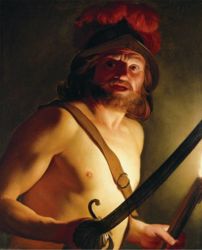
We are talking about the Mysteries of Antinous-Mars. This is why Flamen Antinoalis Antonius Subia has painted Antinous in the guise of the War God (above). 

Antinous is not just about gay male beauty. He is about gay male warrior energy.

Mars is a very important constituent aspect of Antinous. In Fixed Star Astrology, the STAR OF ANTINOUS is characterized by a mixture of Jupiter/Mars energy along with Venus energy — unique among Fixed Stars. To overlook Mars is to overlook a major component of what Antinous is all about.

Mars and his Alchemical Intelligence Graphiel and Daimon Barzabel (Deimos and Phobos) is much misunderstood by philosophers and occultists. 

The fiery Graphiel/Barzabel energies of the red planet ("terror" Deimos and "horror" Phobos) are often seen as frightful and horrific and destructive and warlike with no other qualities. This is a shallow analysis and one that should be discarded. Understanding your Martial nature — the Antinous-Mars warrior inside you — is essential to your survival and growth as a gay man. Terror and horror accompany us all our lives.

We are all afraid every day. We are all riddled with doubts every day. Look around you — most people are consumed with fear and doubt. Fear fuels their lives! But each of us can learn to turn our fears and doubts "inside-out" so that their barbs no longer point inward towards us, but instead so that these barbs of fear and doubt form a protective shield around us. 

It girds us with a constructive energy which helps us to advance through the Herculean travails which we face in our daily lives. Instead of being "fearfully" timid, we become "fearsomely" determined not to let life get us down.

Tomorrow, this transformational ability to turn fear "inside-out" will help us to understand how Antinous was able to charge the man-eater during the SACRED LION HUNT.

He must have been terrified. He was young and inexperienced and alone on his steed and armed only with an adamantine-tipped lance.

But through his loving bond with Hadrian/Hercules, Antinous/Iolaus was also magically armed with the "fearsomely strong" energies of the Sacred Band of Thebes. 


Flamen Antinoalis Antonius affirms: "We consecrate and honor their memory and call upon their strength and courage in our own hearts, that we may become the New Sacred Band." 

Tuesday, August 19, 2025

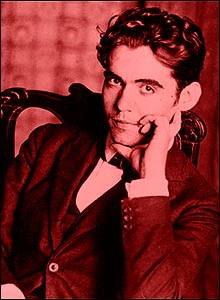
FEDERICO GARCÍA LORCA
SAINT OF ANTINOUS


THE religion of Antinous honors St. Federico García Lorca, who was openly gay and who is one of the greatest poets of the Spanish language.

Born June 5th 1898, he was executed by the Fascists on August 19th 1936 during the Spanish Civil War. García Lorca's central themes are love, pride, passion and violent death, which also marked his own life.

The Spanish Civil was just getting underway in August 1936 and García Lorca was seen by the right-wing forces as an enemy. The author hid from the soldiers but he was eventually found.

An eyewitness has told that he was taken out of a Civil Government building by guards and Falangists belonging to the "Black Squad". García Lorca was shot in Granada without trial. The circumstances of his death are still shrouded in mystery. He was buried in a grave that he had been forced top dig for himself. 

According to some sources, he had to be finished off by a coup de grâce. One of his assassins later boasted, that he shot "two bullets into his arse for being a queer".

It was the end of a brilliant career as a poet and dramatist who was also remembered as a painter, pianist and composer.

In the 1920s he was close friends with Luis Buñuel and Salvador Dalí, among many others who later became influential artists in Spain. Despite the accolades from artists and critics, he suffered from bouts of depression brought on largely by his inner conflict about his homosexuality.

He was tortured by the demands of being a celebrity in a homophobic society and the yearnings of his gay soul.

During his lifetime only a handful of close friends were allowed to read the collection of gay poems which would be published many years later as his Sonnets of Dark Love. Here is one of them, entitled Love Sleeps in the Poet's Heart:


You'll never understand my love for you,
because you dream inside me, fast asleep.
I hide you, persecuted though you weep,
from the penetrating steel voice of truth.
Normalcy stirs both flesh and blinding star,
and pierces even my despairing heart.
Confusing reasoning has eaten out
the wings on which your spirit fiercely soared:
onlookers who gather on the garden lawn
await your body and my bitter grief,
their jumping horses made of light, green manes.
But go on sleeping now, my life, my dear.
Hear my smashed blood rebuke their violins!
See how they still must spy on us, so near!


With the Catalan painter Salvador Dalí and the film director Louis Buñuel he worked in different productions.

Dalí and Lorca had met in 1923. From the beginning, Lorca was fascinated by the young Catalan's personality and looks. Also Dalí had admitted that Lorca impressed him deeply.

When Buñuel and Dalí made their famous surrealist short film Un Chien Andalou (1928), García Lorca was offended: he thought that the film was about him.

Lorca's friendship with Dalí inspired a poem, a defense of modern art and at the same time an expression of homosexual love. Dalí dedicated his painting of Saint Sebastian to his friend, who often compared himself to the tortured homoerotic martyr.

"Let us agree," Lorca wrote to Dalí, "that one of man's most beautiful postures is that of St. Sebastian."

"In my 'Saint Sebastian' I remember you," Salvador Dalí replied, ". . . and sometimes I think he IS you. Let's see whether Saint Sebastian turns out to be you."

García Lorca was capable only of a "tragic, passionate relationship," Dalí once wrote — a friendship pierced by the arrows of Saint Sebastian.


The Religion of Antinous honors this great artist who lived and loved tragically and passionately and who died tragically for being gay.

Monday, August 18, 2025

ANTINOUS IN CORINTH


THE IMPERIAL entourage arrived in Greece, at the city of Corinth in the late summer of 128. 

They visited the Temple of Fortuna, the goddess of fortune, known as Tyche to the Greeks. 

Hadrian and Antinous made sacrifice to her for the benefit of the tour and for the Empire as a whole. Fortuna, also known as Bona Dea, a manifestation of the Great Mother as a girl, in her aspect as the bestower of goodness, wealth and prosperity. 

Her consort was Agatho Daimon, the "Blessed Daimon." In Greek, "daimon" means "spirit-being" regardless whether that being is beneficial or detrimental to humans. It was only later that the Christians literally "demonized" the word daimon, so that the modern word "demon" only ever refers to an evil spirit. 

Agatho Daimon is a decidedly beneficent spirit, rendered often as a serpent. 

Antinous was later compared to Agatho Daimon, and is often portrayed with the Serpent in his hand, as in the famous Berlin Antinous-Agathodaimon statue pictured here. 

The arrival of the court in the city of Corinth signaled the beginning of the association between Antinous-Agatho Daimon and his female counter-identity as Fortuna. 

After the death and deification of Antinous, a temple to Antinous would be erected to him and we know the name of the chief priest there: HOSTILIUS MARCELLUS.

We consecrate this day to our own fortune and to the forces of chance that play through our lives, as Hadrian and Antinous submitted their hope to the goddess at Corinth.

Sunday, August 17, 2025

NO WELL-GROOMED ROMAN MALE
WAS WITHOUT AN ANTINOUS BALSAMARIUM


"CLEANLINESS is next to Godliness" ... was Ovid's advice to young men setting out on amorous conquests in his poem Ars Amatoria.

A clean body and a well-groomed appearance was not only indispensable in the art of love, but was also considered a fundamental feature of Roman self-esteem, frequently contrasted with the uncleanliness and unkempt appearance of Barbarians living outside the borders of the Empire.

The third Friday in August is Men's Grooming Day and the ancient Romans apparently considered Antinous to be their role model because a BALSAMARIUM (bath unguent jar) in the form of the head of Antinous was hugely popular.


Any well-groomed Roman male owned an array of bathing implements, combs, strigilae, lamps, water-resistant flip-flops and other articles ... including a balsamarium to hold his bath oils or skin lotions.

Antinous balsamaria were exceedingly popular in Rome. Suitable for holding bath oils or moisturizers, an Antinous balsamarium suggested that its owner would emerge from the baths looking like a God. 

And we thought modern advertising came up with that gimmick!

Saturday, August 16, 2025

THE BIRTHPLACE OF ANTINOUS
IS THE HOME OF 'MAD HONEY'


TURKEY's hallucinogenic "Mad Honey" is produced when bees pollinate rhododendron flowers in the remote mountainside towns of the Black Sea region ... where Antinous was born and spent his childhood.

After his death and deification, Antinous was identified with ARISTAEUS (below right), the inventor of beekeeping, so it is likely that he knew about the effects of Bithynian "Mad Honey."

He must have seen beekeepers hauling their hives up the slopes of the mountains of his homeland until they reach vast fields of cream and magenta rhododendron flowers. 

Here, they unleashed their bees, which pollinated the blossoms and made a kind of honey from them so potent, it has been used as a weapon of war.

The dark, reddish "Mad Honey," known as "deli bal" in Turkey, contains an ingredient from rhododendron nectar called grayanotoxin ... a natural neurotoxin that, even in small quantities, brings on light-headedness and sometimes, hallucinations. 

Throughout the ages, Bithynia has traded this potent produce with Greece and Rome and (in later centuries) Western Europe, where the honey was infused with drinks to give boozers a greater high than alcohol could deliver.

When over-imbibed, however, the honey can cause low blood pressure and irregularities in the heartbeat that bring on nausea, numbness, blurred vision, fainting, potent hallucinations, seizures, and even death, in rare cases. 

Nowadays, cases of mad honey poisoning crop up every few years ... oftentimes in travelers who have visited Turkey.

Rhododendron flowers occur all over the world, and yet mad honey is most common in the Bithynia region ... the biggest honey-producing region in Turkey.

"There are more than 700 different species (of rhododendron) in the world, but according to our knowledge just two or three include grayanotoxin in their nectars," says Süleyman Turedi, a doctor at the Karadeniz Technical University School of Medicine in Trabzon, Turkey, who studies deli bal's effects and has witnessed more than 200 cases of mad honey poisoning.

In Turkey, not only do the poisonous rhododendrons abound, but the humid, mountainous slopes where Antinous grew up provide the perfect habitat for these flowers to grow in monocrop-like swaths. 

When bees make honey in these fields, no other nectars get mixed in ... and the result is deli bal, potent and pure.

Although the product makes up only a tiny percentage of Bithynia's honey production, it has long held a strong Turkish following.

"People believe that this honey is a kind of medicine," Turedi says. “They use it to treat hypertension, diabetes mellitus and some different stomach diseases. And also, some people use deli bal to improve their sexual performance."

The honey is taken in small amounts, sometimes boiled in milk, and consumed typically just before breakfast, he adds ... not slathered on toast or stirred generously into tea the way normal honey would be.

Its value to customers has given beekeepers an incentive to keep visiting those rhododendron fields and producing it alongside their normal honey products.

Johnny Morris, a travel journalist from the United Kingdom, puts its Turkish predominance partly down to history, too. In 2003, for his popular travel column called "Grail Trail," he went to taste mad honey in Trabzon, a Turkish city that’s backed by mountains and faces the Black Sea.

"It’s got a long history in Turkey," he says. "It was used as a weapon of mass destruction for invading armies."

Indeed, in 67 B.C. Roman soldiers invaded the Black Sea region under General Pompey's command, and those loyal to the reigning King Mithridates secretly lined the Romans' path with enticing chunks of mad honeycomb. 

The unwitting army ate these with gusto, as the story goes.

Driven into an intoxicated stupor by the hallucinogenic honey, many of the flailing soldiers became easy prey, and were slain.

Mad Honey is still sold under the counter at shops in the area today. Turedi explains that Turks in the region have the know-how to consume it responsibly.

"Local people are able to distinguish mad honey from other honeys. It causes a sharp burning sensation in the throat and thus it’s also referred to as bitter honey," he says.

People who have tried is say that even a drop or two of it on the tongue has a numbing effect. Experts say deli bal retains its numbing, head-spinning traits because it is untreated, unprocessed, and essentially pure.

"We know that if you eat more than one spoonful of honey including grayanotoxin, you are at risk of Mad-Honey poisoning," Turedi says.

"In spring and summer, the honeys are fresh and may include more grayanotoxin than in other seasons." 

If that doesn’t dissuade the adventurous foodie, then Turedi says to limit intake to less than a teaspoon, "and if you feel some symptoms associated with mad honey, you should get medical care as soon as possible."

For adherents of Antinous on pilgrimages to the land of his birth, the dangerously sweet syrup retains its ancient mystery, tucked away in shops that are difficult to find.