Wednesday, June 12, 2013

"SHOCKING" POMPEII PAINTING

RESURFACES AFTER NEARLY 100 YEARS


A "lost" painting said to have "shocked" the Victorians with its depiction of a young woman in a diaphanous pink gown doing a sensuous dance in Pompeii has been rediscovered and is set to sell at auction in London for £400,000 ($625,000).

The painting, by Sir Edward John Poynter and entitled "The Ionian Dance," caused ladies to swoon and heterosexual gentlemen to twitch their moustaches in titillation when it was unveiled in 1895.

Homosexual art aficionados at the time noted Poynter's brilliant mastery of the brush in creating realistic marble surfaces polished so smoothly that they reflect light. They also marveled at the way the sheer fabric flows.

The painting was last seen on the open market in 1915, when it passed into a private collection and out of the public gaze.

It has now re-emerged nearly a century later after being offered at Bonhams auction house, where it is set to sell for over $600,000.

A spokesman called the painting "arguably the most important work by Sir Edward Poynter," as he claimed it was the first opportunity for it to be seen in "generations," according to a report in THE TELEGRAPH.

The image is intended to bring to life an ancient Greek poem by Horace, in which a young girl is exiled from Greece and the Ionian islands. She is seen in the painting in a translucent gown, performing a native dance for her Roman mistress.

It is said to have been "heavily influenced" by the stories of debauchery coming out of the buried city of Pompeii, after it was rediscovered in 1863.

A spokesman for Bonhams told The Telegraph: "For the first time, excavations exposed magnificent murals, artworks and the preserved remains of the city's inhabitants.

"The city had been discovered once before in 1599 by an architect who stumbled across frescoes of such frequent sexual content that they were hastily covered over again and no more of the city was touched.

"After the 19th century re-discovery, artists were heavily influenced by the ancient Roman culture that had been tragically wiped from history."

"The Ionian Dance" was exhibited at the Royal Academy in London, and bought from the artist by notable collector Robert English. It remained in his collection until his death in 1914, when it was sold by his estate.

It will now be sold on July 10 at Bonhams' 19th Century Paintings sale, estimated at £300,000-£400,000. 

Tuesday, June 11, 2013

THE RISE OF THE STAR OF ANTINOUS


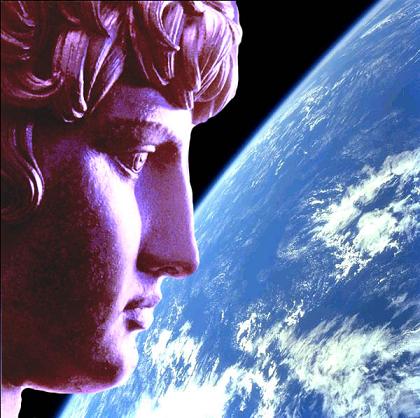
ON JUNE 11th, the Religion of Antinous celebrates the Rise of the Star of Antinous. This is the date in our Liturgical Calendar when the Constellation of Antinous begins to rise over the horizon at sunset. It is visible on the eastern horizon along the banks of the Milky Way.

Wherever you live on this blue marble we call Earth, you can see the Constellation of Antinous on starry nights from mid-June through late October when, in synchronicity with the Death of Antinous in late October, the Star of Antinous descends below the western horizon in the glare of the setting sun.
 

The Constellation of Antinous is no longer recognized by astronomers (just as Pluto has been demoted to the rank of "dwarf planet"). But it is still visible from any point on Earth nestled between Sagittarius and Capricorn and in the talons of Aquila (the Eagle Constellation) representing the Imperial Eagle which carried Antinous to lofty heights.

The most visible identifiers are the three bright stars of Aquila — Altair at the crown of his head, Tarazad, and Alshain. Alshain is derived from Arabic for "Two Friends" which astrologers have cited as a hint as to how to interpret the Sign of Antinous.

The Star of Antinous is however difficult to see. Most people cannot see it at all. You won't find it on any star chart. Like the Star of Bethlehem, it is a mystery and a conundrum about which many theories have been written.

And even if you could see it, the light which reaches your eyes would have left the star thousands of years ago — perhaps about the time that Emperor Hadrian discovered the star.

The simple truth of the matter — and the most beautiful facet of all — is the fact that Hadrian discovered the Star of Antinous with his own tear-filled eyes as he looked skyward in grief after the death of his beloved Antinous. Distraught and weeping, the emperor stood under the canopy of the star-studded heavens and looked up the River Nile towards the spot where his Beloved Boy had died. And he saw a new star which he recognized as a celestial sign that the gods had taken Antinous to be one of them.


You have to realize that Hadrian was a keen astronomer/astrologer himself. He knew the heavens like the back of his hand and he was so adept at casting horoscopes that it was said he had determined the exact hour of his death. He built an observatory at his sumptious villa outside Rome. And the tour of Egypt had brought him into contact with the finest Egyptian magician/priests, one of whom taught him how to cast a binding spell which could give him dream-visions and could also cause someone to fall hopelessly in love with him or — depending on how it was cast — even cause that person to die in agony.

Hadrian was that sort of control freak. Despite the fact that he was the mightiest man on Earth who could send a man to death on a whim (and did so, on occasion), he also wanted control over the future. And he wanted to be able to force someone to love him and never, never leave him.

Much has been theorized about those fateful final days leading up to the death and deification of Antinous and Hadrian's discovery of the STAR OF ANTINOUS.

Yes, much has been written about these events and about Hadrian's obsession with magic and astrology and soothsayers. One of the more fanciful versions was published in a novel in the mid-1950s by the German author Ernst Sommer. Entitled simply Antinous, the novel suggests Antinous sacrificed his own life to save his beloved emperor during the imperial tour of Egypt in the year 130 AD.


The dramatic climax of the plot has Hadrian lying in a villa in Hermopolis, feverish and at death's door after having been bitten by a mosquito. The emperor writhes in bed, calling out Antinous's name. The Empress Sabina and heir-apparent Lucius, jealous but also fearful that the presence of Antinous might further agitate the emperor, issue orders that the boy be kept away from the emperor.

After several daring attempts to sneak into the villa, Antinous is finally put under house arrest aboard an imperial vessel anchored a few miles upstream near the fallen-down Temple of Bes (the future site of the Sacred City of Antinoopolis). Lucius has ordered that he be put in irons to prevent him from sneaking off to visit Hadrian. But the guards cannot bring themselves to place the beauteous boy in irons, in defiance of Lucius's orders. Instead, they merely confine him to his quarters below deck with a single porthole overlooking the nighttime waters of the Nile.

Sensing that the emperor is dying, Antinous realizes his love for Hadrian is boundless and that nothing can keep them apart. Thinking back to his discussions about life and death with Jewish Rabbis, Christian clerics and Egyptian priests of Osiris, he realizes that the day has come. The hour has arrived. It is time to surrender everything he has — in a pure act of love that will transform everything.

He opens the porthole hatch and sees an unusually bright star which seems to beckon. He steps out of his clothes and leaves them (his last earthly possessions) lying in a heap on the floor. He climbs deftly out the porthole and slips quietly into the water.

At the same moment, Hadrian breathes his last breath, to the horror of Sabina and Lucius and the others who are gathered at his bedside. In a state now beyond physical life, Hadrian opens his eyes to see Anubis standing before him with outstretched hands, lifting him out of bed and guiding him away down many dark corridors. At last, Hadrian is taken through a massive portal and into a chamber where Thoth is waiting beside scales placed before Osiris.

Thoth begins the Weighing of the Heart ceremony as Osiris asks who this person is who seeks admittance to his realm. In the midst of the solemn proceedings there is a loud banging at the portal and Anubis announces that someone has arrived to offer his own heart in exchange for the emperor's heart, so that Hadrian might live and walk the earth again. That person is standing unseen just outside the portal. After brief discussion, the Egyptian deities acknowledge that the Law of Maat specifically envisions such an exchange and that, indeed, it is the most sacred and powerful of covenants — surrendering one's own heart on the Scales of Truth for that of a loved one. Such love cannot be denied. The offer cannot be denied.

Genesthoi — So Be It Done!

Back at the death bed in the Hermopolis villa, Hadrian gasps suddenly and his eyelids fly open, to the amazement of everyone who thought he had just expired. Sensing what has happened, he speaks hoarsely of a vivid dream involving deities. He looks around and demands to know where Antinous is.

"Where is he? What have you done with him? I know he would be here at my side if he were physically able. Bring him to me at once!"


But as Sabina and Lucius stammer excuses, and before the runners can summon Antinous, a boat crewman bursts into the room with the news that Antinous is missing and presumed to have drowned in the Nile.

Hadrian suffers a relapse, but the Egyptian magic is well done. So he cannot die this time. As the search for Antinous continues, with hope waning each day, Hadrian retreats to the rooftop observatory of the villa in Hermopolis which has been placed at his disposal by a wealthy Hermopolite. The emperor stares into the heavens night after night, refusing to give up hope that Antinous might yet be alive, perhaps dazed and confused and lost somewhere along the river.

Then one night he looks into the heavens and sees the proof that he has been looking for since the disappearance of Antinous. He summons the empress and Lucius and the entire court and also calls for the chief astrologer of the Temple of Thoth in Hermopolis to come quickly.

He informs them that a new star has appeared in the heavens and that it is a celestial sign that Antinous has left this earthly existence to ascend to the pantheon of the gods. He has surrendered everything on behalf of his beloved emperor, just as he had always said he would. Everyone thinks Hadrian has suffered another relapse and is delusional with fever. But the astronomer arrives and swiftly confirms that the sharp-eyed emperor has indeed discovered an uncharted star.

As Hadrian leaves to issue orders for the deification of Antinous, construction of the city at the spot where he drowned and erection of temples throughout the world, the astronomer remains behind in the rooftop observatory with the wealthy owner of the house. Where precisely is this new star, the owner asks. "I know quite a bit about the stars for an amateur, but I can't for the life of me see anything at the spot in the heavens where Caesar was pointing just a while ago."

The astronomer says that the new star is definitely there and that astronomers throughout the world will confirm its existence and it will be recorded duly in all the star charts.

"Yes, but can't you point it out to me?" the wealthy man pleas. "I'm straining my eys looking, but I just can't see anything."

The astronomer answers, "And that is why you will never be a good astronomer. You scan the heavens with your eyes, but not with your heart."

So Hadrian looked into the nighttime skies and discovered a new star to point the way to that new religion. As a scholar and man of science he was able to see it with his own two eyes. Perhaps it was a super-nova which flared and then went out — who knows? He saw it and his court astronomers confirmed it and the Constellation of Antinous was recorded in the star charts for 19 centuries to come.

But more importantly, Hadrian discovered the Star of Antinous shining in his heart. The Death of Antinous showed him a way to make his vision of the perfect religion a reality on Earth. It was the Light he was seeking. It was the Light of Antinous.

So when you look up into the nighttime skies tonight in search of the Star of Antinous, don't be surprised if you can't find it with your physical eyes. You can't find it in physical space, which is why Flamen Antinoalis Antonyus Subia calls it the Dark Star of Antinous. Look inside your heart and you will find it shining there with all the beauty of a dream of perfection ....

Lumen Antinoi Adiuva Nos!

(Light of Antinous, Sustain Us!)


Monday, June 10, 2013

WHAT DID ANTINOUS LOVE TO EAT?

PERHAPS A LITTLE TURKISH DELIGHT


WHAT did Antinous like to eat? Did he like pungent Roman garum fish sauce? Alas, we don't know what Antinous liked to eat.

But we know he was from Bithynia ... modern Turkey ... a land with a rich culinary tradition. 

Presumably he was raised on a diet of olives and lentils and spicy chicken and garlicky goat meat and goat cheese and fish/seafood of all kinds. And pork/goat/chicken sausages, of course.

The cherry tree originated in Asia Minor, for starters. He must have eaten dates and pistachios and figs and honey cakes similar to baklava.

He would have had somewhat oriental tastes inspired by Persia, don't you think? He would have loved honey-cinnamon flavor with maybe a touch of almond or pistachio and just a hint of rose water.

The incredibly sweet treat called: TURKISH DELIGHT!

Being a living and breathing "Turkish Delight" himself, Antinous would have loved living in an Imperial palace with "whole rooms simply stuffed with Turkish delight" so he could enjoy all he wanted any time he wanted, served to him in silver dishes by obedient slaves while his doting emperor wiped the powdered sugar from his sweet lips. 


Life in the palace would have been magical. All the emperor had to do was snap his fingers and the most incredible things would appear like magic for young Antinous to enjoy ....

Antinous especially would have loved Bithynian wild mountain orchids -- because the plant's tubers are ground to make a flour which is used in all sorts of dessert sweets. 


It is called "salep" and is used in a syrupy drink which was very popular throughout the Mideast and Europe until its popularity was overtaken by coffee. 

In England, it was called "saloop" and was THE thing to drink before tea was imported from India. 

These Bithynian orchid bulbs were incredibly popular in Ancient Rome, where they were ground to make sweet drinks which were believed to be aphrodisiacs (coming from the "testes" orchid) and which had names like "satyrion" and "priapiscus".

Paracelsus, the alchemist/chemist, wrote, "Behold the Satyrion root! Is it not formed like the male privy parts? Accordingly, magic discovered it and revealed that it can restore a man's virility and passion!"

In fact, salep is so popular to this day, that the wild mountain orchids have become practically an endangered species in Turkey/Bithynia.

In modern Turkey, salep is used in a famous ice cream called "dondurma" which is very precious and beloved by all Turks.

Turkish "dondurma" vendors wear a particular outfit and have a little ritual ceremony for serving this very thick and gooey ice cream which involves digging it out with a long spatula and slinging it around to that the cone rings a bell -- and then doing acrobatic tricks with the cone stuck to the spatula.

The ritual ... the anticipation ... the laughter ... the most delicious ice cream in the world ... and it's made from orchids!

This is what Antinous the Gay God serves to everyone aboard the Barque of Millions of Years ... free kisses with every serving ....


Sunday, June 9, 2013

LOVE IT OR LOATHE IT
ROMAN GARUM FISH SAUCE IS BACK


IT was called "garum" and it was as ubiquitous on Ancient Roman dining tables as a bottle of soy sauce, Worcestershire sauce, ketchup, Mexican salsa or German Maggi is on tables in modern cultures.

This powerful fish sauce was loved by many Romans, who ladled it over everything they ate ... and absolutely detested by many other Romans, whose stomachs turned at the mere scent of it. 

The image above is a spoof mosaic saying "Beware of Garum" (a pun on "Cave Canem" ... "Beware of Dog") but many Ancient Romans no doubt would have welcomed such a warning at a taverna doorway.

Garum was an essential condiment for Romans, both patrician and plebian. It was made by curing chopped and salted fish innards in earthen amphores. These jars were left in the sun for up to three months as the mixture fermented.

Production of garum was often relegated to areas removed from residential and business districts because the stench was so over-powering.

The final product varied widely in quality and an ancient recipe book even offers advice about how to "reclaim" spoiled garum.


And now garum fish sauce is back ... thanks to Spanish researchers at the Universities of Cádiz and Seville, who hope to market it commercially. They already have a name: "Flor de Garum" (Garum Blossom), according to A NEWS REPORT.

Initial taste tests involving about 30 chefs are encouraging ... though most of the cooks admit that garum is an acquired taste and must be used sparingly.

Petri Benitez, the head chef of Venta Melchor, used it as a condiment in tuna tartar.

"I dispensed with salt because the little dash of garum sauce was already salty enough," he said. "The flavor is very reminiscent of the sea, fishy and salty. But it's a nice aroma, very soft, very subtle. It would be a good substitute for soy sauce."

Blas Perez, head chef at Hotel Conil Park, concurred,, saying, "I think it can be a wonderful complement to a chowder or seaman's stew."

Alvaro Rodriguez and Josefina Alcantara Sanchez Garcia are two young researchers working on this project.

Both are convinced that, after a hiatus of 1,400 years, the time has come to re-introduce garum to modern palates.

They are now looking for 30,000 euros in start-up funding to bottle garum for the specialty gourmet sector and restaurants.

Saturday, June 8, 2013

JOHANN JOACHIM WINCKELMANN

SAINT OF ANTINOUS


ON June 8th the Religion of Antinous commemorates the flamboyantly gay man who is the father of modern archaeology, our own Saint Johann Joachim Winckelmann.

Born in Stendal, Germany, on December 9, 1717, he is called the father of modern archaeology because of his scientific studies of the excavations of Pompeii and Herculaneum in Italy.

He was a student of classical art and his many writings, including the famous History of Ancient Art, are a testament to his adoration of the male form as manifested in Greek and Roman sculpture. He wrote openly about his homosexual relationships as early as 1763, and eventually found employment with Cardinal Allesandro Albani, whose art collection he catalogued.

Winckelmann is among the first to conduct a serious study of the art of Antinous, and to have written openly about the significance of the relationship between Hadrian and Antinous. 


He is also believed to have been part of the first revival of the Religion of Antinous, and Priapus, led in secret by Cardinal Albani.

Winckelmann was murdered in his hotel room in Trieste by a young man with whom he was having a casual love affair, on the 8th of June 1768.


He was stabbed multiple times including repeated wounds to the groin, evidently out of sexual violence.

For his work as a student of the art of Antinous, and as an early believer the Religion of Antinous, and for the violence of his death, Johann Joachim Winckelmann is revered as an Innocent Martyr of the Religion of Antinous, perhaps the most specifically Antinonine of all those who died as a consequence of their desire for beautiful men.

Notice the painting above by Anton Von Maron. Winckelmann sits in a magnificent costume, gazing on an engraving of Antinous and writing his thoughts, as though the painter has distracted him from his meditation ... but we can be be sure that Winckelmann wanted us to know that Antinous was at the forefront of his thoughts.

Friday, June 7, 2013

HADRIAN'S PANTHEON

"THE PERFECT BUILDING"


THIS video, with a running narration by Dr. Steven Zucker and Dr. Beth Harris, provides brilliant insights into Hadrian's Pantheon as an earthly model of the cosmos.

Zucker and Harris, founders of Smarthistory, aptly point out that this is not only the best-preserved temple of Ancient Rome, but also that it is the "perfect building" and a testament to the genius of the Roman civilization ....

Thursday, June 6, 2013

EMPEROR HADRIAN TAKES YOU

ON A TOUR OF HIS SPRAWLING VILLA


THIS video with a running narration by Dr. Beth Harris and Dr. Bernard Frischer provides brilliant insights into Hadrian's Villa as an earthly model of the cosmos.

Dr. Harris, a co-founder of Smarthistory, joins Dr. Frischer on a virtual tour which starts with the Emperor standing in the portals of the ANTINOEION, the Mortuary Temple to Antinous.

Dr. Frischer is a leading digital humanist and the author of seven printed books, three e-books, and dozens of articles on virtual heritage, Classics, and the survival of the Classical world. He is the founding editor of Digital Applications to Archaeology and Cultural Heritage, the world's first peer-reviewed, online journal where scientists can publish interactive 3D models. Click here for links to his web sites, videos, online interviews, and online publications.


He has been Professor of Art History and Classics at the University of Virginia, where he is also Director of the Virtual World Heritage Laboratory, whose mission is to apply 3D digital tools to simulating cultural heritage artifacts and sites as heuristic instruments of discovery. 

He is founding director of the UCLA Cultural Virtual Reality Laboratory, one of the first in the world to use 3D computer modeling to reconstruct cultural heritage sites. 

Frischer has overseen many significant modeling projects, including "Rome Reborn," the virtual recreation of the entire city of ancient Rome within the Aurelian Walls.