Thursday, March 17, 2016

HIDDEN CHAMBERS IN TUT'S TOMB
'CONTAIN METAL OR ORGANIC MATERIALS'


IT'S TRUE! It has been officially confirmed that the secret chambers behind hidden doorways in the tomb of Tutankhamun "contain either metal or organic material."

Egypt's Ministry of Antiquities announced on Thursday that two previously un-discovered chambers have been revealed by scans of King Tutankhamun’s tomb in the Valley of the Kings.

In a news conference, the Ministry said that the two chambers, on the North and Eastern walls of the tomb, contain either metal or organic material, according to scans carried out by Japanese radar specialist Hirokatsu Watanabu.

New scans will be conducted later this month to determine the exact dimensions of the chambers, said the Ministry.

The revelations come months after Egypt's Minister of Antiquities said there was a 90 per cent chance that one or more hidden chambers were concealed in the tomb.

The latest findings, which lend credence to British archaeologist Nicholas Reeves' theory that NEFERTITI could be buried in those secret chambers.

At a news conference in November, fittingly held at Howard Carter's Rest House on Luxor's West Bank, the Minister of Antiquities, Dr. Mamdouh El-Damaty, announced that the radar scans of Tutankhamun's Burial Chamber revealed there is A LARGE VOID behind what we now know is a false wall in Tutankhamun's Burial Chamber.


The radar scans revealed that the transition from solid bedrock to masonry is stark. There is a straight, vertical line - the line that Nicholas Reeves first spotted earlier this year on high-definition scans of the tomb wall.

It strongly suggests that the antechamber continues through the burial chamber as a corridor.

Reeves believes that what looks like a solid, painted wall, is actually a ruse designed to foil tomb robbers. 

A number of other tombs in the Valley of the Kings used the same device. Tutankhamun's seems to be the only one that worked.

So what's next?

The Minister of Antiquities suggests that the next step is to drill as small hole in the wall of the side room known as theTreasury. 

It adjoins the "void" behind the wall in the Burial Chamber.

And, importantly, it has no painted decoration that could be damaged.

If a camera reveals artefacts within the chamber behind the wall, then a tunnel starting from the Treasury might be the best bet.

But for now, let's congratulate Dr. Nicholas Reeves for the results so far. He spotted something that ancient thieves, Howard Carter, and hundreds of scientists since missed - the outline of a hidden doorway in Tutankhamun's tomb.

Not only was Nefertiti famous for her beauty, which remains evident through her world-renowned 3,300-year-old painted limestone bust housed at the Egyptian Museum in Berlin, but she was also the Great Royal Wife of the Pharaoh Akhenaten and his chief consort.

Nefertiti's burial site has long been a mystery as archaeologists have so far failed to find the queen’s tomb.

King Tutankhamun's tomb was found in 1922 under the supervision of another British archaeologist and Egyptologist, Howard Carter.

Wednesday, March 16, 2016

FABULOUS CACHE OF SEKHMET STATUES
UNEARTHED IN WESTERN THEBES


A cache of eight statues of the Egyptian goddess Sekhmet in black granite has discovered at the temple of Amenhotep III in Western Thebes.

Six of the statues represent the lion-headed goddess seated on a throne and holding a symbol of life in her right hand. Among them three are almost complete, one upper part, and two others are lower parts.

The maximal height is 1.90m, the width 0.51m and the depth 1.00m, according to the members of The Colossi of Memnon and Amenhotep III Temple Conservation Project directed by Hourig Sourouzian.

Two other middle parts of statues represent the goddess in standing attitude. They are headless and the lower parts are missing. The goddess is depicted holding a papyrus scepter in the left hand and a life symbol in the right.

Sekhmet, "the Powerful" is a mighty solar goddess who protects the Sun-King in his "temple of millions of years", like she protects the Sun-God Rê by repelling his enemies.

Many similar statues have been discovered in the temple of Amenhotep III during the past seasons.

They were all surrounding the large peristyle court and the hypostyle hall of the vast temple.

Each statue is a masterpiece of sculpture, combining the head of a lion with the body of a woman wearing a tripartite wig and a long, tight-fitting dress.

Like a true-life lioness, Sekhmet was a terrifying goddess to Egyptians ... bringer of war and pestilence. However, for her friends she could avert plague and cure disease. 

She was the patron of Physicians, and Healers and her priests became known as skilled doctors. As a result, the fearsome deity sometimes called the "lady of terror" was also known as "lady of life". 


Sekhmet is mentioned a number of times in the spells of The Book of the Dead as both a creative and destructive force.

But above all, she is the protector of Ma'at (balance or justice) named "The One Who Loves Ma'at and Who Detests Evil". 

Hundreds of statues of Sekhmet were buried by priests at temples in Thebes to act as "storage batteries" of protection. These new statues will be exhibited to the public.

All these statues, when cleaned, desalinated, and fully documented, will put on display in the temple when the site will be opened to the visitors after being completely protected by a fence and secured.

Beside the divine statues the team also discovered the middle partof a headless royal statue in black granite, representing Amenhotep III standing, wearing a jubilee cloak. Height 0.77m, width 0.56m.

Two similar statues discovered in the temple a century ago are now kept in the Egyptian Museum.

Tuesday, March 15, 2016

ANTINOUS THE LIVING ZODIAC


PREPARATIONS are being made for Equinox rites at the TEMPLO DE ANTINOO in Mexico City by our sister organization Epithimia, Antinoo México. 

This painting shared by Carlos Oseguera Loranca of Antinous as the living Zodiac is nearly finished. 

It depicts Antinous as the ages-old symbolic representation of the astrological associations with the physical body ... from Aries at the crown of the head to Pisces at the toes.

Traditionally, the 12 Zodiac signs are said to represent 12 body parts, from the head down. It is referred to as Zodiac Man, or Astrological Man, and it is a very common motif in illustrations and art of the Middle Ages and the Renaissance.

In this painting, a light descends from the sky as rainbow from the constellation of Antinous, represented by a trans star. The God of Diversity enacts love for lesbian, gay, transsexual, transgender and intersex. 

From all the constellations Antinous blesses marriage equality and proclaims: Long live diversity! Happy Equinox Pride March 2016 Ecatepec!

Epithimia, Antinoo México.
Descripción del cartelcompartida por Carlos Oseguera Loranca. Una luz desciende del cielo en forma de arcoiris desde la constelación de Antínoo, representada por una estrella trans. El Dios de la Diversidad decreta el amor para lesbianas, homosexuales, travestis, transexuales, transgéneros e intersexuales.
Desde todas las constelaciones bendice el matrimonio igualitario y lo proclama:
¡Viva la Diversidad!
¡Feliz Marcha del Orgullo Ecatepec 2016!


Os preparativos estão sendo feitos para os ritos Equinox por nossa organização irmã epithimia , Antinoo México . Esta pintura de Antinous compartilhada por Carlos Oseguera Loranca como o zodíaco vivendo está quase concluído . Uma luz desce do céu como arco-íris da constelação de Antinous , representada por uma estrela trans . O Deus da Diversidade decreta amor de lésbicas, gays , transexuais , transgêneros e intersexuais . De todas as constelações Antinous abençoa a igualdade no casamento e proclama : Diversidade Viva ! Orgulho feliz Equinox março 2016 Ecatepec !

Monday, March 14, 2016

CHECK OUT THESE GORGEOUS IMAGES
OF ANTINOUS FROM AN ADMIRER


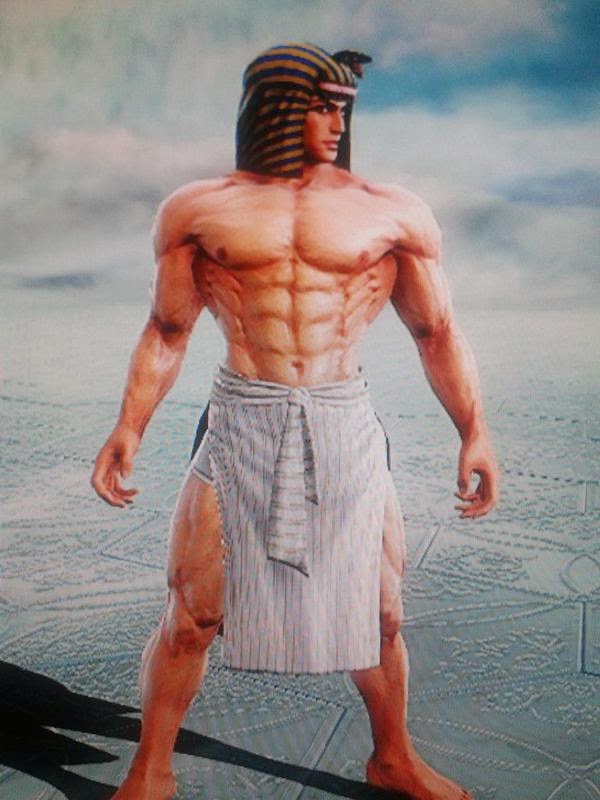
WE love it when people who love Antinous send us unsolicited stories, poems and art. These images were created by our Twitter follower @Son_of_Sekhmet in the Netherlands.


Sunday, March 13, 2016

THE MANY FACES
OF ANTINOUS THE GAY GOD


BY ALICIA 7777777


Emperor Hadrian commissioned thousands of statues of his Beloved Antinous, showing HIM in the guise of many deities and heroes. This sublime video morphing montage shows some of the many faces
of ANTINOUS THE GAY GOD


Antinous - Face Morph from Alicia7777777 on Vimeo.

Saturday, March 12, 2016

HOW WOULD YOU RESPOND
IF YOU SAW ANTINOUS TODAY?


FLAMEN Antonius Subia likes to ask new dedicants of Antinous this question:

"If you encountered Antinous right here in your midst today, how would you react? Would you believe it was H.I.M? Or would you say it couldn't be true?"

That is why we love this painting by one of our favorite artists, ANDRÉ DURAND.

He entitles it "The Disciples of Emmaus" from a biblical verse about two men who are so busy talking about the death of Jesus that they fail to recognize him walking towards them on the road to the village of Emmaus.

They "believe in" the promise of eternal life.

But they do not "really believe" that it is possible ... even when they see it with their own eyes.

We are in the midst of the greatest turning point in human history since the discovery of fire … you hold it in the palm of your hand as you scroll your smart phone's apps.

Look around yourself and you see people so engrossed in the the magical world of their smart phones that they are unaware of the magic happening all around them.

It is the same with HOMOTHEOSIS … Gay-Man-Godliness-Becoming-The-Same. Many people "believe in" becoming one with Antinous. But they don't "really believe" it is possible.

Antonius has always believed that a "New Antinous" may already have been born ... or soon will be. He won't be the same "Old Antinous". He will be the Antinous we gay men need in the 21st Century.

Antonius always asks the question to prospective new priests, "Would you recognize Antinous if you were to see him on the street today? And if so, how would you respond?"

Do you "believe in" ... or do you "really believe"? A very good question.

Friday, March 11, 2016

THE ASSASSINATION OF ELAGABALUS
ROME'S TRANSGENDER TEEN EMPEROR


ON March 11th the Religion of Antinous solemnly commemorates the assassination of Elagabalus, Rome's transgender teen emperor.

Imperator Caesar Marcus Aurelius Antoninus Augustus was born on an unknown date in the winter of 204 AD in the city of Emesa in Syria.

His birth name was Varius Avitus Bassianus, and he is believed to have been the son of Caracalla, for which reason he was declared Emperor by the Legions of Syria during an uprising against the short-lived Emperor Macrinus who had assassinated Caracalla and taken the throne.

Varius Bassianus was only 14 years old when he became sole ruler of the Roman Empire and took the name of Antoninus. He was the last Emperor to bear the sacred name of the most glorious rulers of the world, the Antonines. He is known to history as Elagabalus, because he was from birth the high priest(ess) of the androgynous sun deity Elagabal.

He brought his strange, phallic religion to Rome, and very shortly began to impose Elagabal, going so far as to nullify all other cults and force the Romans to accept his one god. It is even claimed that he closed and demolished the temple of Antinous at Tibur and perhaps others, but this is rumor.

What Elagabalus is famous for is that he was an extreme homosexual phallus worshipper with an insatiable fondness for chariot racers who he often elevated to the highest positions of authority simply based on the size and grace of their penises. He is criticized by ancient historians for portraying himself as Venus on Mount Ida, and allowing himself to be sodomized on stage by his chariot racers in the roles of various gods in full view of an audience.


History is slanted by anti-tranny prejudice. Elagabalus is recorded as having been one of the most infamous and degenerate figures in Roman history. 

This despite the fact that he was not particularly cruel or demonstrably mad. He simply offended the sensibilities of later historians ... particularly Victorian historians who were appalled by the fact that a trans teen had been acclaimed emperor of Rome.

Elagabalus, devoted to the androgynous god Elagabal, made it his priority as emperor to demote all others gods and goddesses to the position of servants to the principal deity. A black stone phallic representation of the god was processed through the streets of Rome to the temple annually.

Many of the sacred symbols of other religions were moved to the temple of Elagabal, including those of Jews and Christians. To persuade followers of other deities to worship Elagabal, the emperor participated in the rituals of several other religions. On a daily basis animal sacrifices were performed, consistent with the practices of many of the religions.

Victorian historians record Elagabalus' life as scandalous, yet an examination of their remarks reveal a troubled trans youth struggling with his identity.

"Not only was he bi-sexual, but also a transvestite. He would go to the taverns at night wearing a wig, woman's clothes and makeup and ply the trade of a prostitute. This activity only ended when he met Hierocles, a Carian slave, and became his wife. Hierocles was even permitted to beat the emperor when displeased, as any man might beat his wife. Even more scandalous Elagabalus not only acted and dressed like a woman, but he wanted to be physically transformed into one. He asked his physicians to contrive a vagina for him, promising huge rewards for success."

In other words, he was a transgender teenager who had the power and money at his disposal to create the gender-bending reality he desired to live in.

At the age of 14, in 218, Elagabaltus, a zealous believer, declared a religious initiative giving Elagabal precedence over all other gods, even Jupiter himself.


The god was also to have a consort. Pallas Athena was the first choice, a goddess tended by the Vestal Virgins. As part of his strategy Avitus married one of the vestals. When Romans balked at the violation of a vestal virgin, however, he opted for the symbolic marriage with Urania, a moon goddess.

His attempt to unify Rome under one religion met with strong resistance and did nothing to moderate his unpopularity. In the very year that Elagabalus became emperor the Third Legion, which had placed him in office, attempted to replace him with Verus, their commander. The attempt failed. Over time, subsequent attempts by the Fourth Legion, by the fleet, and by a pretender named Seleucus also failed.

But as unpopular as he was with the nobility and commanders of the Legions, he was not at all unpopular with the plebs, upon whom he lavished gifts and games. As emperor he had a Temple built to Elagabal, restored the Flavian Amphitheatre (the Colosseum) that had been damaged by fire and completed the construction of the public baths of Caracalla in the Vicus Sulplicius. He also had built a palace complex, the Horti Variani, with an amphitheatre, a circus, a bath, and audience hall.

His most famous projects, however, were the temple of Elagabal (the Elagaballium) on the Palatine hill and another such temple on the southeastern edge of the city. From these temples the emperor delivered largesse to crowds that gathered below.

None of his works, or gifts to the people, were sufficient to offset his reputation among the elite, tarnished by his promiscuous behavior with men and women. Regardless, provided with almost absolute power one wonders, wouldn't most teenage boys be self- indulgent? Many of the adult emperors did no less.

Many legends have arisen about the decadent lifestyle of Elagabalus, including the tall tale that one of his palace orgies was the scene of an inadvertent massacre when so many flower petals were showered upon the banquet guests that dozens of people suffocated to death as they reclined on their couches. 


A colossal, wall-sized painting of this scene by Lawrence Alma-Tadema shocked and titillated Victorian  viewers.

As the young emperor's popularity dwindled his mother, Julia Soaemias, and other supporters recognized that the royal family was in danger of their lives. Rome had a tradition of murdering unpopular emperors, and sometimes their adherents as well.

In hopes of rescuing the regime his close family and supporters induced Elagabalus to adopt his cousin Bassianus Alexianus, a young man popular with the praetorian guard, and name him Caesar, heir to the throne.

The scheme backfired in that Julia Mamaea, Alexianus's mother, was as ambitious as Julia Soaemias and desired to see her son emperor as quickly as possible. Mamaea, playing on the praetorian guard's contempt for Elagabalus entreated for the assassination of Elagabalus. Soaemias, discovering the adoption had created greater danger not less, urged Elagabalus to have his cousin killed lest he himself be murdered. However, no one would obey the order.

Here is where we catch up with Julia Soaemias and Elagabalus:

"Mother," spoke the young emperor, 17 years old, the glow of childhood still reflected in his eyes, "they don't understand what I want to accomplish. If they did, they wouldn't hate me."

"Child," replied Julia Soaemias, "they have more than one reason to hate you. You're obsessed with being a woman and you flaunt Roman tradition. You seek to bring down their gods and make them slaves to Elagabal. Elagabal knows I worship him as much as you, but he wants not that we place him above other gods."

"I will go to the praetorian camp and entreat with them, explain what I intend. Surely they will listen. A single god for all Rome would unify us as naught else might. Our former glory would be restored and Rome would endure forever. I will go. I will go now! The armies must be made to understand," declared the emperor, rising from his throne even as he spoke.

"If you go to the guard they are as likely to kill you as listen to you," admonished his mother.

"That is a chance I must take," he retorted, "Rome is more important than my life."

At the praetorian camp:

"All hail Nellie Ellie," sarcastically called a guardsman upon the approach of the emperor.

"Run, fear for your manhood, she comes to drain us dry," screamed another voice.

Other guardsmen laughed and joined in, a little nervously at first, after all this was the emperor of Rome, but with growing enthusiasm. 


Stepping down from his chariot Elagabalus, dressed as a woman, his wig meticulously styled and his makeup artfully done, spoke in a loud voice, "I have come to discuss with you the fate of Rome." 

His mother, having accompanied him stepped down beside him, on her countenance fear was plainly written. She had a bad feeling about what could happen that night and the crowd of soldiers mocking and jeering did nothing to lessen that fear.

"Alexianus would have me murdered and restore the old gods, the many religions which kept Romans apart. I have dedicated my rule to bringing our great nation together under one god, you must see the wisdom in such a venture," he called out in a loud voice, ignoring the insults and belittling remarks.

"Wisdom from a boy whore," yelled out a disgruntled soldier, "Drunk one night, boy, I had you. Was that your wisdom, Nellie Ellie?" The crowd laughed uproariously.


"I am the priestess of Elagabal. It is my place to be among my people, to suffer the worst and the best at your hands. I am also your emperor and I command you to kill my rival, Alexianus," he ordered.

His mother leaned forward and whispered in his ear, "Tread softly my son, their temper is not to be trifled with. I like not their mood."

"You have had my spear once, priestess," venomously spat a soldier near the front of those gathered. "Now have another!" As the soldier uttered the words he hurled a spear. It landed to one side, but came perilously close to hitting Elagabalus.

"I want nothing but the betterment of Rome," shouted Avitus, taking his mother by the arm and retreating to his chariot. Too late he took the reins of his spirited horses, the soldiers had already surrounded his chariot and taken control.

"You will agree to abdicate in favor of Alexianus before you leave this night, or you shall not leave," spoke up the closest of his adversaries. The army heard the words and began to chant, "Alexianus, Alexianus, Alexianus."

Enraged the youthful emperor screamed, "I am emperor. It is I who know what is best for Rome. Not you traitors. Now, let go of my horses!" With his whip he struck at the face of the nearest soldier, landing a vicious blow that brought blood.

The soldier in turn pulled Elagabalus from the chariot and stabbed him. Others joined in. The last thing Elagabalus saw before he died was the soldiers pulling his mother from the chariot,"Let my mother be," he tried to yell, but only a whisper passed his lips.


So ended the reign of the trans teenage Varius Avitus Bassinus, having ruled Rome for but four years. 

He had been the first emperor to attempt to unify Rome under one god. 

His gender variance, his sexual escapades while frowned on but tolerated had destroyed his credibility. After the murders, his body and that of his mother's, were dragged naked through the streets of Rome.

Finally, beheaded, both bodies were thrown into the Tiber, the punishment for convicted criminals.

Elagabalus reigned only four years, and was 18 years old when he was murdered, the same age as Antinous. 


Though his character is condemned as perverse, the open phallicism that he imposed upon Rome, and the dramatic exhibition of his homosexuality warrant his deification.